
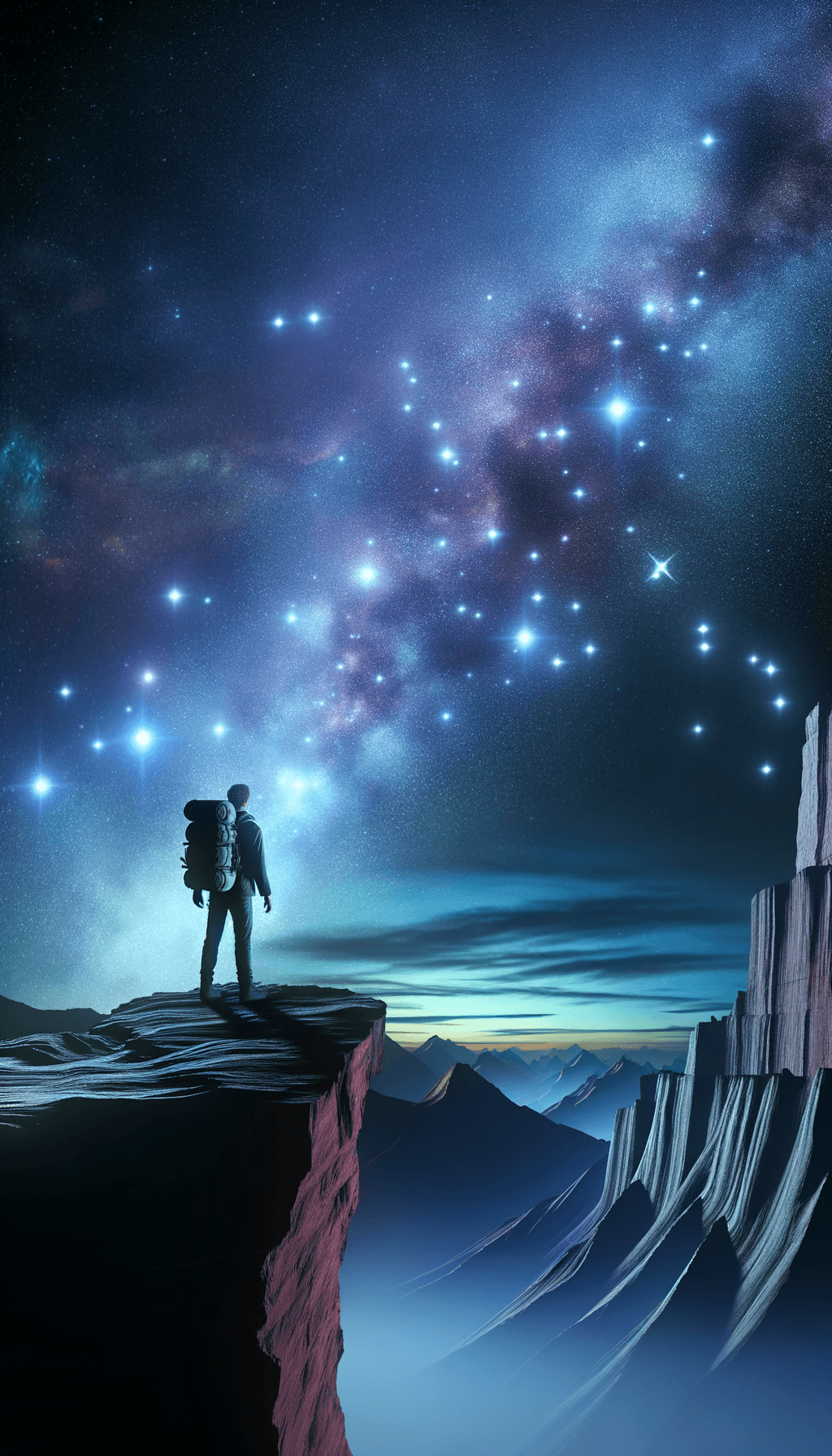
To reach the stars, you must dare to take the first step. — Fyodor Dostoevsky
—What lingers after this line?
Importance of Taking Action
This quote highlights that achieving great success or dreams requires taking the first step. Without action, aspirations remain unfulfilled.
Courage and Ambition
Dostoevsky emphasizes the need for bravery. Many people wish for greatness, but only those who dare to begin the journey can reach their goals.
Overcoming Fear
Fear often holds people back from pursuing their dreams. This quote encourages individuals to push past doubt and take the initial step forward.
Symbolism of the Stars
The stars represent high aspirations, success, and enlightenment. Reaching them symbolizes an extraordinary goal that requires effort and perseverance.
Philosophical Perspective
Dostoevsky’s works often explore human struggles and aspirations. This quote aligns with his belief in personal growth through action and determination.
One-minute reflection
What feeling does this quote bring up for you?
Related Quotes
6 selectedIf you are not willing to look stupid, nothing great is ever going to happen to you. — Julia Cameron
Julia Cameron
Julia Cameron’s remark begins with a hard truth: many people do not fail because they lack talent, but because they fear embarrassment. In that sense, ‘looking stupid’ becomes shorthand for being seen trying, stumbling,...
Read full interpretation →You don't have to bully yourself out of feeling fear. You just have to move while it's still there. — Annie Wright
Annie Wright
At its core, Annie Wright’s quote challenges the common belief that courage begins only after fear has disappeared. Instead, it reframes fear as something that can accompany action rather than prevent it.
Read full interpretation →For what matters in life is not whether we receive a round of applause; what matters is whether we have the courage to venture forth despite the uncertainty of acclaim. — Amor Towles
Amor Towles
At its core, Amor Towles shifts attention away from public approval and toward private resolve. The quote argues that a life’s value is not determined by applause—those visible signs of recognition—but by the willingness...
Read full interpretation →Confidence doesn't mean being fearless. It means creating, even when your hands shake. — Lisa Golightly
Lisa Golightly
At first glance, Lisa Golightly’s quote overturns a common myth: that confident people move through life without fear. Instead, she presents confidence as action taken in spite of fear, not in the absence of it.
Read full interpretation →Screw your courage to the sticking-place. — William Shakespeare
William Shakespeare
At its core, Shakespeare’s line is a vivid call to steady oneself before decisive action. In Macbeth (c.
Read full interpretation →Do not mistake your digital silence for peace. Real strength is found in the courage to speak the truth to the people who hold your heart. — Anne Lamott
Anne Lamott
At first glance, Anne Lamott’s quote challenges a familiar illusion: silence can resemble peace without actually creating it. Choosing not to speak may keep conflict out of sight, yet beneath that quiet surface, hurt, co...
Read full interpretation →More From Author
More from Fyodor Dostoevsky →If you want to overcome the whole world, overcome yourself. — Fyodor Dostoevsky
Dostoevsky’s line reframes ambition by shifting the arena of struggle from the public world to the private self. Instead of measuring strength by dominance over others, he implies that the most consequential victories ha...
Read full interpretation →You will burn and you will burn out; you will be healed and come back again. — Fyodor Dostoevsky
Dostoevsky’s line treats suffering not as a single dramatic episode but as a recurring rhythm: intensity, collapse, recovery, and return. Instead of promising a smooth ascent toward improvement, he describes a life that...
Read full interpretation →You will burn and you will burn out; you will be healed and come back again. — Fyodor Dostoevsky
Dostoevsky’s line frames suffering as rhythmic rather than final: first the blaze of effort or emotion, then the collapse, then the slow work of recovery, and finally the return. Instead of treating burnout as a personal...
Read full interpretation →You will burn and you will burn out; you will be healed and come back again. — Fyodor Dostoevsky
Dostoevsky’s line frames suffering as rhythmic: first the blaze of intensity, then the inevitability of burnout, and finally the possibility of renewal. Instead of treating exhaustion as a final verdict, he suggests it i...
Read full interpretation →