
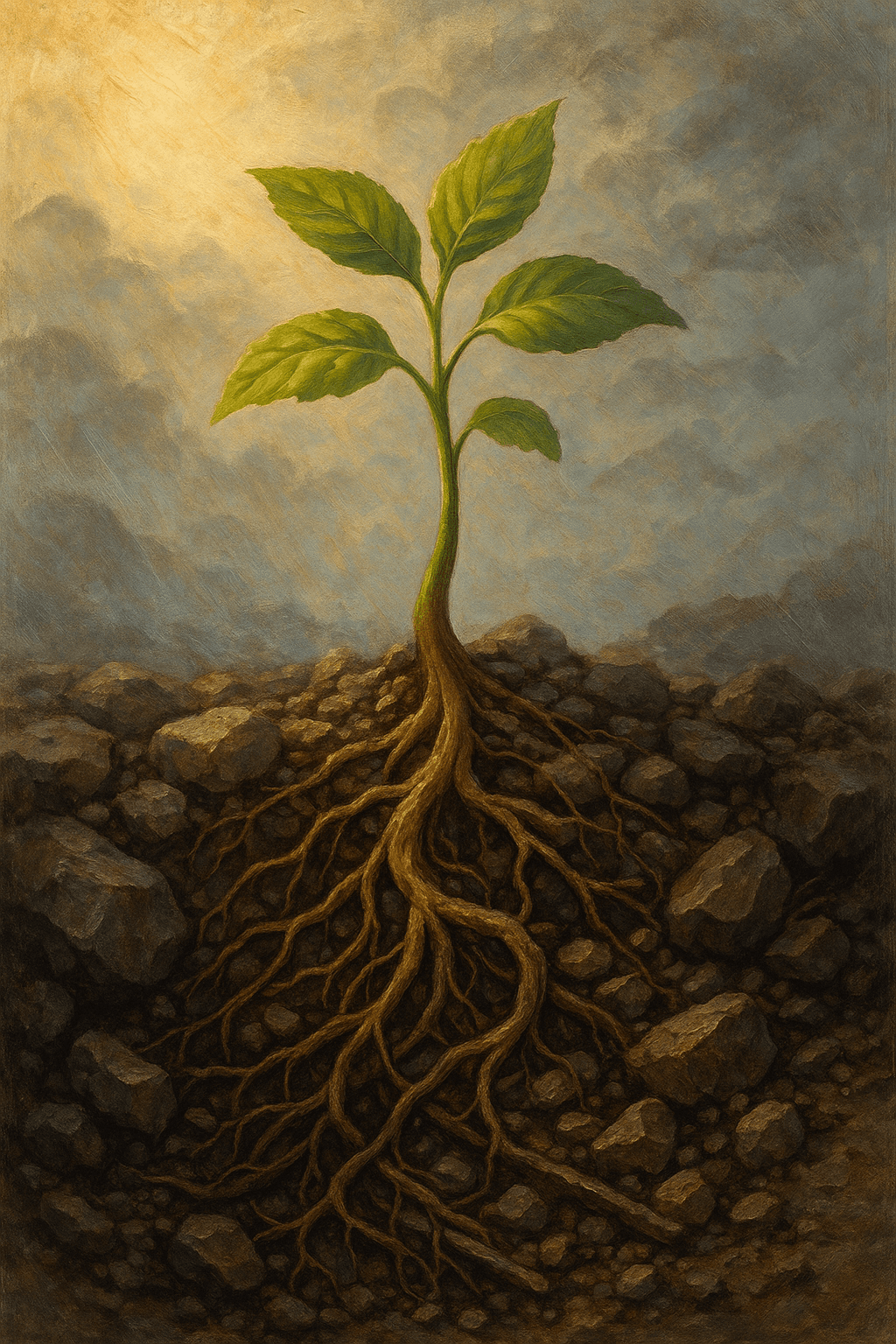
Grow through what you go through. — Mandy Hale
—What lingers after this line?
The Wisdom Behind the Quote
Mandy Hale’s phrase, 'Grow through what you go through,' encourages individuals to view challenges not solely as obstacles, but as catalysts for self-improvement. Rather than passively enduring hardship, Hale suggests we actively engage with our experiences, using them as fertile ground for inner development. This perspective empowers us to extract meaning from even the toughest moments, fostering resilience and adaptability.
Historical Perspectives on Overcoming Hardship
Throughout history, countless figures have echoed this principle. For example, Viktor Frankl’s memoir, *Man’s Search for Meaning* (1946), recounts how prisoners in concentration camps found psychological growth amid harrowing suffering. Frankl argues that by finding significance in tribulation, individuals transform their pain into a source of strength. Thus, the notion of growing through adversity has deep philosophical and existential roots.
Psychological Benefits of Embracing Difficulties
Modern psychology has further cemented the ties between hardship and growth. The concept of 'post-traumatic growth,' introduced by Tedeschi and Calhoun in the 1990s, describes positive psychological changes resulting from life’s most challenging events. By confronting adversity head-on, people often discover new possibilities, stronger relationships, and a deeper appreciation for life—validating Hale’s message from a scientific standpoint.
Turning Setbacks into Stepping Stones
Transitioning from theory to real life, countless entrepreneurs, artists, and innovators have cited failures as crucial to their eventual success. Consider J.K. Rowling, who faced rejection and personal hardship before publishing the Harry Potter series. She credits her setbacks as transformative experiences that shaped her perseverance and creativity. These stories illustrate how difficulties, when embraced with the intent to learn, can lay the foundation for future achievements.
Cultivating a Growth-Oriented Mindset
Finally, adopting this proactive approach to adversity requires a shift in mindset—a willingness to reflect, adapt, and seek opportunity within misfortune. Whether through journaling, therapy, or supportive communities, individuals can develop strategies to reframe setbacks as learning experiences. In this way, 'growing through what you go through' becomes not just a motivational slogan, but a practical philosophy for navigating life’s inevitable challenges.
Recommended Reading
As an Amazon Associate, we earn from qualifying purchases.
One-minute reflection
What does this quote ask you to notice today?
Related Quotes
6 selectedTrue resilience is not about returning to the person you were before the storm. It is about bouncing forward into the person the storm required you to become. — Satya Nadella
Satya Nadella
Satya Nadella’s line challenges the common idea that resilience is simply “getting back to normal.” Instead of treating hardship as a temporary interruption, he frames it as a transforming event that changes what “normal...
Read full interpretation →Great emergencies and crises show us how much greater our vital resources are than we had supposed. — William James
William James
William James suggests that ordinary life can conceal our deepest capacities. In routine conditions, people often act within familiar limits, assuming those limits define their true strength.
Read full interpretation →To bear trials with a calm mind robs misfortune of its strength and burden. — Seneca
Seneca
Seneca’s line captures a central Stoic conviction: suffering is made heavier not only by events themselves, but by our agitation before them. To bear trials with a calm mind is not to deny pain; rather, it is to refuse p...
Read full interpretation →Healing is not about erasing the past, but about finding the strength to carry it with a lighter hand. — Maya Angelou
Maya Angelou
At its core, Maya Angelou’s insight rejects the comforting but false idea that recovery requires a clean slate. Instead, she frames healing as a change in relationship to memory: the past remains, yet it no longer crushe...
Read full interpretation →Do not whine. Do not complain. Work harder. — Joan Didion
Joan Didion
At first glance, Joan Didion’s line reads like a blunt command, stripped of comfort or qualification. “Do not whine.
Read full interpretation →You are built not to shrink down to less but to blossom into more. — Oprah Winfrey
Oprah Winfrey
Oprah Winfrey’s line hinges on a vivid contrast: “shrink down” suggests self-erasure, caution, and living smaller than one’s nature, while “blossom into more” evokes organic growth—slow, embodied, and inevitable when con...
Read full interpretation →More From Author
More from Mandy Hale →Changes may come along and change may be painful, but nothing will be as painful as staying stuck somewhere you don't belong. — Mandy Hale
This quote acknowledges that change can be difficult and often comes with discomfort. However, it suggests that embracing change is essential for personal growth and fulfillment.
Read full interpretation →Changes can be scary, but you know what’s scarier? Allowing your fear to stop you from growing, evolving, and progressing. — Mandy Hale
The quote highlights how fear, especially fear of change, can become a significant barrier that prevents individuals from experiencing personal growth, evolution, and progress in life.
Read full interpretation →Ten years from now, make sure you can say that you chose your life, you didn't settle for it. — Mandy Hale
This quote encourages individuals to actively shape their lives rather than passively accepting circumstances. It emphasizes the importance of making deliberate choices to pursue goals and dreams.
Read full interpretation →A meaningful life is not being rich, being popular, being highly educated or being perfect. It is about being real, being true, being you. — Mandy Hale
This quote suggests that a meaningful life is not defined by wealth, fame, education, or perfection but by authenticity and self-acceptance.
Read full interpretation →