
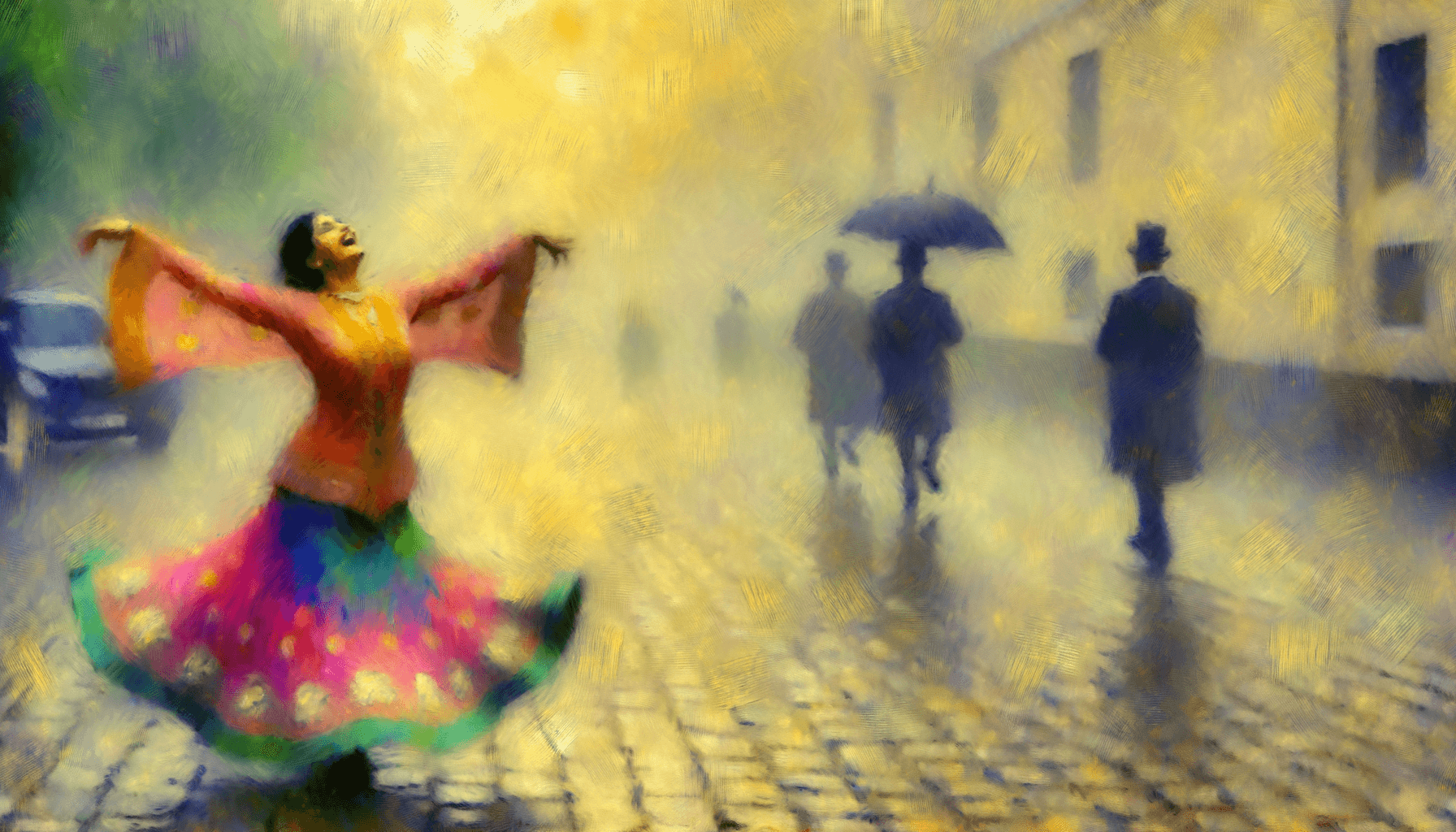
One must be a little foolish, if one does not want to be unhappy. — Marcel Proust
—What lingers after this line?
Embracing Imperfection
This quote suggests that strict rationality and excessive seriousness can lead to unhappiness. Allowing oneself moments of foolishness and spontaneity can contribute to a more joyful life.
Freedom from Overthinking
Overanalyzing every situation can lead to stress and dissatisfaction. This quote encourages people to sometimes let go of excessive introspection and enjoy life without overburdening themselves with deep thoughts.
Playfulness and Joy
A little foolishness in life, such as engaging in playful activities or appreciating life’s simple pleasures, can enhance overall happiness by easing life's harsh realities.
Philosophical Perspective on Happiness
Proust suggests that a rigid and overly practical approach to life may prevent people from experiencing true joy. Happiness often lies in embracing the irrational, the whimsical, and the unpredictable.
Marcel Proust's Literary Vision
As a writer known for exploring memory, time, and human emotions, Proust frequently delved into the complexities of happiness. His works often highlight how human emotions and experiences are intertwined with both wisdom and folly.
One-minute reflection
Why might this line matter today, not tomorrow?
Related Quotes
6 selectedWhen you look at your life, the greatest happinesses are family happinesses. — Joyce Brothers
Joyce Brothers
Joyce Brothers’ remark begins with a retrospective question: when people survey their lives, what moments shine most brightly? Her answer is strikingly ordinary yet profound—family happiness.
Read full interpretation →If you want to be happy, learn to be alone without being lonely. Learn that being alone does not mean being unhappy. — Michael Josephson
Michael Josephson
Michael Josephson’s remark turns on a subtle but life-changing distinction: being alone is a circumstance, while being lonely is an emotional interpretation of that circumstance. In other words, solitude does not automat...
Read full interpretation →The better part of happiness is to wish to be what you are. — Desiderius Erasmus
Desiderius Erasmus
At its core, Erasmus suggests that happiness is not primarily found in acquiring a different life, status, or identity, but in reconciling oneself with one’s own nature. To wish to be what you are is to stop waging an in...
Read full interpretation →Being happy doesn't mean that everything is perfect. It means that you've decided to look beyond the imperfections. — Gerard Way
Gerard Way
At its core, Gerard Way’s quote reframes happiness not as a reward for flawless circumstances, but as an act of perception. He suggests that joy begins when a person stops waiting for life to become perfectly arranged an...
Read full interpretation →Happiness is a good flow of life. — Zeno of Citium
Zeno of Citium
Zeno of Citium defines happiness not as a burst of pleasure but as a sustained movement through life. The phrase “a good flow of life” suggests continuity, direction, and inner coherence, as if well-being were less a sin...
Read full interpretation →The secret of happiness is to admire without desiring. — Carl Sandburg
Carl Sandburg
Carl Sandburg’s line reframes happiness as an attitude rather than an acquisition. To admire without desiring means recognizing beauty, excellence, or joy in the world without immediately trying to possess it.
Read full interpretation →More From Author
More from Marcel Proust →It is the quiet, daily labor that builds the cathedral of a life. — Marcel Proust
At first glance, Proust’s image shifts attention away from dramatic turning points and toward the unnoticed repetitions that shape a human life. By comparing life to a cathedral, he suggests that meaning is not assembled...
Read full interpretation →We are healed of a suffering only by expressing it to the full. — Marcel Proust
At its heart, Marcel Proust’s line suggests that pain does not loosen its grip when it is hidden or minimized; instead, it begins to change when it is fully articulated. To express suffering “to the full” means giving it...
Read full interpretation →The real voyage of discovery consists not in seeking new landscapes, but in having new eyes. - Marcel Proust
This quote emphasizes the importance of perspective in the experience of discovery. It suggests that true exploration comes from changing the way we see the world, rather than merely traveling to new places.
Read full interpretation →Everything that is great in the world comes from neurotics. They alone have founded our religions and composed our masterpieces. — Marcel Proust
Proust suggests that individuals who might be labeled as 'neurotic' are often more creative or productive, using their internal struggles to fuel extraordinary accomplishments in the fields of art and religion.
Read full interpretation →