
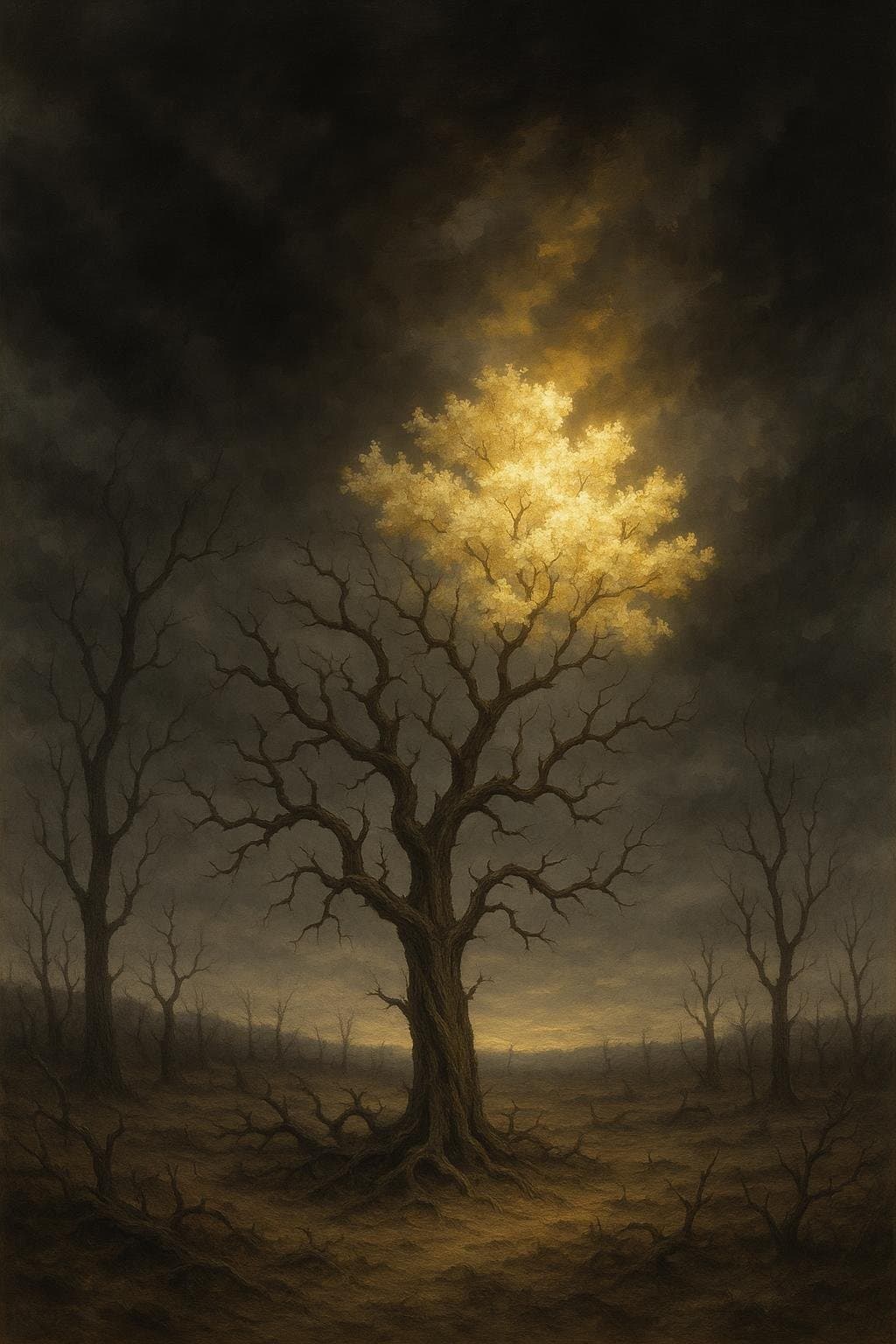
When the soul suffers too much, it develops a taste for misfortune. — Marcel Proust
—What lingers after this line?
Understanding Proust's Observation
Marcel Proust’s insight delves into the psychology of enduring hardship. He posits that overwhelming suffering can lead the soul to not only expect but almost desire further misfortune. This shift from mere endurance to an active preference is paradoxical, urging us to consider how pain can reshape our desires and outlook—sometimes until what once repelled us becomes familiar or even strangely comforting.
From Familiarity to Fatalism
As suffering persists, its presence becomes a constant—sometimes more predictable than fleeting moments of happiness. This phenomenon finds echoes in Dostoevsky’s *Notes from Underground* (1864), where the protagonist grows accustomed to misery, wary of happiness that might be snatched away. Familiar hardship, then, provides a sort of grim certainty, nurturing a subtle dependence on adversity.
Neuroscientific Perspectives on Suffering
Transitioning from literature to neuroscience, studies of chronic stress indicate that repeated pain can recalibrate the brain’s reward pathways. Researchers have observed that individuals who experience ongoing adversity often find unfamiliar joy unsettling, preferring the emotional states they know. This neurological adaptation makes Proust’s assertion relatable: the soul, through repeated exposure, learns to find a strange comfort in continuing misfortune.
Cultural Reflections in Art and History
Artistic traditions align with Proust’s view, often depicting suffering as an integral, almost cherished part of identity. For example, Picasso’s Blue Period (1901–1904) immerses viewers in tones of melancholy, suggesting that deep sorrow can define not only the individual but collective culture. History, too, shows communities clinging to narratives of struggle, forging resilience out of repeated hardships.
The Road Back from Affinity to Pain
Yet, moving forward, recognizing this affinity for suffering is also a first step toward healing. Modern therapeutic approaches—such as cognitive behavioral therapy—help individuals unlearn patterns of expecting or desiring misfortune. By building new associations and fostering hope, people can gradually restore the soul’s appetite for happiness, transforming Proust’s warning into an invitation for renewal.
One-minute reflection
What does this quote ask you to notice today?
Related Quotes
6 selectedMoney can't buy happiness, but it can make you awfully comfortable while you're being miserable. — Clare Boothe Luce
Clare Boothe Luce
Clare Boothe Luce’s line hinges on a clean separation: money can improve conditions, but it cannot guarantee contentment. By pairing “happiness” with “comfort,” she suggests that material security changes the texture of...
Read full interpretation →Given the choice between the experience of pain and nothing, I would choose pain. — William Faulkner
William Faulkner
This quote reflects an existential viewpoint, implying that experiencing pain is a way of affirming existence. Choosing pain over nothingness highlights the idea that living, even with suffering, is more meaningful than...
Read full interpretation →It is the quiet, daily labor that builds the cathedral of a life. — Marcel Proust
Marcel Proust
At first glance, Proust’s image shifts attention away from dramatic turning points and toward the unnoticed repetitions that shape a human life. By comparing life to a cathedral, he suggests that meaning is not assembled...
Read full interpretation →We are healed of a suffering only by expressing it to the full. — Marcel Proust
Marcel Proust
At its heart, Marcel Proust’s line suggests that pain does not loosen its grip when it is hidden or minimized; instead, it begins to change when it is fully articulated. To express suffering “to the full” means giving it...
Read full interpretation →The real voyage of discovery consists not in seeking new landscapes, but in having new eyes. - Marcel Proust
Marcel Proust
This quote emphasizes the importance of perspective in the experience of discovery. It suggests that true exploration comes from changing the way we see the world, rather than merely traveling to new places.
Read full interpretation →Everything that is great in the world comes from neurotics. They alone have founded our religions and composed our masterpieces. — Marcel Proust
Marcel Proust
Proust suggests that individuals who might be labeled as 'neurotic' are often more creative or productive, using their internal struggles to fuel extraordinary accomplishments in the fields of art and religion.
Read full interpretation →More From Author
More from Marcel Proust →It is the quiet, daily labor that builds the cathedral of a life. — Marcel Proust
At first glance, Proust’s image shifts attention away from dramatic turning points and toward the unnoticed repetitions that shape a human life. By comparing life to a cathedral, he suggests that meaning is not assembled...
Read full interpretation →We are healed of a suffering only by expressing it to the full. — Marcel Proust
At its heart, Marcel Proust’s line suggests that pain does not loosen its grip when it is hidden or minimized; instead, it begins to change when it is fully articulated. To express suffering “to the full” means giving it...
Read full interpretation →The real voyage of discovery consists not in seeking new landscapes, but in having new eyes. - Marcel Proust
This quote emphasizes the importance of perspective in the experience of discovery. It suggests that true exploration comes from changing the way we see the world, rather than merely traveling to new places.
Read full interpretation →Everything that is great in the world comes from neurotics. They alone have founded our religions and composed our masterpieces. — Marcel Proust
Proust suggests that individuals who might be labeled as 'neurotic' are often more creative or productive, using their internal struggles to fuel extraordinary accomplishments in the fields of art and religion.
Read full interpretation →