
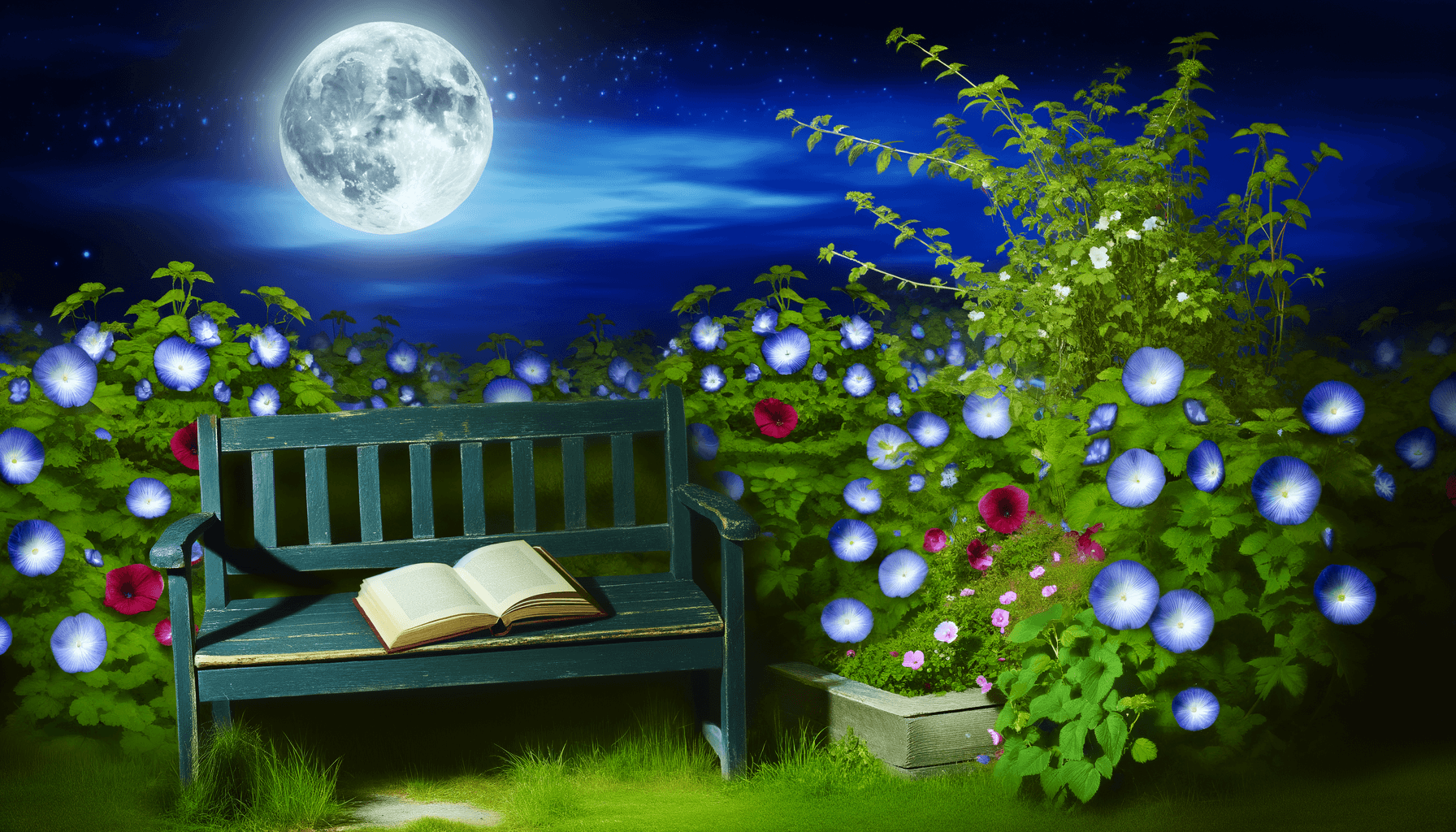
With freedom, books, flowers, and the moon, who could not be happy? — Oscar Wilde
—What lingers after this line?
Simple Pleasures of Life
The quote suggests that happiness can be found in the simple yet profound experiences of life—freedom, literature, nature, and the beauty of the night sky.
Freedom as a Key to Happiness
Wilde emphasizes that personal freedom is essential to happiness. Without constraints, one is free to explore, learn, and appreciate the beauty around them.
Books as Sources of Joy and Knowledge
Books symbolize both knowledge and escape. They offer wisdom, adventure, and emotional depth, contributing significantly to one’s happiness and personal growth.
Flowers and Nature’s Beauty
Flowers represent the aesthetic and fleeting beauty of nature. Appreciating natural elements can foster a sense of peace and contentment in life.
The Moon as a Symbol of Wonder
The moon, often linked to mystery and romance, is a source of inspiration and contemplation. It reminds us of the vastness of the universe and our connection to it.
Oscar Wilde’s Love for Aestheticism
Wilde was a prominent advocate of the Aesthetic Movement, which valued beauty and art above all. This quote reflects his belief that the appreciation of life’s simple beauties leads to a fulfilling existence.
Recommended Reading
As an Amazon Associate, we earn from qualifying purchases.
One-minute reflection
Why might this line matter today, not tomorrow?
Related Quotes
6 selectedThe boundary to what we can accept is the boundary to our freedom. — Tara Brach
Tara Brach
At first glance, Tara Brach’s statement suggests that freedom is not only shaped by external circumstances but also by our inner willingness to face reality. What we cannot accept—whether grief, uncertainty, fear, or imp...
Read full interpretation →It is nice when I have days off to go home and relax and literally take the weight off my shoulders and enjoy the simple things. — Michael B. Jordan
Michael B. Jordan
At its heart, Michael B. Jordan’s reflection presents rest not as laziness, but as a vital form of release.
Read full interpretation →Sometimes, the simple things are more fun and meaningful than all the banquets in the world. — E.A. Bucchianeri
E.A. Bucchianeri
At first glance, Bucchianeri’s line contrasts modest pleasures with extravagant abundance, yet its deeper point is about value rather than scale. A banquet symbolizes excess, display, and public celebration, while ‘simpl...
Read full interpretation →True freedom is found in the discipline to choose what you want most over what you want in this fleeting moment. — Arden Mahlberg
Arden Mahlberg
At first glance, freedom is often imagined as the ability to do whatever one wants at any given moment. Arden Mahlberg’s statement gently overturns that assumption by suggesting that real freedom is not impulsive indulge...
Read full interpretation →Freedom is knowing what is yours to influence. — Zeno of Citium
Zeno of Citium
At its heart, Zeno’s statement defines freedom not as unlimited power, but as clear discernment. The founder of Stoicism, writing in the early 3rd century BC, argued that human beings suffer when they confuse what belong...
Read full interpretation →The things you own end up owning you. It is only after you lose everything that you're free to do anything. — Chuck Palahniuk
Chuck Palahniuk
At first glance, Palahniuk’s line appears to criticize materialism, yet it goes further by describing a reversal of power. We believe we possess objects, but gradually those objects begin to dictate our time, anxiety, an...
Read full interpretation →More From Author
More from Oscar Wilde →Always forgive your enemies; nothing annoys them so much. — Oscar Wilde
At first glance, Oscar Wilde’s remark sounds like simple moral advice, yet its brilliance lies in its inversion of expectation. Instead of presenting forgiveness as saintly self-denial, he recasts it as a sly strategy: t...
Read full interpretation →It is only shallow people who require years to get rid of an emotion. A man who is master of himself can end a sorrow as easily as he can invent a pleasure. — Oscar Wilde
Oscar Wilde’s remark is deliberately provocative, drawing a sharp line between those ruled by feeling and those who govern it. At first glance, he seems almost cruel in dismissing prolonged sorrow as a mark of shallownes...
Read full interpretation →The mark of all good art is not that the thing done is done exactly or finely, but that it is worked out with the head and the workman's heart. — Oscar Wilde
Oscar Wilde immediately shifts the standard by which art is judged. Rather than praising work simply because it is exact, polished, or finely executed, he argues that true artistic value comes from something deeper: thou...
Read full interpretation →Everything in moderation, including moderation. — Oscar Wilde
Oscar Wilde’s line, “Everything in moderation, including moderation,” works by first borrowing a familiar moral rule and then twisting it into a paradox. If moderation is always good, then we should practice it without e...
Read full interpretation →