
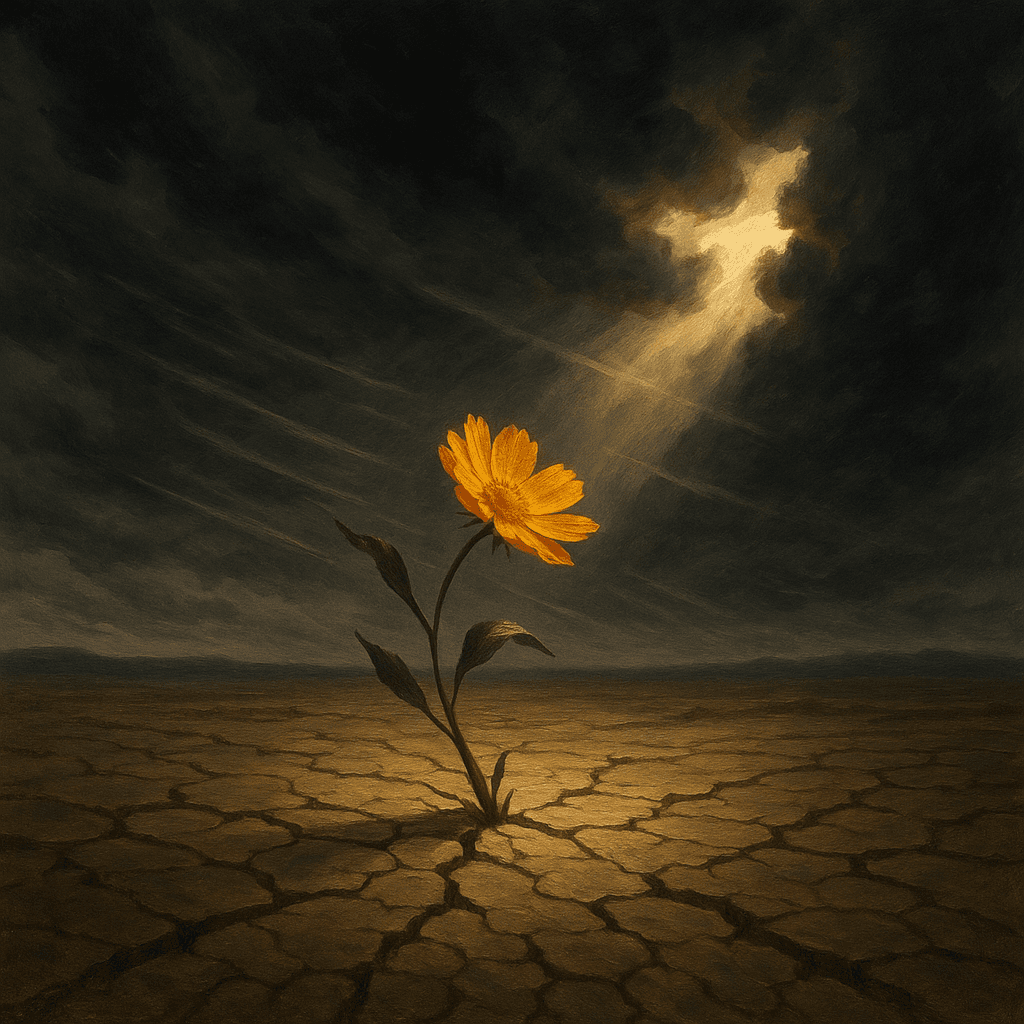
Resistance is the secret to joy. — Rainer Maria Rilke
—What lingers after this line?
Interpreting Rilke’s Paradox
Rainer Maria Rilke’s assertion that ‘resistance is the secret to joy’ presents a compelling paradox. At first glance, resistance might conjure images of struggle or adversity—hardly the direct path to happiness. Yet Rilke hints that it is precisely through overcoming obstacles that one accesses deeper fulfillment. This perspective compels us to view joy not as mere pleasure, but as a hard-won triumph.
Historical Examples of Resistance Breeding Fulfillment
Tracing this idea back through history, stories abound in which resistance forges character and ultimately joy. Consider the journey of Odysseus in Homer’s *Odyssey*, where ceaseless resistance—against tempests, monsters, and temptation—fulfills him not just with homecoming, but with profound self-understanding. Such narratives remind us that adversity can be the crucible from which joy emerges.
Creative Endeavor as Joy Found in Struggle
Rilke himself, as a poet, embodied resistance in the act of creation. In his *Letters to a Young Poet* (1903–1908), he counsels embracing difficulties, arguing they are essential for authentic artistic expression. Through the struggle to shape fleeting emotion into lasting verse, Rilke illuminates how creative resistance offers incomparable satisfaction—a joy that emerges not in spite of difficulty, but through it.
Psychological Perspectives on Overcoming Adversity
Modern psychology supports Rilke’s insight, highlighting how resilience and perseverance contribute to well-being. Research on post-traumatic growth, such as studies by Tedeschi and Calhoun (1996), show that confronting and overcoming significant challenges can result not only in personal development but also in newfound happiness. In this way, resistance is recast as a necessary ingredient for lasting joy.
Building a Meaningful Life Through Resistance
Ultimately, Rilke’s statement invites us to reconsider the nature of joy. Rather than a fleeting or passive state, joy results from the ongoing act of engagement and resistance—whether against external obstacles or internal doubts. Just as athletes rejoice after rigorous training and scholars after difficult research, our deepest joys often crown our moments of greatest resistance, weaving adversity into a fabric of meaning.
One-minute reflection
What does this quote ask you to notice today?
Related Quotes
6 selectedJoy is the compass pointing to your true north. — Rainer Maria Rilke
Rainer Maria Rilke
Rainer Maria Rilke’s metaphor positions joy as a personal compass, suggesting that the truest direction for a person’s life is revealed through what brings genuine happiness. Unlike fleeting pleasure, joy is presented he...
Read full interpretation →Joy is the greatest act of resistance. — Valarie Kaur
Valarie Kaur
Valarie Kaur’s line turns a feeling into a stance: joy is not merely a private mood but a public refusal to be reduced by injustice. Rather than treating happiness as naïve, she suggests joy can be chosen with clear eyes...
Read full interpretation →Resistance leads to revelation. — Rumi
Rumi
Rumi’s succinct statement, 'Resistance leads to revelation,' encapsulates a profound truth about human growth and self-discovery. Rather than viewing resistance—whether in the form of internal struggle or external obstac...
Read full interpretation →We need joy as we need air. We need love as we need water. We need each other as we need the earth we share. — Maya Angelou
Maya Angelou
Maya Angelou’s words turn emotional needs into elemental ones, placing joy beside air, love beside water, and human connection beside the earth itself. By doing so, she refuses to treat happiness, affection, and communit...
Read full interpretation →Joy is a net of love by which you can catch souls. — Mother Teresa
Mother Teresa
Mother Teresa’s saying begins with a striking metaphor: joy is not merely a private feeling, but an instrument that reaches outward. By calling it a “net of love,” she suggests that joy gathers people in without force, p...
Read full interpretation →Adults can benefit from play as much as children. Go ahead and dance with your dog or build something just for fun. — Dr. Elinore McCance-Katz
Katz
At first glance, Dr. Elinore McCance-Katz’s quote sounds almost disarmingly simple, yet it challenges a common adult assumption: that play belongs mainly to childhood.
Read full interpretation →More From Author
More from Rainer Maria Rilke →To love is not about merging. It is a noble calling for the individual to ripen, to differentiate, to become a world in oneself in response to another. — Rainer Maria Rilke
At first glance, Rilke challenges one of romance’s most familiar ideals: the desire to ‘become one.’ Instead, he argues that genuine love is not a collapse of boundaries but a deepened encounter between two distinct peop...
Read full interpretation →Everything is blooming most recklessly; if it were voices instead of colors, there would be an unbelievable shrieking into the heart of the night. — Rainer Maria Rilke
At first glance, Rilke turns a peaceful image of blooming nature into something almost overwhelming. Flowers do not merely open; they burst forth “most recklessly,” suggesting a vitality so abundant that it exceeds calm...
Read full interpretation →And now let us believe in a long year that is given to us, new, untouched, full of things that have never been. — Rainer Maria Rilke
Rilke opens by shifting the tone from planning to believing: the year is “given to us,” implying something received rather than conquered. This framing matters because it replaces the pressure of achievement with the hum...
Read full interpretation →The purpose of life is to be defeated by greater and greater things. — Rainer Maria Rilke
Rainer Maria Rilke’s line treats “defeat” not as failure to avoid, but as a destination worth moving toward. The purpose of life, in this view, is measured by what can humble us—truths, beauties, responsibilities, or ide...
Read full interpretation →