
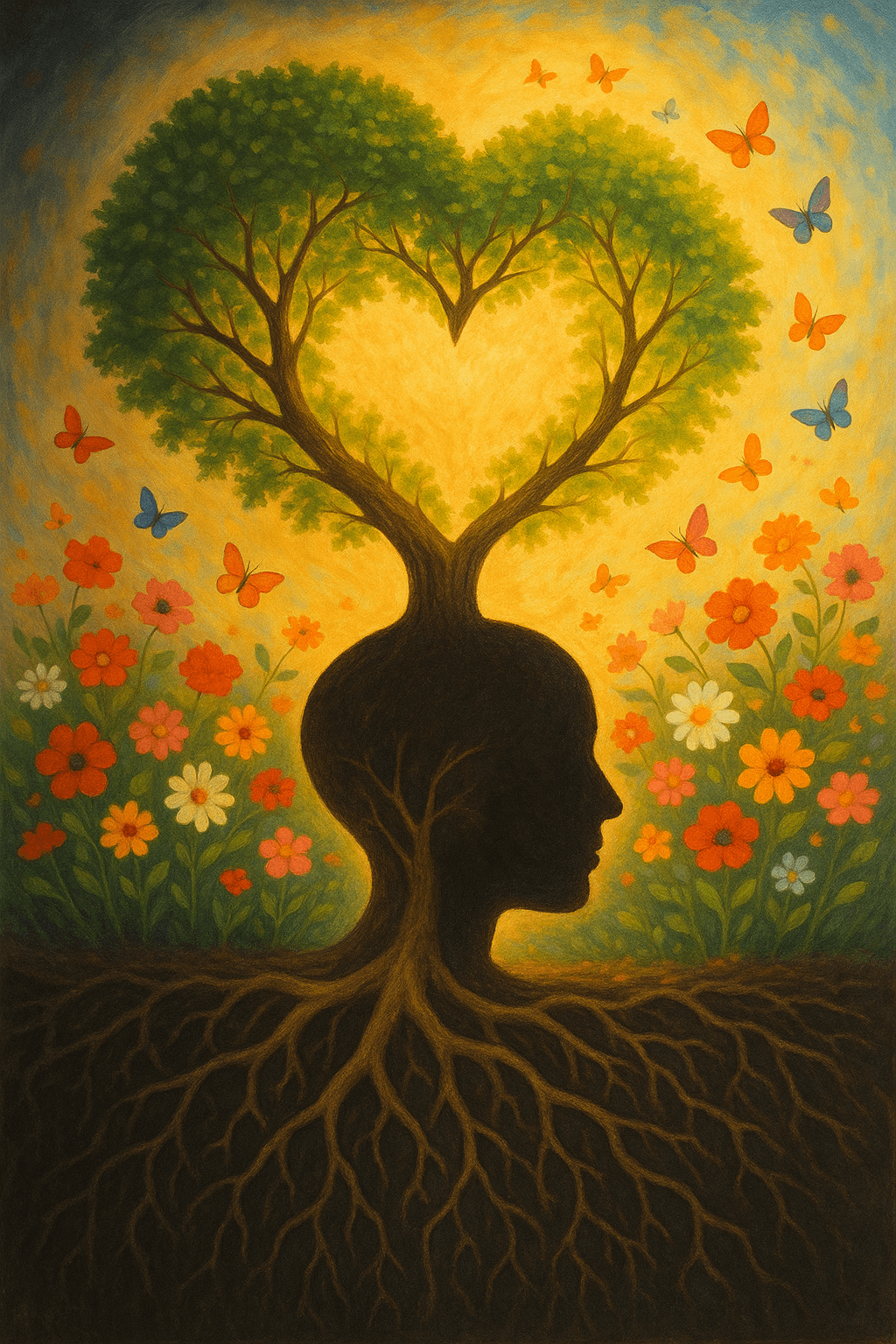
An open heart is an open mind’s greatest ally in transformation. — bell hooks
—What lingers after this line?
Understanding bell hooks’s Insight
bell hooks, renowned for her powerful explorations of love and social change, encapsulates in this quote the essential interdependence of emotional openness and intellectual growth. By asserting that 'an open heart is an open mind’s greatest ally,' she suggests that transformation is not merely a cognitive process, but an emotional journey as well. This initial framing invites us to consider how emotional receptivity and intellectual curiosity coalesce to foster genuine change.
Emotional Openness as a Catalyst
Delving deeper, an open heart actively cultivates empathy and vulnerability—qualities that enable individuals to encounter new ideas without defensiveness. For example, in hooks’s seminal work, 'All About Love' (2000), she discusses how willingness to feel and forgive can dismantle barriers to understanding. This emotional readiness lays the groundwork for a mind that is receptive, creative, and less constrained by bias.
Mutual Enrichment of Feeling and Thinking
Building upon this foundation, it is evident that the heart and mind operate in a mutually reinforcing cycle during periods of transformation. When we open our hearts to new experiences, our minds are more flexible and adaptive. Conversely, intellectual exploration often stirs emotional reactions that challenge us to grow. Plato’s *Phaedrus* (c. 370 BC) notes a similar dual path—emphasizing that knowledge rooted in love achieves deeper authenticity and change.
Breaking Through Resistance to Change
Resistance to transformation frequently manifests as either intellectual stubbornness or emotional withdrawal. Yet, as hooks contends, when the heart remains open, fear and prejudice can be tempered, allowing the mind to accept and integrate new perspectives. Research in social psychology, such as Carol Dweck’s studies on growth mindset, affirms this: embracing vulnerability enhances one’s capacity for learning and adaptation.
Toward Holistic Personal and Social Change
Ultimately, the call for an open heart and mind is a call for holistic transformation—on both personal and collective levels. hooks’s philosophy bridges the inner work of self-awareness with the outer work of societal change, urging us to nurture empathy alongside critical thought. By harmonizing both aspects, individuals and communities alike can achieve deeper, more lasting forms of growth and justice.
One-minute reflection
What feeling does this quote bring up for you?
Related Quotes
6 selectedBe open to the amazing changes which are occurring in your life. — Bell Hooks
bell hooks
This quote encourages individuals to welcome change rather than resist it. Embracing transformation allows for personal growth and unexpected opportunities.
Read full interpretation →Transformation begins when we dare to question the familiar. — bell hooks
bell hooks
bell hooks’ insight points to the critical role of inquiry in personal and societal growth. Transformation, according to this view, does not arise from passivity or routine acceptance; instead, it is sparked when individ...
Read full interpretation →We need people in our lives with whom we can be as open as possible. To have real conversations may seem simple, but it involves courage and risk. — Thomas Moore
Thomas Moore
Thomas Moore’s quote begins with a simple human need: we require people with whom we can speak honestly, without performance or self-protection. At first glance, that sounds ordinary, yet his wording suggests something d...
Read full interpretation →The most important thing in life is to learn how to give out love, and to let it come in. — Morrie Schwartz
Morrie Schwartz
Morrie Schwartz reduces a complicated life to a simple, demanding truth: what matters most is not achievement, status, or possession, but love. By framing love as something we must learn, he implies that it does not alwa...
Read full interpretation →If you want to turn your life around, try thankfulness. It will change your life mightily. — Gerald Good
Gerald Good
Gerald Good’s remark sounds almost too straightforward: if life feels stuck, start with thankfulness. Yet the power of the quote lies in its practicality—gratitude is presented not as a mood but as an action you can choo...
Read full interpretation →The cost of your new life is your old one. — Brianna Wiest
Brianna Wiest
Brianna Wiest’s line frames transformation as a direct trade: to step into a “new life,” you must pay with the familiar structures of the “old one.” Rather than promising effortless reinvention, the quote insists that me...
Read full interpretation →More From Author
More from bell hooks →But many of us seek community solely to escape the fear of being alone. Knowing how to be solitary is central to the art of loving. — bell hooks
Bell hooks begins with a quiet but difficult observation: not every search for community is rooted in love. Sometimes, we reach for others because solitude feels threatening, as though being alone exposes a lack within u...
Read full interpretation →Your presence is a form of resistance against a culture that profits from your isolation. Show up for those you love, even when it is inconvenient. — bell hooks
At first glance, bell hooks reframes something ordinary—being present for others—as a political and moral act. Her words suggest that care is not merely private sentiment; rather, it pushes back against a social order th...
Read full interpretation →If you don't build your own sanctuary, you will spend your life living in the wreckage of someone else's expectations. — Bell Hooks
Bell hooks frames sanctuary as more than a physical refuge; it is an inner and outer space where a person can live by values they have consciously chosen. At first glance, the quote sounds like a warning about independen...
Read full interpretation →The art of living is a constant process of refining one's own sanctuary against the tide of external expectations. — bell hooks
At its core, bell hooks presents living not as a finished achievement but as a continuous act of shaping and reshaping the self. The phrase “constant process” suggests that identity, peace, and integrity are never perman...
Read full interpretation →