
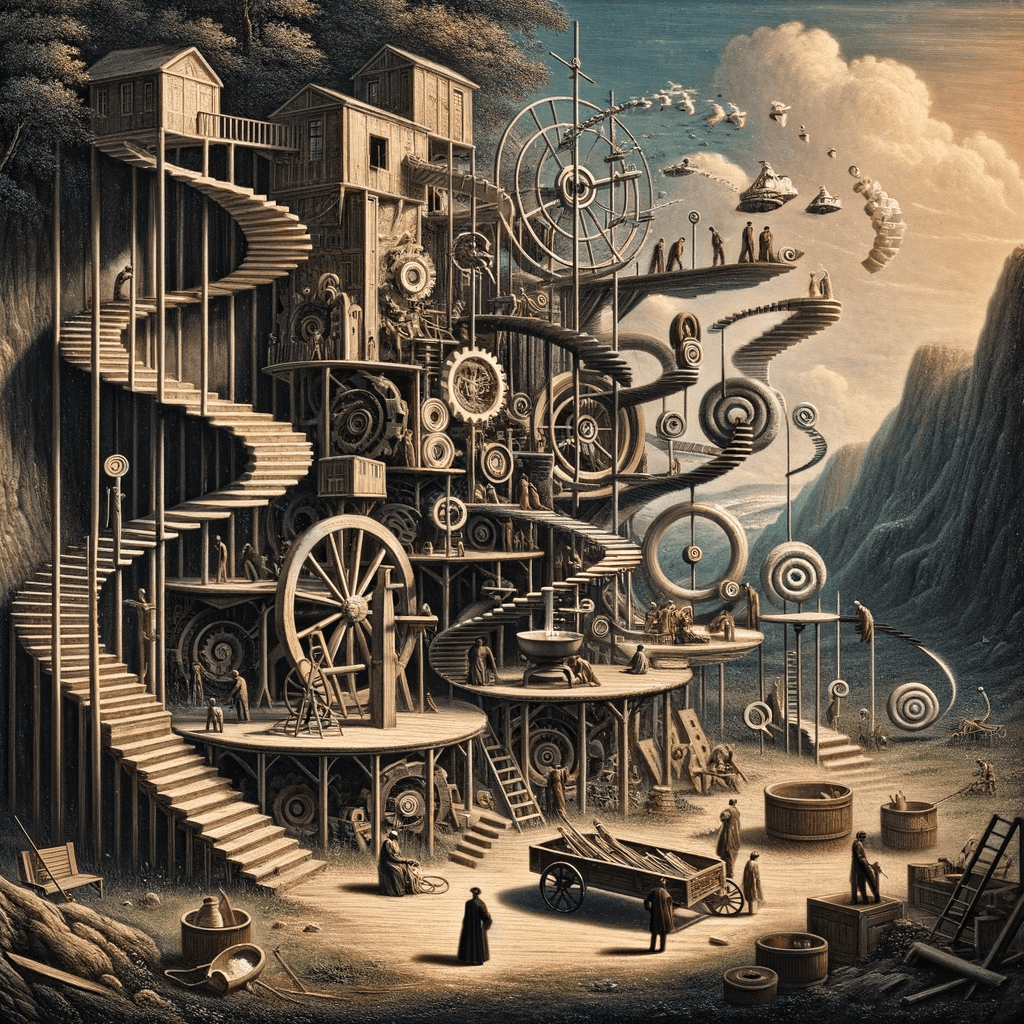
The how is often more important than the what. — John Steinbeck
—What lingers after this line?
Approach Versus Outcome
This quote suggests that the manner in which we achieve something can be more crucial than the end result itself. The process, methods, and values we employ often define the quality and significance of our achievements.
Values and Ethics in Action
The emphasis on 'how' implies that ethical considerations, integrity, and the respect shown during the execution of actions contribute significantly to the overall worth of those actions.
Quality Over Quantity
It conveys that focusing on how tasks are completed can lead to better quality results, rather than merely aiming for a specific goal with little regard for the process.
Learning and Growth
The journey and the experiences gained while pursuing something can be more valuable than simply achieving the objective. The lessons learned along the way shape our character and understanding.
Context of Steinbeck's Work
John Steinbeck, a renowned American author known for his portrayals of the human condition, often emphasized moral dilemmas and the importance of personal integrity in his writing, reflecting the social issues of his time.
One-minute reflection
Why might this line matter today, not tomorrow?
Related Quotes
6 selectedA really great talent finds its happiness in execution. — Johann Wolfgang von Goethe
Johann Wolfgang von Goethe
Goethe’s remark shifts attention away from talent as mere possession and toward talent as practice. A gift, however impressive, remains incomplete until it is exercised; in this sense, happiness does not come from being...
Read full interpretation →Security is a process, not a product. - Bruce Schneier
Bruce Schneier
At its heart, Bruce Schneier’s remark rejects the comforting illusion that safety can be bought once and for all. A firewall, an antivirus suite, or a smart lock may help, yet none of them can guarantee lasting protectio...
Read full interpretation →The craft of the master is not in the final product alone, but in the devotion to the process that brought it into being. — Richard Sennett
Richard Sennett
At first glance, Richard Sennett’s remark shifts attention away from the polished artifact and toward the labor that shaped it. He argues that true mastery cannot be measured only by what the audience sees at the end; ra...
Read full interpretation →The beauty of a thing is not just in its final form, but in the slow, deliberate history of how it was made. — William Morris
William Morris
At first glance, William Morris shifts attention away from the polished object and toward the human story embedded within it. His point is not that the final form does not matter, but that its beauty deepens when we unde...
Read full interpretation →To know and not to do is not yet to know. Your collection of insights is worthless without execution. — Zen Proverb
Zen Proverb
The proverb challenges the comforting idea that understanding is primarily mental. In this view, “to know” is not merely to recognize a principle, repeat it, or even agree with it; knowledge becomes real only when it sha...
Read full interpretation →Ideas light the way, but hands build the road. — Margaret Mead
Margaret Mead
Margaret Mead’s line contrasts two indispensable forces: ideas that “light the way” and hands that “build the road.” In doing so, it suggests that human progress depends on a partnership between imagination and labor. Ju...
Read full interpretation →More From Author
More from John Steinbeck →The work we do with our hands is the best way to keep our hearts from getting restless. — John Steinbeck
At its core, Steinbeck’s line proposes that physical work does more than produce useful things: it calms inner turbulence. By keeping the hands occupied, he suggests, the mind is less likely to drift into anxiety, idlene...
Read full interpretation →The art of resting is a part of the art of working. — John Steinbeck
At first glance, Steinbeck’s remark seems simple, yet it quietly overturns a common assumption: that work and rest are opposites. Instead, he presents them as parts of the same craft.
Read full interpretation →Set your hands to work that honors tomorrow and your feet will find steady ground. — John Steinbeck
Steinbeck’s line ties dignity to direction: “hands” symbolize daily effort, but the effort must “honor tomorrow,” meaning it should be guided by a longer horizon than immediate comfort. Rather than romanticizing busyness...
Read full interpretation →Turn curiosity into craft; practice is where dreams learn to behave. — John Steinbeck
Steinbeck begins with a familiar engine of creativity: curiosity. It’s the restless question—“What if?”—that nudges a person toward a story, a song, a business, or a skill.
Read full interpretation →