
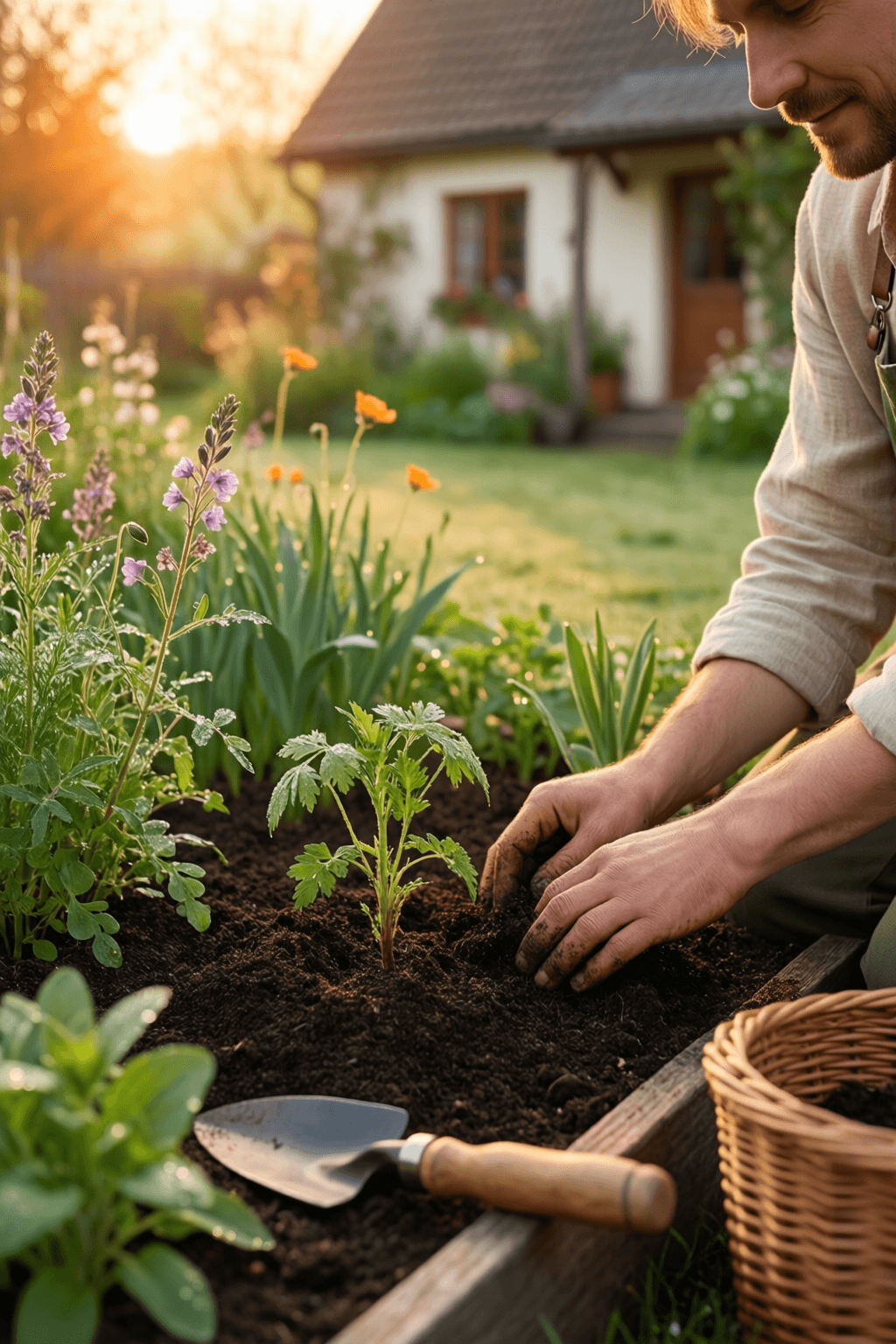
We might think we are nurturing our garden, but of course it's our garden that is really nurturing us. — Jenny Uglow
—What lingers after this line?
A Reversal of Care
At first glance, Jenny Uglow’s remark seems to describe a simple exchange: we water, weed, and prune, and the garden flourishes. Yet her deeper point is a reversal of ownership and care. While we imagine ourselves shaping the soil, the garden is simultaneously shaping us—through patience, attention, and the steady rhythm of seasonal work. In that sense, gardening becomes less an act of control than a relationship. The gardener may plan borders and sow seeds, but the living world answers in its own time. As this realization settles in, Uglow’s line opens into a broader truth: tending the earth often becomes a way of being tended by it.
The Slow Education of the Seasons
From there, the quote naturally points to time as a teacher. Gardens do not obey modern urgency; they unfold by germination, weather, decay, and return. In learning to wait for bulbs to emerge or fruit to ripen, people are quietly trained in humility. Karel Čapek’s The Gardener’s Year (1929) captures this beautifully, showing how gardening converts human impatience into amused surrender before nature’s schedule. Moreover, each season offers instruction without preaching. Spring rewards hope, summer demands care, autumn counsels release, and winter insists on rest. Thus the garden nurtures not only the body through labor and harvest, but also the mind through recurring lessons in change.
Healing Through Physical Presence
Just as importantly, a garden restores us through bodily involvement. Digging, planting, and pruning draw attention away from abstraction and back into touch, scent, and movement. Modern research often confirms what gardeners have long felt intuitively: contact with green spaces can reduce stress and improve mood. Roger Ulrich’s 1984 study on recovery and window views, for instance, helped popularize the idea that nature is not decorative but therapeutic. Consequently, the garden’s nurture is not merely symbolic. Soil under the fingernails, the repetition of watering, and the sight of new growth all create a form of grounded presence. What begins as maintenance often becomes healing.
A Lesson in Mutual Dependence
At the same time, Uglow’s words suggest that gardens teach interdependence rather than mastery. No garden exists through human effort alone: earthworms aerate soil, pollinators carry life between blossoms, rain interrupts our plans, and sunlight remains beyond command. In recognizing this web, the gardener is gently moved from self-importance toward participation. This insight has deep literary and philosophical roots. Voltaire’s Candide (1759) ends with the famous injunction to “cultivate our garden,” not simply as a private hobby but as a disciplined engagement with the world. Yet Uglow extends that wisdom further, reminding us that in cultivation we ourselves are cultivated.
Memory, Identity, and Belonging
Beyond health and humility, gardens nurture us by anchoring memory. A rose bush from a grandparent’s yard, a row of beans planted each spring, or the scent of tomato leaves at dusk can hold entire histories. Because gardens change while recurring, they become living archives—places where personal identity is renewed through ritual. As a result, the garden offers belonging in a particularly intimate form. Unlike wild landscapes encountered briefly, a tended plot knows our habits and reflects our choices, failures, and hopes. Over time, it becomes not just land we work on, but a companion to our life story.
Why the Quote Endures
Finally, the enduring power of Uglow’s sentence lies in its quiet correction of modern assumptions. It resists the idea that value flows only from human action outward. Instead, it proposes that care is reciprocal: in tending something beyond ourselves, we become more attentive, steadier, and more alive. For that reason, the quote resonates even with people who have never kept a formal garden. It speaks to any practice in which devotion transforms the devotee. The garden, then, stands as both literal place and enduring metaphor—a reminder that what we nurture may, in the end, be nurturing us most.
One-minute reflection
What feeling does this quote bring up for you?
Related Quotes
6 selectedHe who cultivates a garden and brings to perfection flowers and fruits, cultivates and advances at the same time his own nature. — Reginald Farrer
Reginald Farrer
At first glance, Reginald Farrer’s remark appears to praise horticulture alone, yet it quickly opens into a deeper claim: the garden reflects the gardener. To bring flowers and fruits to perfection requires patience, obs...
Read full interpretation →Everything that slows us down and forces patience, everything that sets us back into the slow circles of nature, is a help. Gardening is an instrument of grace. — May Sarton
May Sarton
May Sarton’s quote begins with a quiet reversal of modern values: what slows us down is not necessarily an obstacle, but often a gift. In a culture that prizes speed, efficiency, and constant motion, she suggests that de...
Read full interpretation →To plant a garden is to believe in tomorrow. — Audrey Hepburn
Audrey Hepburn
This quote implies that planting a garden is an act of faith in the future. It conveys optimism, hope, and belief that tomorrow will come, and it will be worth investing time and effort into.
Read full interpretation →There is nothing pleasanter than spading when the ground is soft and damp. — John Steinbeck
John Steinbeck
At first glance, Steinbeck’s line seems almost modest, yet its pleasure is precise and deeply felt. Spading soft, damp ground turns labor into something nearly sensual: the tool enters easily, the earth yields without re...
Read full interpretation →I have found that if you love life, life will love you back. — Arthur Rubinstein
Arthur Rubinstein
At its heart, Arthur Rubinstein’s remark suggests that life answers the attitude we bring to it. To love life is not to deny pain or difficulty; rather, it is to meet experience with receptivity, gratitude, and enthusias...
Read full interpretation →Gardening is the slowest of the performing arts. — Mac Griswold
Mac Griswold
Mac Griswold’s remark transforms gardening from a practical chore into a form of performance, one staged not on a theater floor but in soil, weather, and seasons. At first glance, the comparison seems surprising; yet the...
Read full interpretation →More From Author
More from Jenny Uglow →