
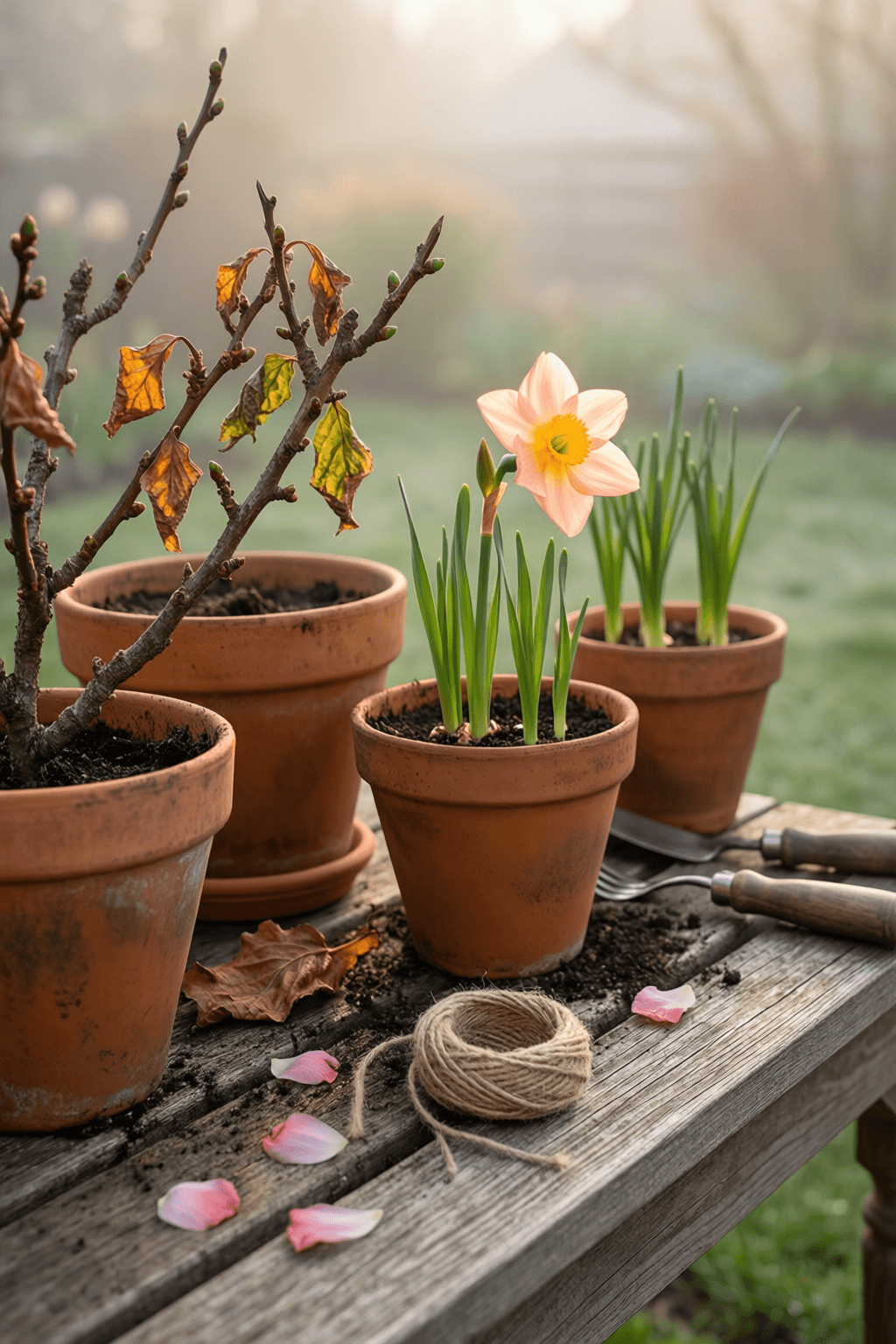
A garden is always a series of losses set against a few triumphs, like life itself. — May Sarton
—What lingers after this line?
A Garden as a Mirror of Living
May Sarton’s reflection turns the garden into more than a cultivated space; it becomes a compressed image of human life. At first glance, the statement seems gently pessimistic, yet its deeper balance is what gives it force: losses are many, triumphs are few, and still the whole endeavor remains worthwhile. In that sense, the garden teaches that meaning does not come from constant success, but from continuing to tend what is fragile. From this starting point, Sarton aligns ordinary gardening with the broader human condition. Plants fail, seasons shift, pests arrive, and weather undoes careful plans. Likewise, lives are shaped by disappointments, interruptions, and endings. Yet just as one blossom can redeem weeks of labor, one moment of beauty or fulfillment can illuminate much of what came before.
Why Loss Is Built Into Growth
To understand the quote fully, it helps to see that loss in a garden is not merely accidental; it is structural. Seeds do not all germinate, blooms fade almost as soon as they peak, and pruning itself requires cutting away living growth so that something stronger may emerge. Therefore, the gardener learns early that care does not guarantee preservation. This insight flows naturally into Sarton’s comparison with life itself. Human attachments, ambitions, and even identities are subject to revision and disappearance. As in gardening, maturity often means accepting that transience is not a failure of effort but a condition of existence. The Japanese aesthetic of mono no aware, articulated in classical literature like Murasaki Shikibu’s The Tale of Genji (11th century), similarly finds poignancy in the passing nature of beautiful things.
The Power of Small Triumphs
Against this backdrop of inevitable diminishment, Sarton places “a few triumphs,” and the phrasing matters. She does not promise abundance; instead, she suggests that rare successes carry unusual weight. A single healthy rose, a tree that survives winter, or tomatoes finally ripening after repeated setbacks can feel disproportionately joyful because they arise from uncertainty. In turn, this resembles life’s emotional economy. Major victories are uncommon, but their scarcity is precisely what makes them memorable. Vita Sackville-West, writing in The Observer about her garden at Sissinghurst in the 20th century, often conveyed how one successful planting could justify seasons of trial. So too in human experience, a friendship sustained, a work completed, or a hardship endured can stand out all the more vividly against repeated disappointments.
Patience as a Form of Wisdom
Because gardens unfold slowly, they train the mind in patience, and this is where Sarton’s comparison grows especially subtle. The gardener cannot command immediate results; instead, one must wait, observe, adjust, and begin again. Consequently, gardening becomes a discipline of humility, reminding us that effort matters even when outcomes remain uncertain. This patience translates directly into a philosophy of living. Rather than expecting uninterrupted progress, Sarton invites us to value persistence through cycles of failure and renewal. Her thought echoes Voltaire’s Candide (1759), which ends with the famous injunction to “cultivate our garden,” a phrase often read as a call to steady, grounded labor in an imperfect world. The triumph is not control over life, but faithful participation in it.
Beauty Made Sharper by Impermanence
Finally, the quote suggests that beauty is intensified, not diminished, by its vulnerability. A garden would mean less if nothing in it could be lost; permanence would flatten surprise and mute gratitude. Since blossoms drop, leaves wither, and carefully tended beds can be undone, each success appears more vivid. Loss, then, is not merely the opposite of triumph but the condition that gives triumph emotional depth. Seen this way, Sarton offers neither resignation nor sentimentality. Instead, she presents a mature gratitude—one that acknowledges sorrow without surrendering to it. Life, like a garden, asks us to continue planting despite what will fail. And when something does flourish, however briefly, we recognize it for what it is: not a denial of loss, but a luminous answer to it.
One-minute reflection
What feeling does this quote bring up for you?
Related Quotes
6 selectedEverything that slows us down and forces patience, everything that sets us back into the slow circles of nature, is a help. Gardening is an instrument of grace. — May Sarton
May Sarton
May Sarton’s quote begins with a quiet reversal of modern values: what slows us down is not necessarily an obstacle, but often a gift. In a culture that prizes speed, efficiency, and constant motion, she suggests that de...
Read full interpretation →We are gardeners of our own resilience, tending to the soil of our minds with the quiet, persistent care that growth requires. — Robin Wall Kimmerer
Robin Wall Kimmerer
Robin Wall Kimmerer’s image begins by turning resilience into something living rather than fixed. Instead of portraying strength as hard armor, she imagines it as a garden that must be tended, suggesting that the mind is...
Read full interpretation →The glory of gardening: hands in the dirt, head in the sun, heart with nature. — Alfred Austin
Alfred Austin
Alfred Austin’s line condenses the appeal of gardening into one vivid scene: the body grounded in soil, the mind lifted by sunlight, and the emotions attuned to the natural world. At once physical and poetic, the quote s...
Read full interpretation →Just because your light flickers does not mean it is about to go out. — Yohancé Salimu
Yohancé Salimu
At first glance, Yohancé Salimu’s line separates appearance from reality. A flicker suggests instability, fatigue, or interruption, yet it does not automatically signal extinction.
Read full interpretation →When something in your life dies—whether it be a job, a hobby, or a dream—I encourage you not to focus on what could have been but instead to look for the new life and the new opportunities that result. — Ryan Hall
Ryan Hall
Ryan Hall frames loss as a kind of death, and that metaphor immediately broadens the quote beyond grief in the literal sense. A job can end, a cherished hobby can fade, and a long-held dream can collapse; yet in each cas...
Read full interpretation →Dreams are made of sturdy stuff. — William Carlos Williams
William Carlos Williams
At first glance, William Carlos Williams’s line reverses a familiar assumption: dreams are often treated as airy, fleeting, and insubstantial, yet he insists they are made of “sturdy stuff.” In that compact phrase, he gi...
Read full interpretation →More From Author
More from May Sarton →The most valuable thing we can do for the psyche, occasionally, is to let it rest, wander, live in the changing light of a room, not try to be or do anything whatever. — May Sarton
At first glance, May Sarton’s reflection seems almost subversive in a culture that equates worth with productivity. Yet her point is gentle rather than defiant: the psyche, like the body, needs intervals of stillness.
Read full interpretation →Everything that slows us down and forces patience, everything that sets us back into the slow circles of nature, is a help. Gardening is an instrument of grace. — May Sarton
May Sarton’s quote begins with a quiet reversal of modern values: what slows us down is not necessarily an obstacle, but often a gift. In a culture that prizes speed, efficiency, and constant motion, she suggests that de...
Read full interpretation →Solitude is the salt of personhood. It brings out the authentic flavor of every experience. — May Sarton
May Sarton’s metaphor begins with a domestic certainty: salt doesn’t replace food; it reveals what’s already there. In the same way, solitude is not presented as an escape from life but as a condition that clarifies it,...
Read full interpretation →Loneliness is the poverty of self; solitude is the richness of self. — May Sarton
May Sarton’s line turns two often-confused states into opposites: loneliness as lack, solitude as abundance. Although both may look like being “alone,” she suggests the inner experience is what matters—whether the self f...
Read full interpretation →