
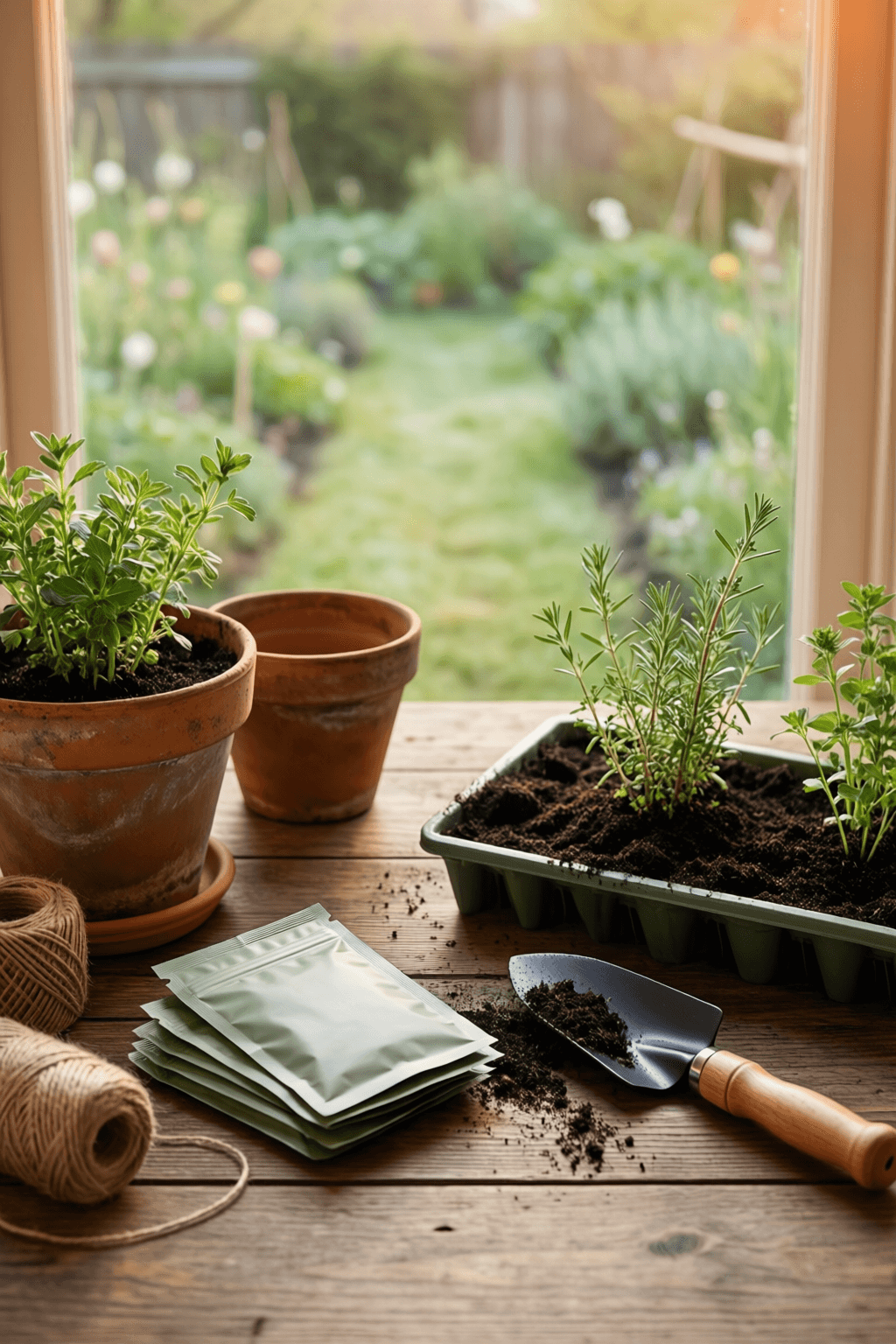
Everything that slows us down and forces patience, everything that sets us back into the slow circles of nature, is a help. Gardening is an instrument of grace. — May Sarton
—What lingers after this line?
The Wisdom of Slowing Down
May Sarton’s quote begins with a quiet reversal of modern values: what slows us down is not necessarily an obstacle, but often a gift. In a culture that prizes speed, efficiency, and constant motion, she suggests that delay and patience can restore something essential in us. Rather than seeing interruption as failure, Sarton invites us to recognize it as a return to a more humane rhythm. From this opening idea, her mention of the “slow circles of nature” becomes especially important. Seasons do not hurry, seeds do not obey deadlines, and growth rarely happens on command. By entering that tempo, we are gently taught to live with limits, waiting, and renewal.
Patience Learned from the Earth
Gardening, in Sarton’s view, is not simply a hobby but a discipline of patience. A gardener can prepare soil, water faithfully, and protect tender shoots, yet cannot force germination or bloom. In that way, the garden becomes a living lesson in cooperation rather than control. Consequently, the act of tending plants reshapes the person doing the tending. The delayed reward of a sprout or blossom trains attention and humility, reminding us that worthwhile things often unfold gradually. Sarton’s insight echoes older agrarian wisdom and even the cadence of Ecclesiastes 3, where every purpose has its season.
Returning to Nature’s Cycles
As the quote develops, Sarton connects patience with being “set back into the slow circles of nature.” That phrase suggests not regression, but recovery. Human beings easily drift into artificial rhythms of clocks, screens, and schedules; gardening returns us to dawn and dusk, rain and drought, decay and rebirth. This return can feel almost corrective. Henry David Thoreau’s Walden (1854) similarly presents nature as a teacher that strips life down to essentials. In a garden, one witnesses compost becoming fertility and winter yielding to spring, and these recurring patterns quietly restore perspective about one’s own setbacks and hopes.
Grace in Ordinary Labor
Sarton’s final claim, “Gardening is an instrument of grace,” gives the whole quotation its spiritual depth. Grace here need not mean only formal religion; it can also mean an unearned inner softening, a moment in which life feels steadier, kinder, and more meaningful. The garden becomes an instrument because it mediates that experience through ordinary, repetitive labor. In this sense, pulling weeds or watering beds can resemble a contemplative practice. Like the monastic tradition of ora et labora, or “pray and work,” manual care opens space for reflection. What appears outwardly simple becomes inwardly transformative, as the gardener receives calm, acceptance, and gratitude almost by surprise.
Resistance to a Culture of Hurry
Seen more broadly, Sarton’s words also challenge the ideology of relentless productivity. If everything that forces patience can help us, then not every delay should be conquered. Some forms of slowness protect depth, attention, and even sanity in ways acceleration cannot. Therefore, gardening stands as a gentle form of resistance. It values nurture over output and process over instant results. Much like the “slow movement” that emerged in response to industrial haste in the late twentieth century, Sarton’s vision suggests that a slower practice can recover a fuller life—one measured not only by achievement, but by presence.
A Model for Living More Fully
Ultimately, the quote reaches beyond gardening itself. The garden becomes a metaphor for how to inhabit time: patiently, seasonally, and with trust in gradual change. It teaches that setbacks may return us to what matters, and that progress is not always linear. For that reason, Sarton’s insight continues to resonate. Anyone who has watched a plant revive after neglect or waited weeks for the first green shoot knows the quiet hope built into the process. Gardening offers more than flowers or vegetables; it offers a way of being in the world that is slower, more attentive, and, in Sarton’s memorable word, graced.
One-minute reflection
What feeling does this quote bring up for you?
Related Quotes
6 selectedA garden is always a series of losses set against a few triumphs, like life itself. — May Sarton
May Sarton
May Sarton’s reflection turns the garden into more than a cultivated space; it becomes a compressed image of human life. At first glance, the statement seems gently pessimistic, yet its deeper balance is what gives it fo...
Read full interpretation →A garden is a grand teacher. It teaches patience and careful watchfulness; it teaches industry and thrift; above all it teaches entire trust. — Gertrude Jekyll
Gertrude Jekyll
Gertrude Jekyll presents the garden not merely as a decorative space but as a living instructor. From the opening phrase, she elevates cultivation into education, suggesting that soil, weather, and seasons quietly shape...
Read full interpretation →Gardening is the slowest of the performing arts. — Mac Griswold
Mac Griswold
Mac Griswold’s remark transforms gardening from a practical chore into a form of performance, one staged not on a theater floor but in soil, weather, and seasons. At first glance, the comparison seems surprising; yet the...
Read full interpretation →Patience is not passive waiting. Patience is active acceptance of the process required to attain your goals and dreams. — Ray Davis
Ray Davis
Ray Davis’s words begin by correcting a common misunderstanding: patience is not the same as doing nothing. Passive waiting suggests resignation, as if time alone will deliver success.
Read full interpretation →Slow progress today is often stable progress tomorrow. Fast growth collapses easily. Slow growth holds. — Timeless Type
Timeless Type
At first glance, slow progress can feel discouraging, especially in a culture that praises speed, sudden breakthroughs, and visible success. Yet the quote reminds us that what seems unimpressive today may become the foun...
Read full interpretation →Sometimes you have to slow down to go fast. — Jeff Olson
Jeff Olson
Jeff Olson’s line begins with a practical paradox: speed is not always created by rushing. Sometimes the quickest path forward requires pausing long enough to see the road clearly, correct mistakes early, and choose acti...
Read full interpretation →More From Author
More from May Sarton →The most valuable thing we can do for the psyche, occasionally, is to let it rest, wander, live in the changing light of a room, not try to be or do anything whatever. — May Sarton
At first glance, May Sarton’s reflection seems almost subversive in a culture that equates worth with productivity. Yet her point is gentle rather than defiant: the psyche, like the body, needs intervals of stillness.
Read full interpretation →A garden is always a series of losses set against a few triumphs, like life itself. — May Sarton
May Sarton’s reflection turns the garden into more than a cultivated space; it becomes a compressed image of human life. At first glance, the statement seems gently pessimistic, yet its deeper balance is what gives it fo...
Read full interpretation →Solitude is the salt of personhood. It brings out the authentic flavor of every experience. — May Sarton
May Sarton’s metaphor begins with a domestic certainty: salt doesn’t replace food; it reveals what’s already there. In the same way, solitude is not presented as an escape from life but as a condition that clarifies it,...
Read full interpretation →Loneliness is the poverty of self; solitude is the richness of self. — May Sarton
May Sarton’s line turns two often-confused states into opposites: loneliness as lack, solitude as abundance. Although both may look like being “alone,” she suggests the inner experience is what matters—whether the self f...
Read full interpretation →