
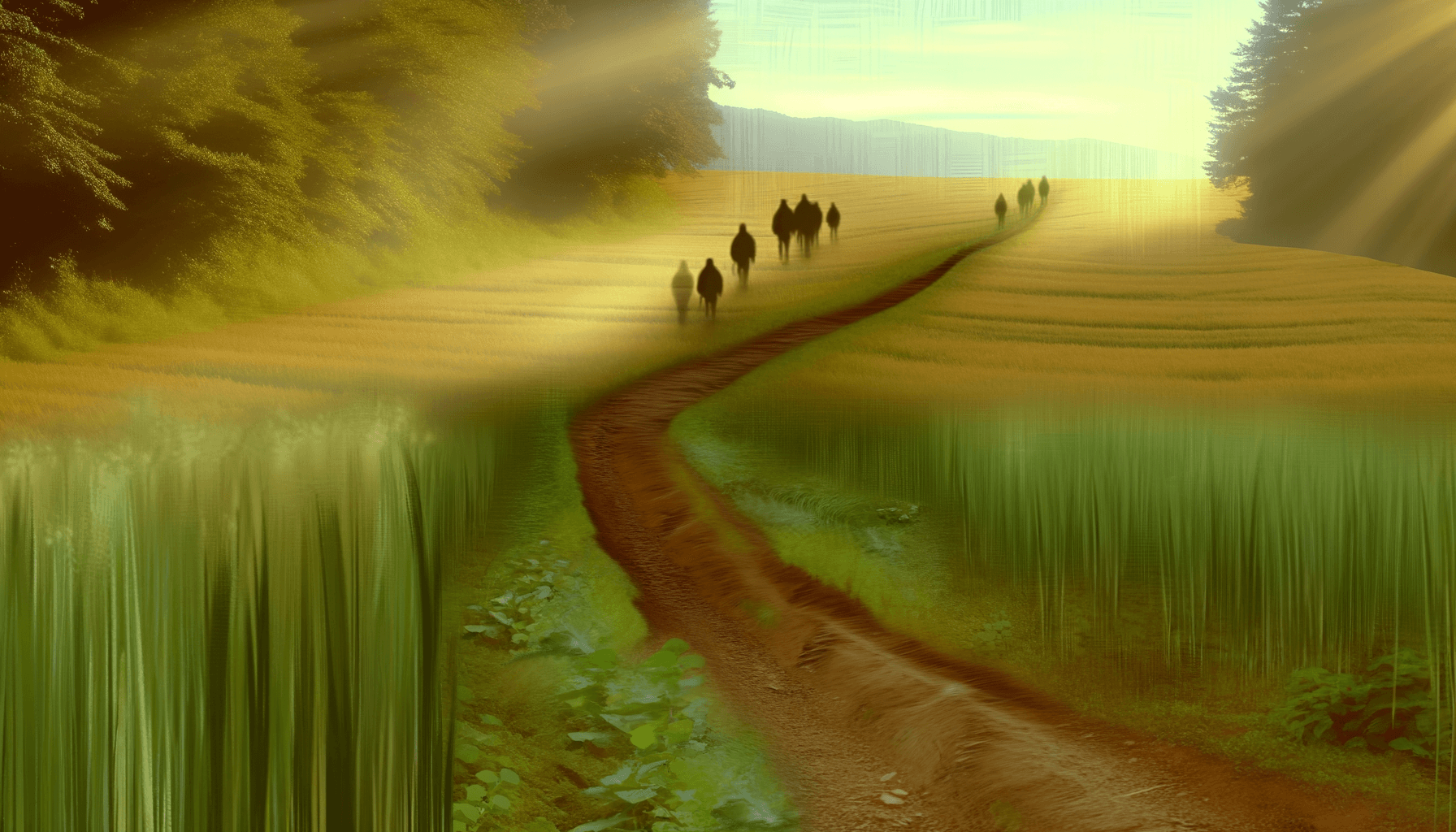
Hope is like a road in the country; there was never a road, but when many people walk on it, the road comes into existence. — Lin Yutang
—What lingers after this line?
The Power of Collective Belief
This quote suggests that hope is created through collective belief and persistence. Just as a road forms when many people walk the same path, hope strengthens when individuals unite in their vision for a better future.
Hope as a Self-Created Path
Lin Yutang implies that hope does not exist inherently; it is built by continuous effort and perseverance. When people believe in something strongly enough and take action, they pave the way for possibilities that did not exist before.
The Role of Human Effort
The metaphor of a road being carved by footsteps signifies that hope requires action. It is not a passive emotion but something that emerges through effort, determination, and repetition.
Optimism in Difficult Situations
This quote encourages people to maintain hope even when things seem uncertain or nonexistent. The road may not be visible at first, but with persistence, solutions and new possibilities will emerge.
Lin Yutang’s Philosophical Perspective
Lin Yutang, a Chinese writer and philosopher, often explored themes of wisdom, nature, and human resilience. His perspective reflects an appreciation for both Eastern and Western philosophies, emphasizing the importance of human initiative in shaping one's destiny.
One-minute reflection
What feeling does this quote bring up for you?
Related Quotes
6 selectedHope is the thing with feathers that perches in the soul - and sings the tunes without the words - and never stops - at all. - Emily Dickinson
Emily Dickinson
Emily Dickinson uses the metaphor of a bird to represent hope. The 'thing with feathers' suggests that hope is light, delicate, but also persistent.
Read full interpretation →Hope is the thing with feathers that perches in the soul, and sings the tune without the words, and never stops at all. - Emily Dickinson
Emily Dickinson
Dickinson uses the metaphor of a bird with feathers to symbolize hope. Like a bird, hope can lift us and help us soar above challenges and difficulties.
Read full interpretation →In the darkness, there is always a ray of light; that is hope.
Unknown
This quote highlights the idea that no matter how challenging or dire a situation may seem, there is always a glimmer of hope. Hope acts as a guiding light during dark times.
Read full interpretation →Hope is the thing with feathers that perches in the soul, and sings the tune without the words, and never stops at all. - Emily Dickinson
Emily Dickinson
Emily Dickinson personifies hope as a bird with feathers that resides within the soul. This metaphor captures the delicate yet persistent nature of hope.
Read full interpretation →Just because your light flickers does not mean it is about to go out. — Yohancé Salimu
Yohancé Salimu
At first glance, Yohancé Salimu’s line separates appearance from reality. A flicker suggests instability, fatigue, or interruption, yet it does not automatically signal extinction.
Read full interpretation →Today's tears water tomorrow's gardens. — Matshona Dhliwayo
Matshona Dhliwayo
At first glance, Matshona Dhliwayo’s line transforms grief into something unexpectedly fertile. Tears, usually seen as signs of pain or loss, become water for a future garden, suggesting that suffering is not merely endu...
Read full interpretation →More From Author
More from Lin Yutang →If you can spend a perfectly useless afternoon in a perfectly useless manner, you have learned how to live. — Lin Yutang
Lin Yutang’s line quietly overturns the modern habit of equating life with productivity. By praising a “perfectly useless afternoon,” he suggests that living well is not measured only by outputs, achievements, or visible...
Read full interpretation →Besides the noble art of getting things done, there is the noble art of leaving things undone. — Lin Yutang
Lin Yutang’s line begins by honoring productivity—the familiar dignity of finishing what we start—yet it immediately widens the moral frame. By calling both doing and not doing “noble,” he suggests that worth is not meas...
Read full interpretation →The wisdom of life consists in the elimination of non-essentials. — Lin Yutang
Lin Yutang frames wisdom as an act of reduction rather than acquisition: life improves not only by adding skills, possessions, or status, but by removing what dilutes attention and meaning. In this view, clarity comes fr...
Read full interpretation →The small man builds cages for everyone he knows; the sage, who is free, sets them all free. — Lin Yutang
Lin Yutang's poignant words encapsulate a timeless struggle: the tendency to restrict not only ourselves, but also those around us. The ‘small man’ here doesn't build physical cages, but rather imposes limitations—expect...
Read full interpretation →