
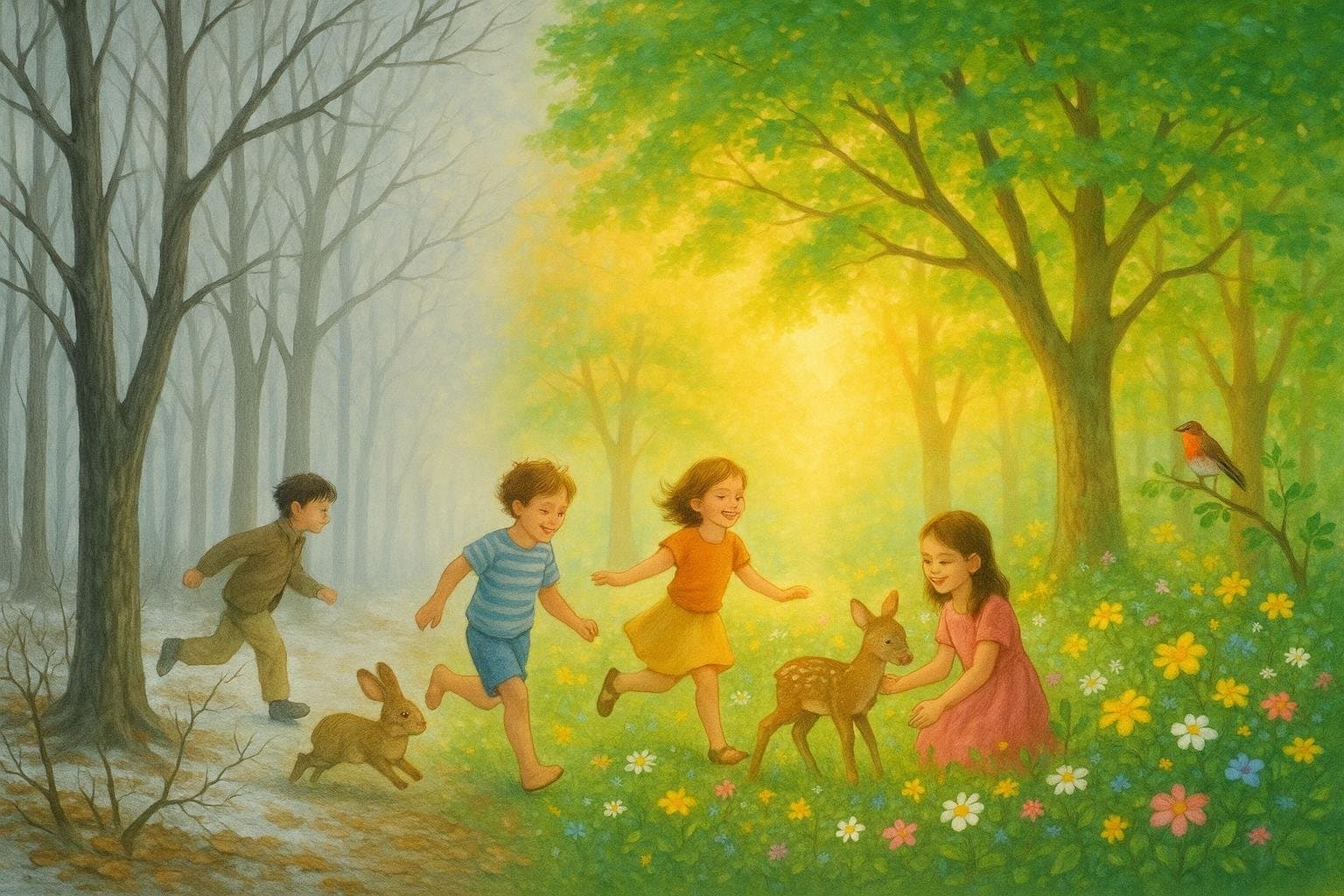
The soul is healed by being with children. — Fyodor Dostoevsky
—What lingers after this line?
Dostoevsky’s Reflection on Innocence
Fyodor Dostoevsky’s words highlight the transformative presence of children in our lives. By suggesting that 'the soul is healed by being with children,' he invites us to consider how innocence and purity provide balm for adult complexities. Dostoevsky’s own novels, such as 'The Brothers Karamazov' (1880), often portray children as embodiments of hope and renewal, offering adults a means to reconnect with unspoiled virtues.
Childhood as a Mirror to Authenticity
Expanding on this, the interaction with children serves as a mirror reflecting our most authentic selves. Children are unguarded, expressing emotions freely and without pretense. This authenticity challenges adults to shed their defenses, encouraging vulnerability and genuine connection. The psychologist Carl Rogers asserted the therapeutic value of congruence—a quality naturally found in children—which fosters healing environments for those willing to engage openly.
Emotional Renewal Through Play and Wonder
Moreover, time spent with children reignites a sense of play and wonder often dulled by routine adult life. Engaging in games or exploring nature alongside children allows adults to experience joy anew, shifting focus from worries to present-moment delights. As Maria Montessori observed, the child’s joyful curiosity and instinct for discovery can inspire adults to reconnect with the world’s intrinsic beauty.
Healing From Cynicism and Disillusionment
By regularly interacting with young minds, even the most world-weary individuals find respite from cynicism. Children’s spontaneous kindness and optimism counteract the skepticism that can accumulate over years of hardship. Dostoevsky himself, having endured much personal suffering, recognized that hope could be restored through encounters with uncorrupted spirits—offering a path from disillusionment to renewed faith in humanity.
A Reciprocal Circle of Growth
Finally, the healing provided by children is reciprocal: while adults nurture and guide the young, they themselves are reminded of empathy, patience, and wonder. Through this exchange, parental or mentoring relationships foster growth on both sides. As the cycle continues, adults pass forward the wisdom and healing gleaned from children, preserving a sense of vitality and spiritual wholeness across generations.
One-minute reflection
What's one small action this suggests?
Related Quotes
6 selectedThe soul knows how to heal; the challenge is to silence the noise. — Unknown
Unknown
The quote begins with a trusting premise: somewhere beneath our confusion, the soul already “knows” how to move toward wholeness. It frames healing less as a foreign technique we must import and more as an innate capacit...
Read full interpretation →The wound is the place where the Light enters you. — Rumi
Rumi
Rumi’s line turns suffering into architecture: a “wound” becomes an opening rather than merely damage, and “Light” becomes something that can enter and transform. Instead of treating pain as evidence of failure, he frame...
Read full interpretation →Be a lamp, or a lifeboat, or a ladder. Help someone's soul heal. — Rumi
Rumi
This quote encourages individuals to act as a source of guidance for others, much like a lamp that illuminates a dark path. Offering clarity and wisdom can help another person navigate through difficult times.
Read full interpretation →The wound is the place where the light enters you. — Jalaluddin Rumi
Jalaluddin Rumi
This quote suggests that personal pain or suffering can be a source of growth and healing.
Read full interpretation →The soul is healed by being with children. — Fyodor Dostoevsky
Fyodor Dostoevsky
Dostoevsky’s assertion serves as a poignant reminder of the redemptive impact children can have on adults. In his works—such as 'The Brothers Karamazov' (1880)—children often symbolize purity and hope amidst moral turmoi...
Read full interpretation →If you want to overcome the whole world, overcome yourself. — Fyodor Dostoevsky
Fyodor Dostoevsky
Dostoevsky’s line reframes ambition by shifting the arena of struggle from the public world to the private self. Instead of measuring strength by dominance over others, he implies that the most consequential victories ha...
Read full interpretation →More From Author
More from Fyodor Dostoevsky →If you want to overcome the whole world, overcome yourself. — Fyodor Dostoevsky
Dostoevsky’s line reframes ambition by shifting the arena of struggle from the public world to the private self. Instead of measuring strength by dominance over others, he implies that the most consequential victories ha...
Read full interpretation →You will burn and you will burn out; you will be healed and come back again. — Fyodor Dostoevsky
Dostoevsky’s line treats suffering not as a single dramatic episode but as a recurring rhythm: intensity, collapse, recovery, and return. Instead of promising a smooth ascent toward improvement, he describes a life that...
Read full interpretation →You will burn and you will burn out; you will be healed and come back again. — Fyodor Dostoevsky
Dostoevsky’s line frames suffering as rhythmic rather than final: first the blaze of effort or emotion, then the collapse, then the slow work of recovery, and finally the return. Instead of treating burnout as a personal...
Read full interpretation →You will burn and you will burn out; you will be healed and come back again. — Fyodor Dostoevsky
Dostoevsky’s line frames suffering as rhythmic: first the blaze of intensity, then the inevitability of burnout, and finally the possibility of renewal. Instead of treating exhaustion as a final verdict, he suggests it i...
Read full interpretation →