
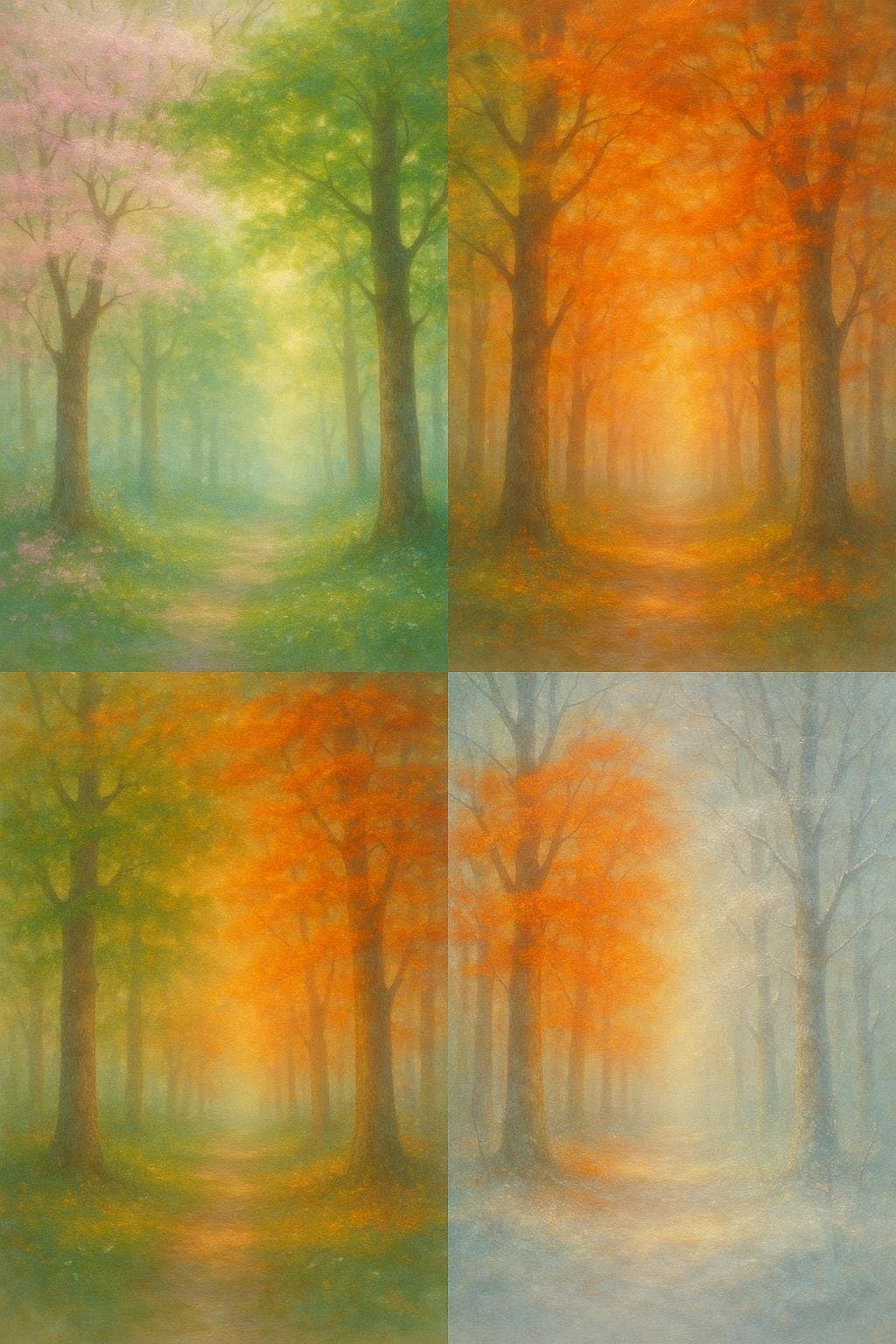
What matters is not what happens to you but what you remember and how you remember it. — Gabriel García Márquez
—What lingers after this line?
The Subjectivity of Experience
Gabriel García Márquez’s insight invites us to reconsider the importance of external events versus our internal interpretations. While life seems defined by what happens to us, Márquez suggests that the true essence of our experience is filtered through memory. Our recollections are not perfect recordings; rather, they are shaped by emotion, perspective, and time, infusing events with unique personal meanings.
Memory as a Creative Process
Transitioning from individual perception, memory becomes less like an archive and more like an act of storytelling. In Márquez’s own novels, such as ‘One Hundred Years of Solitude’ (1967), characters remember shared histories differently, weaving myth and reality together. This literary device reflects how real people edit, embellish, or even repress moments, crafting their narratives and identities as they recall the past.
The Impact of Remembrance on Identity
As we move from the act of remembering to its effects, it becomes clear that our sense of self is constructed from the stories we tell ourselves about the past. Psychologists have long noted, as in the work of Daniel Kahneman, that the ‘remembering self’—how we recall and interpret our experiences—often overrides the ‘experiencing self.’ Thus, our memories, not the objective truth of events, shape our personalities and core beliefs.
Memory and Collective History
Beyond the personal, societies too rely on selective remembrance in forming collective identity. National histories, for example, are crafted by emphasizing or downplaying certain events in the public conscience. Márquez, whose journalism and fiction both grapple with the collective memory of Latin America, illustrates how nations and cultures are built not just on what happens, but on how those happenings are retold across generations.
Transforming the Future Through Remembrance
Ultimately, understanding the power of memory gives individuals and communities agency over their futures. If what matters most is how we remember, then reframing painful or joyful events can transform present attitudes and decisions. Márquez’s words suggest a hopeful possibility: by actively shaping our memories, we also shape the realities we will live tomorrow.
One-minute reflection
Why might this line matter today, not tomorrow?
Related Quotes
6 selectedWeave the small miracles you witness into the story you live. — Gabriel García Márquez
Gabriel García Márquez
Márquez’s invitation begins with attention: the quiet decision to notice the glint of a puddle after rain, the improbable timing of a helpful call, the child who forgives before an apology arrives. Such moments rarely an...
Read full interpretation →The present changes the past. Looking back you do not find what you left behind. — Kiran Desai
Kiran Desai
At first glance, Desai’s line seems paradoxical, yet it captures a basic truth about human memory: the past is not stored inside us like a sealed archive. Instead, each act of remembering rebuilds events through the lens...
Read full interpretation →The most important milestones are the ones that come to the door of memory unannounced, stray dogs that amble in, sniff around a bit and simply never leave. — Susan B. Anthony
Susan B. Anthony
Susan B. Anthony reframes the idea of a milestone by shifting attention away from public achievements and toward the private moments that linger unexpectedly.
Read full interpretation →If you want to test your memory, try to recall what you were worrying about one year ago. — E. Joseph Cossman
E. Joseph Cossman
E. Joseph Cossman’s remark begins with an almost playful challenge: if you want to test your memory, try recalling what troubled you a year ago.
Read full interpretation →Gratitude is the memory of the heart. — Jean Baptiste Massieu
Jean Baptiste Massieu
Jean Baptiste Massieu’s line transforms gratitude from a simple polite response into something deeper and more enduring. At once, he suggests that the heart keeps its own kind of record, preserving moments of kindness lo...
Read full interpretation →Your life is not a blank canvas to be styled for an algorithm; it is a narrative that requires the weight of your actual presence. — Sheena Rawla
Sheena Rawla
Rawla’s line opens with a refusal: your life is not “a blank canvas” waiting to be arranged for someone else’s machine logic. The phrase calls out how platforms quietly teach people to treat daily choices—meals, outfits,...
Read full interpretation →More From Author
More from Gabriel García Márquez →No one should fear shadows. It simply means there's a light shining somewhere nearby. — Gabriel García Márquez
Gabriel García Márquez turns a common source of unease into a quiet reassurance: shadows are not threats in themselves, but evidence. When we fear shadows, we often respond to what is vague, enlarged, or half-seen—our mi...
Read full interpretation →Open one window of wonder each day and the light of possibility will rush in. — Gabriel García Márquez
García Márquez frames wonder not as a rare accident, but as something you can choose—one “window” at a time. The image suggests a small, deliberate action: a pause, a question, a moment of attention.
Read full interpretation →Persist like a river: find the cracks and flow through them. — Gabriel García Márquez
García Márquez’s image begins with something ordinary but unstoppable: a river. It doesn’t “win” by force or by arguing with the landscape; it keeps moving, day after day, and that continued motion becomes its power.
Read full interpretation →Imagine boldly, then write the first line with your feet. — Gabriel García Márquez
Gabriel García Márquez’s line, “Imagine boldly, then write the first line with your feet,” begins with an impossibility. No one literally writes with their feet, yet the image lingers because it challenges our sense of w...
Read full interpretation →