
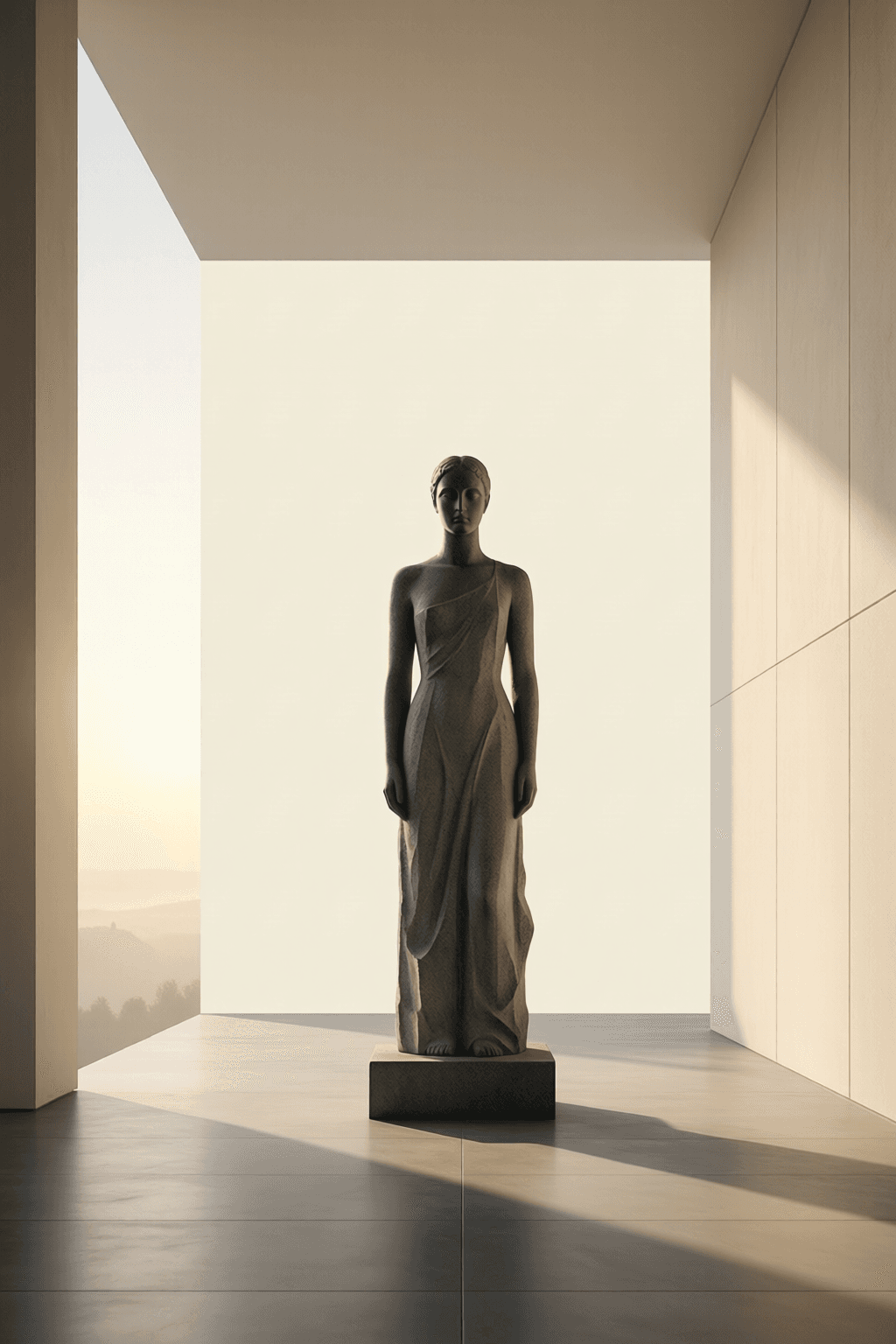
Do not mistake my calm for passivity. True power is often the most still thing in the room. — Seneca
—What lingers after this line?
Calm Is Not Surrender
At first glance, Seneca’s statement separates outward quiet from inward weakness. A calm person may appear passive to those who equate strength with volume, speed, or visible force, yet the quote insists that composure can conceal immense resolve. In this sense, stillness is not retreat but control: the ability to remain centered when others are pulled about by fear, anger, or vanity. This distinction matters because many cultures reward dramatic displays of dominance. Seneca, however, redirects attention from performance to mastery. What looks inactive from the outside may actually be disciplined restraint, a deliberate refusal to waste energy on reaction.
The Stoic Discipline of Self-Mastery
Seen through Stoic philosophy, this calm becomes a sign of power over the self, which Seneca regarded as the hardest victory of all. In his Letters to Lucilius (c. AD 65), he repeatedly argues that the wise person is not ruled by impulse or public opinion. Therefore, stillness in a tense moment is evidence that reason, not emotion, holds the reins. From there, the quote broadens into a moral ideal. True power is not merely the ability to compel others, but the capacity to govern one’s own mind. The still person in the room may be the only one who is genuinely free.
Why Noise Often Masks Insecurity
By contrast, loudness can function as compensation rather than proof of strength. People who interrupt, posture, or escalate conflict often create the impression of authority, yet such behavior may reveal fragility underneath. Seneca’s insight suggests that the need to constantly display power can expose uncertainty rather than confidence. This pattern appears throughout history and literature. In Shakespeare’s King Lear (1606), rash declarations and emotional excess repeatedly undermine judgment, while moments of reflection arrive too late. Thus, stillness can be more formidable than spectacle because it does not depend on convincing an audience.
Stillness in Leadership and Conflict
As the idea moves from philosophy into daily life, its practical value becomes clearer in leadership. In a crisis, the person who speaks least but sees most often shapes the outcome. Military historian and theorist Sun Tzu’s The Art of War (traditionally dated to the 5th century BC) praises discipline, patience, and measured response over impulsive aggression, echoing Seneca’s preference for contained strength. Consider a manager facing panic in a failing project: while others rush to assign blame, the calm leader gathers facts, steadies the group, and acts precisely. That kind of stillness does not weaken authority; rather, it makes authority trustworthy.
The Psychological Force of Composure
Moreover, modern psychology helps explain why calm can feel so powerful. Emotional regulation research, including James Gross’s work on affect regulation (1998 onward), shows that the ability to manage emotional responses improves judgment, communication, and resilience under stress. In other words, composure is not an ornamental trait but a functional advantage. Because of this, stillness changes the social atmosphere around it. A regulated person can interrupt cycles of panic or aggression simply by refusing to amplify them. What Seneca expresses poetically, psychology reinforces empirically: steadiness exerts influence precisely because it remains unshaken.
A Quiet Standard for Real Strength
Ultimately, the quote offers a corrective to shallow ideas of power. If strength is measured only by visible assertion, then calm people will always be underestimated. Yet Seneca invites us to look again and recognize that true force may be silent, patient, and nearly immovable—like a deep current beneath a smooth surface. Accordingly, the line becomes both a warning and a guide. Do not misread quietness as incapacity, whether in others or in yourself. Often the most powerful presence is the one that does not need to announce itself.
One-minute reflection
Where does this idea show up in your life right now?
Related Quotes
6 selectedQuiet people are not empty; they are contained. Their power does not seek attention—it waits. — Seneca
Seneca
At first glance, Seneca’s line overturns a common social assumption: that quietness signals absence, weakness, or lack of thought. Instead, he frames silence as containment, suggesting that some people hold their ideas,...
Read full interpretation →The strongest person controls the self, not others. — Seneca
Seneca
Seneca’s statement turns the usual idea of power inside out. Instead of praising the person who dominates rivals, commands attention, or bends others to their will, he locates real strength in self-command.
Read full interpretation →Strength is quiet; only insecurity shouts. — Seneca
Seneca
At its core, Seneca’s line draws a sharp contrast between genuine power and performative force. Real strength does not need applause, intimidation, or constant display; instead, it rests securely in itself.
Read full interpretation →Resilience grows in the quiet choosing to go on. — Seneca
Seneca
Seneca’s line shifts resilience away from grand heroics and toward an inward discipline: the private decision to continue. In Stoic philosophy, strength is not measured by how little one is hurt but by how steadily one r...
Read full interpretation →Stillness is the birthplace of strength. — Epictetus
Epictetus
At first glance, Epictetus turns a common assumption upside down: strength does not begin in noise, force, or visible struggle, but in stillness. The Stoic philosopher suggests that real power is born when the mind becom...
Read full interpretation →Real strength is not the absence of struggle, but the presence of a calm, steady mind. — Marcus Aurelius
Marcus Aurelius
At first glance, the quote overturns a common assumption: that strength means never suffering, wavering, or feeling pressure. Instead, it proposes a deeper standard.
Read full interpretation →More From Author
More from Seneca →The heart is great which shows moderation in the midst of prosperity. — Seneca
Seneca’s observation begins with a quiet but demanding standard: true greatness is not proven by success itself, but by restraint when success arrives. Prosperity can enlarge appetites, inflate pride, and make excess app...
Read full interpretation →Whatever you are doing, do it with a sense of purpose, not merely to pass the time. — Seneca
Seneca’s counsel begins with a simple but demanding idea: life should not be treated as something to be spent carelessly. For the Stoics, time was not a disposable background to action but the very material of character.
Read full interpretation →The strongest person controls the self, not others. — Seneca
Seneca’s statement turns the usual idea of power inside out. Instead of praising the person who dominates rivals, commands attention, or bends others to their will, he locates real strength in self-command.
Read full interpretation →Quiet people are not empty; they are contained. Their power does not seek attention—it waits. — Seneca
At first glance, Seneca’s line overturns a common social assumption: that quietness signals absence, weakness, or lack of thought. Instead, he frames silence as containment, suggesting that some people hold their ideas,...
Read full interpretation →