
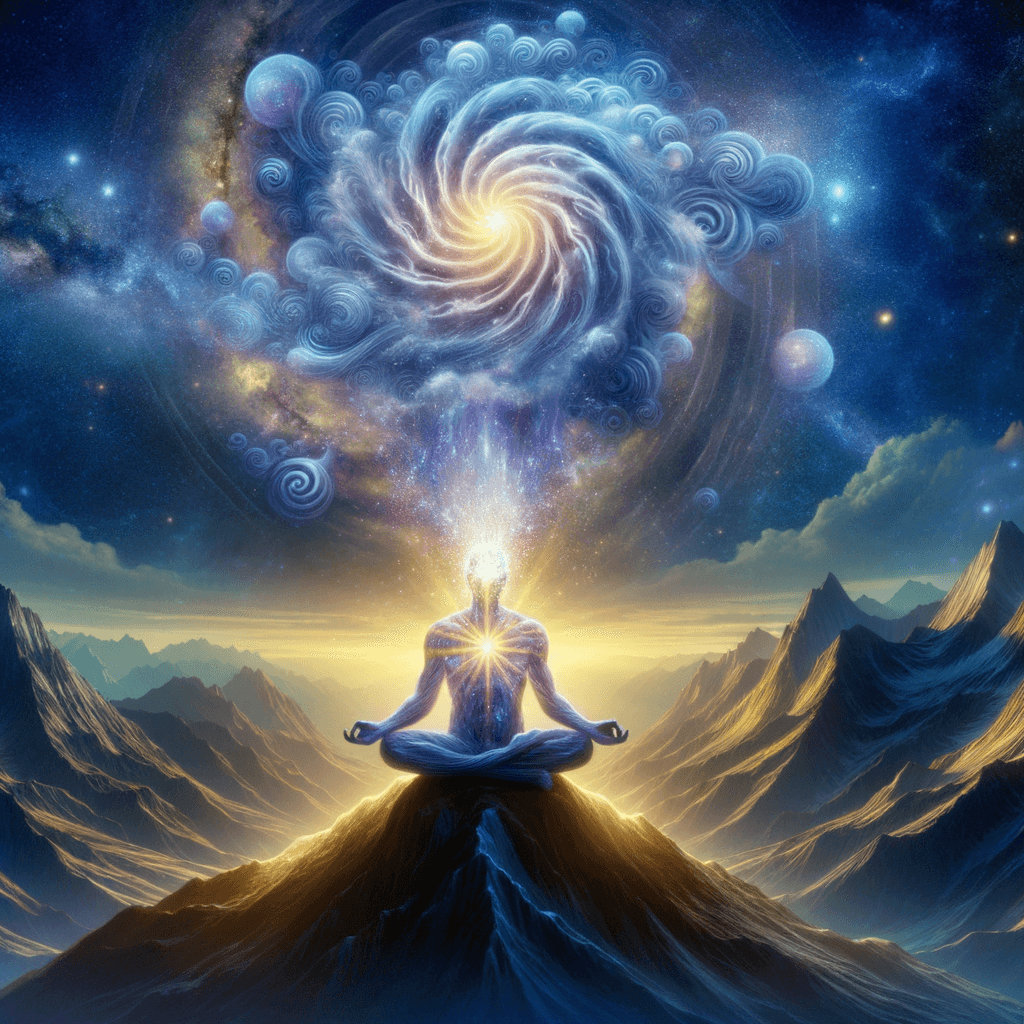
The only freedom is freedom from the mind. — Muktananda
—What lingers after this line?
Freedom from Mental Constraints
This quote implies that true freedom is achieved by freeing oneself from the limitations and constant chatter of the mind, which often creates fear, doubt, and attachment.
Inner Peace and Liberation
It highlights the concept that liberation and inner peace come from transcending mental turmoil. When one detaches from their mind's desires and judgments, they experience profound tranquility.
Spiritual Enlightenment
Muktananda, a spiritual teacher, emphasizes that detaching from the mind is a pathway to spiritual enlightenment. By overcoming the ego and its illusions, one can connect with the divine or the true self.
Mind as a Source of Bondage
The mind is often seen as the source of mental bondage because it clings to past experiences, future anxieties, and illusions of control. Overcoming this bondage allows one to live in the present moment fully.
Role of Meditation and Mindfulness
Practices like meditation and mindfulness are tools to achieve freedom from the mind, helping individuals observe thoughts without being controlled by them and fostering a deeper connection with their true essence.
Philosophical Roots
Muktananda's teachings are rooted in yogic and Vedic philosophies, which often view the mind as an obstacle to self-realization and stress the importance of rising above it to attain liberation or 'moksha.'
One-minute reflection
What does this quote ask you to notice today?
Related Quotes
6 selectedTrue freedom is being without anxiety about imperfection. — Seng-tsan
tsan
Seng-tsan’s line shifts freedom away from external conditions and toward an internal posture: a mind no longer bullied by the fear of being flawed. In this framing, you can have choices, status, or even safety and still...
Read full interpretation →Freedom is not given to us by anyone; we have to cultivate it within ourselves. — Thich Nhat Hanh
Thich Nhat Hanh
Thich Nhat Hanh reframes freedom as something more intimate than laws, leaders, or circumstances. Rather than waiting for a benefactor to grant it, he points to a lived capacity—an inner steadiness that can be developed...
Read full interpretation →Flow with whatever may happen and let your mind be free. — Zhuangzi
Zhuangzi
Zhuangzi’s line reads like a gentle instruction: stop tightening your grip on how things should go, and meet life as it actually arrives. In Daoist thought, insisting on control often creates the very tension we hope to...
Read full interpretation →Sketch your days with daring strokes; intimacy with yourself paints freedom. — Anaïs Nin
Anaïs Nin
Anaïs Nin frames daily living as an artistic act: to “sketch your days” suggests that life is not merely endured or recorded, but deliberately composed. The phrase “daring strokes” implies risk—choices made without waiti...
Read full interpretation →Even in the narrowest room, choose freedom by how you meet the day — Viktor E. Frankl
Viktor E. Frankl
Frankl’s line begins with a stark image: the “narrowest room,” a place of constraint where choice seems to shrink to nothing. Yet he immediately pivots to a counterclaim—that freedom can still be chosen—not by changing t...
Read full interpretation →Between stimulus and response, there is a space. In that space is our power to choose our response. In our response lies our growth and our freedom. — Viktor E. Frankl
Viktor E. Frankl
This quote highlights the critical moment of pause that exists between any given stimulus and our reaction to it. Utilizing this space allows for a mindful and deliberate response.
Read full interpretation →More From Author
More from Muktananda →