
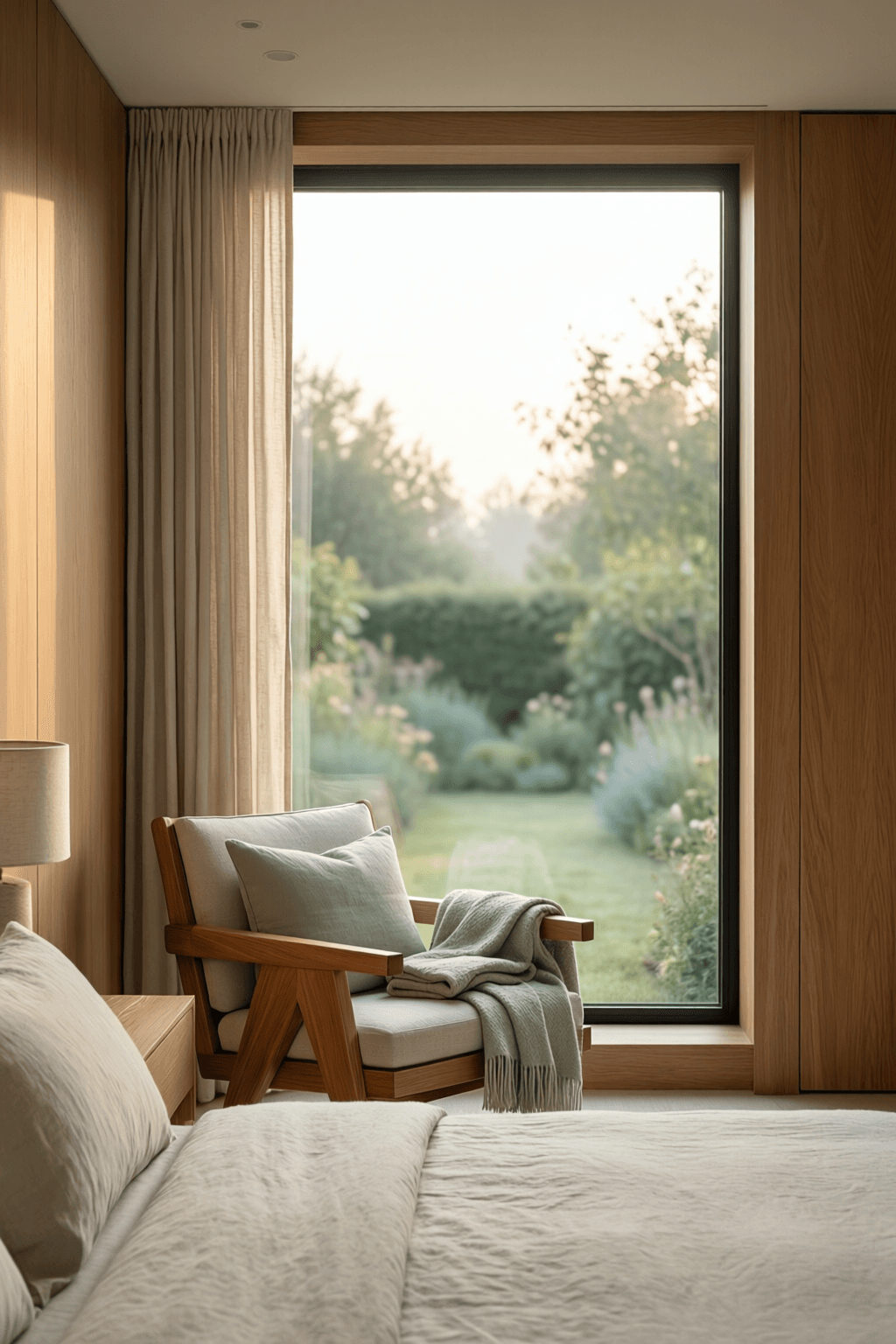
The walls of your home should be a fortress of peace, not a cage of isolation. Claim your sanctuary; it is where your nervous system goes to remember who you are. — Nanea Hoffman
—What lingers after this line?
A House as Emotional Refuge
At its core, Nanea Hoffman’s line reframes home as more than a physical structure. Walls can protect, but they can also confine; the difference lies in whether a home restores the self or slowly disconnects it from the world. By calling it a “fortress of peace,” she suggests that safety is not about withdrawal alone, but about creating a place where calm can take root. From there, the quote moves inward. A true sanctuary is not defined by décor or size, but by the feeling it evokes in the body and mind. In that sense, home becomes the setting where a person can unclench, breathe more deeply, and experience belonging without performance.
The Contrast Between Protection and Isolation
At the same time, Hoffman carefully warns that the same walls meant to shield us can become a “cage of isolation.” This contrast gives the quote its moral and emotional tension: safety is healthy, but seclusion can quietly distort it. A home that offers peace still leaves room for connection, while one shaped by fear may become a place where silence turns heavy rather than healing. This distinction appears often in literature and social thought. Gaston Bachelard’s The Poetics of Space (1958), for instance, treats the home as an intimate site of shelter and imagination, yet Hoffman adds a modern psychological caution: refuge should not cost us our relationship to others or to ourselves.
Claiming Space as an Act of Agency
The phrase “claim your sanctuary” introduces a note of deliberate action. In other words, peace at home is not always accidental; it often must be chosen, protected, and practiced. That might mean setting boundaries, arranging one’s environment with care, or refusing dynamics that make the household feel unsafe. The quote therefore carries a quiet empowerment: sanctuary is something a person can name and defend. Seen this way, the home becomes an extension of personal dignity. Virginia Woolf’s A Room of One’s Own (1929) similarly linked private space to selfhood and creative freedom. Hoffman’s insight broadens that idea, implying that a claimed space does not merely support thought—it supports emotional survival.
The Nervous System and the Sense of Self
Perhaps the most striking part of the quotation is its bodily language: home is where “your nervous system goes to remember who you are.” Here Hoffman speaks in terms that echo modern trauma-informed psychology, which emphasizes how stress and safety are registered physically as much as mentally. Thinkers such as Stephen Porges, through Polyvagal Theory (1994), argue that environments of safety help the body shift out of vigilance and into regulation. Accordingly, the quote suggests that identity is not purely intellectual. We do not only think ourselves into wholeness; often, we feel our way back through rest, predictability, and gentle surroundings. In a regulated space, the self that was scattered by pressure or conflict can begin to gather again.
Peace as a Form of Recognition
Because of this, peace at home is more than comfort—it is recognition. When the nervous system “remembers,” the home becomes a place where a person is met without disguise. The noise of external demands quiets, and what emerges is not a new identity but an older, truer one that had been buried beneath exhaustion, fear, or overstimulation. This idea resonates with memoirs of recovery and return, where healing often begins not with dramatic revelation but with ordinary steadiness: a locked door, a soft chair, a predictable evening. Thus Hoffman’s words honor the humble power of domestic peace. They imply that sanctuary is not escapism; it is the ground from which a person can re-enter life more fully.
A Vision of Home Worth Building
Ultimately, the quotation offers both comfort and challenge. It comforts by insisting that home can be the place where the body softens and the self becomes legible again. Yet it also challenges us to examine whether our living spaces foster restoration or reinforce loneliness, tension, and emotional constriction. In that final sense, Hoffman presents home as a living ethical project. To build a sanctuary is to cultivate peace without cutting off connection, and to protect solitude without surrendering to isolation. When that balance is achieved, the walls of a home do not trap us; they hold us steady enough to remember ourselves.
Recommended Reading
As an Amazon Associate, we earn from qualifying purchases.
One-minute reflection
What's one small action this suggests?
Related Quotes
6 selectedOne's home should be a place where one can be oneself, a sanctuary from the noise of the world. — William Morris
William Morris
William Morris presents home not merely as a physical shelter, but as a moral and emotional refuge. At the heart of the quote lies a simple human need: the desire for one place where performance ends and authenticity beg...
Read full interpretation →Your home should be a sanctuary that nurtures your soul, ignites your creativity, and inspires you to live your best life. — Nate Berkus
Nate Berkus
At first glance, Nate Berkus’s quote elevates the idea of home beyond walls, furniture, and utility. He frames it instead as a sanctuary—a place that actively restores the spirit rather than merely protecting the body.
Read full interpretation →When you can bear your own silence, you are free. — Mooji
Mooji
At first glance, Mooji’s statement appears simple, yet it points to a demanding inner test: can a person remain alone with silence without immediately reaching for distraction? To ‘bear’ one’s own silence suggests more t...
Read full interpretation →Being at ease with not knowing is crucial for answers to come to you. — Eckhart Tolle
Eckhart Tolle
At its core, Eckhart Tolle’s statement reframes uncertainty as a condition for insight rather than a failure of thought. To be at ease with not knowing is not to become passive; instead, it means loosening the mind’s com...
Read full interpretation →Self-mastery begins the moment you decide that your internal peace is more valuable than the external approval you were chasing. — Epictetus
Epictetus
At its core, this saying frames self-mastery as a decisive inner shift. The moment a person values peace of mind over praise, status, or acceptance, power begins to move inward rather than outward.
Read full interpretation →Your soul isn't gone; it's just waiting for you to slow down and find it again. — Sam Keen
Sam Keen
Sam Keen’s line begins by refusing panic: the soul is not destroyed or stolen, only misplaced in the rush of living. That shift matters because it turns a story of permanent loss into one of possible return.
Read full interpretation →More From Author
More from Nanea Hoffman →