
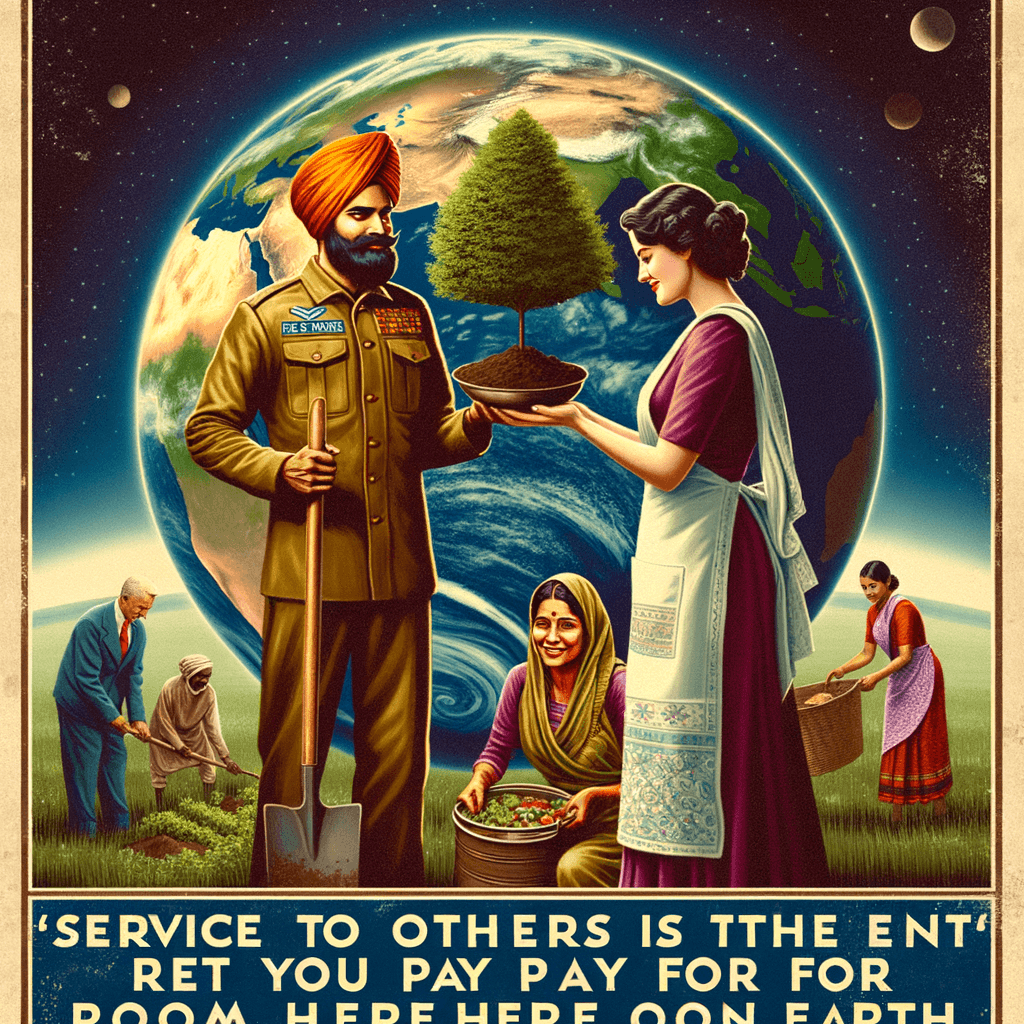
Service to others is the rent you pay for your room here on earth. — Muhammad Ali
—What lingers after this line?
Philosophy of Giving
This quote illustrates the belief that serving others and contributing to society is a fundamental part of our existence. It implies that our lives gain meaning through acts of kindness and service.
Responsibility Towards Community
Ali emphasizes a sense of responsibility towards others. Just as we pay rent for a physical space, we should also feel accountable for the well-being of the community we inhabit.
Interconnectedness of Humanity
The quote reflects the idea that all human beings are interconnected. Our actions, particularly those that serve others, contribute to a larger social fabric and a more harmonious world.
Legacy and Impact
Ali's words remind us that the true measure of our lives should be the positive impact we have on others. Service can create a lasting legacy that transcends our own existence.
Cultural Context of Service
Muhammad Ali was not only a boxing champion but also an activist. He used his platform to advocate for social issues and inspire others to engage in acts of service, reflecting the values of compassion and philanthropy prevalent in many cultures.
One-minute reflection
What feeling does this quote bring up for you?
Related Quotes
6 selectedService is the rent we pay for the privilege of living on this earth. — Shirley Chisholm
Shirley Chisholm
At the outset, Shirley Chisholm’s metaphor reframes life as a lease, not an entitlement: service is the recurring payment that keeps our collective dwelling livable. By invoking “rent,” she links personal privilege to pu...
Read full interpretation →The essence of life is to serve others and do good. — Aristotle
Aristotle
Aristotle, one of the most significant philosophers of ancient Greece, believed that the ultimate goal of human existence is eudaimonia—often translated as flourishing or true happiness. For Aristotle, however, such fulf...
Read full interpretation →The highest office is the office of citizen. — Felix Frankfurter
Felix Frankfurter
At its heart, Felix Frankfurter’s line elevates citizenship above titles, rank, or formal authority. To call citizen the “highest office” is to argue that democracy does not ultimately rest on presidents, judges, or legi...
Read full interpretation →The things that you do for yourself are gone when you are gone, but the things that you do for others remain as your legacy. — Kalu K. Ndukwe Kalu
Kalu K. Ndukwe Kalu
At its heart, Kalu K. Ndukwe Kalu’s quote redirects attention from personal gain to shared impact.
Read full interpretation →The most important aspect of gratitude is that it spurs action—that it compels us to go outside ourselves to express our gratitude in a way that makes a difference in someone else's life. — Rebecca Solnit
Rebecca Solnit
Rebecca Solnit shifts gratitude away from being a private sentiment and turns it into a moral impulse. In her view, thankfulness matters most not when it remains an inward glow, but when it pushes us outward toward other...
Read full interpretation →One of the deep secrets of life is that all that is really worth the doing is what we do for others. — Lewis Carroll
Lewis Carroll
Lewis Carroll’s line turns attention away from achievement for its own sake and toward a quieter measure of value: whether our actions help someone beyond ourselves. At first glance, this may sound like simple moral advi...
Read full interpretation →More From Author
More from Muhammad Ali →I don't have to be what you want me to be. I'm free to be what I want. — Muhammad Ali
Muhammad Ali’s line is a firm refusal to be molded by someone else’s expectations. Rather than asking permission to exist as himself, he asserts an internal authority: the right to choose who he is and how he lives.
Read full interpretation →I am the greatest; I said that even before I knew I was. — Muhammad Ali
Muhammad Ali’s line hinges on a bold reversal of the usual order: instead of waiting for evidence, he speaks the identity first. “I am the greatest” reads less like a report and more like a destination announced in advan...
Read full interpretation →Success is not the mountain we conquer, but the pebble in our shoe. - Muhammad Ali
This quote emphasizes that success is found in overcoming everyday challenges rather than achieving grand, monumental goals. It's the small, persistent issues that often determine our ability to succeed.
Read full interpretation →Don't count the days, make the days count. — Muhammad Ali
This quote encourages individuals to focus on the quality of their daily experiences instead of merely passing time. It emphasizes the importance of being present and making the most out of each day.
Read full interpretation →