
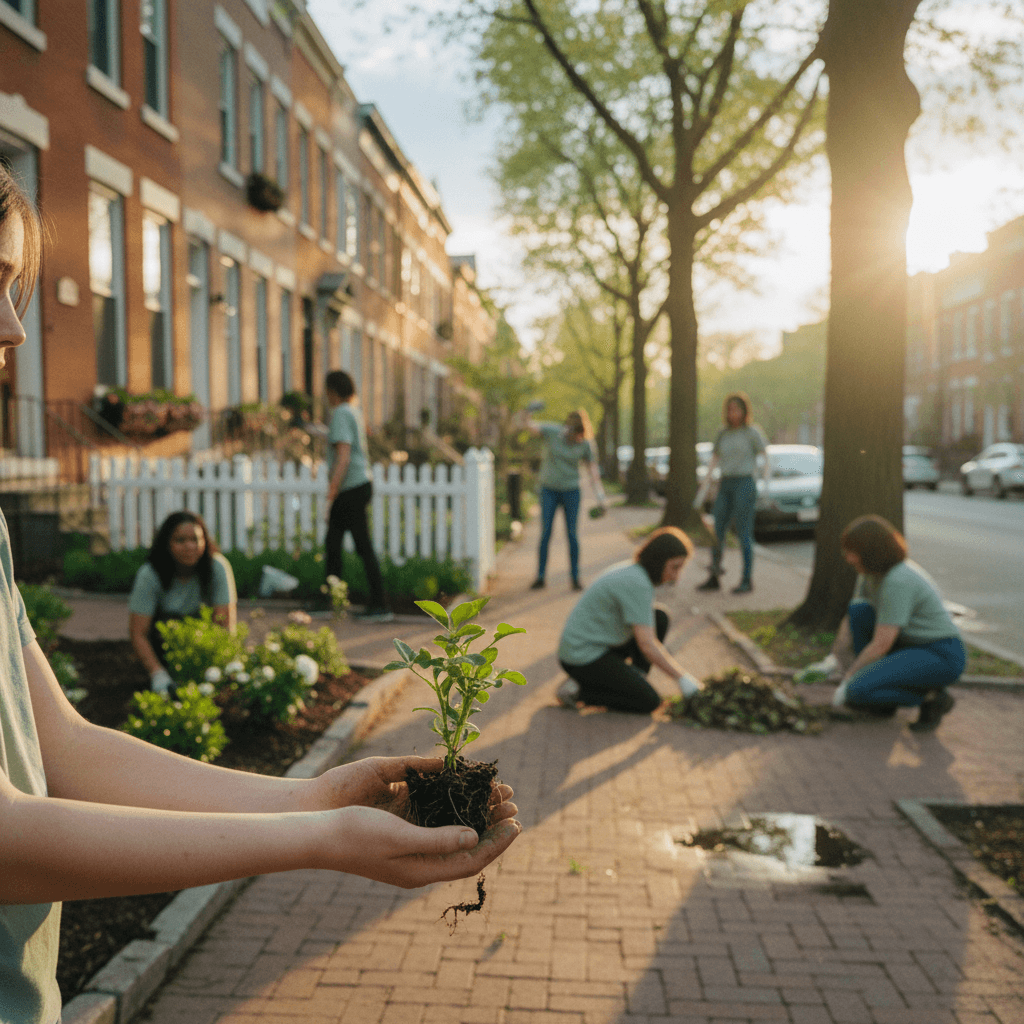
Turn affection into action and let kindness be visible work. — Elizabeth Barrett Browning
—What lingers after this line?
From Feeling to Deed — The Imperative
Browning’s injunction moves love from the private warmth of emotion to the public arena of effort. Affection, she implies, is not complete until it takes the shape of labor that others can see and benefit from. In this view, kindness is not a mood but a craft, practiced with hands, calendars, and commitments. Moreover, by insisting on visibility, the line reminds us that good intentions do their best work when they become shared signals, inviting participation rather than remaining unseen sentiment.
Browning’s Victorian Lens of Social Conscience
Historically, Elizabeth Barrett Browning wrote into an era wrestling with industrial hardship and social reform. Her poem The Cry of the Children (1843) helped galvanize public sympathy and debate around child labor, while Aurora Leigh (1856) presents an artist whose vocation includes social responsibility. These works model what her aphorism urges: transmuting tenderness into tangible advocacy. Thus, Browning’s line is not only lyrical; it is a lived aesthetic of ethics, where poetry becomes policy’s conscience and care takes measurable form.
Ethics That Tie Love to Labor
Philosophically, the claim echoes Aristotle’s Nicomachean Ethics, where virtues are built by repeated deeds; we become just by doing just acts. Religious traditions voice a parallel refrain: 1 John 3:18 urges love in actions and truth, and James 2:17 cautions that faith without works is dead. Taken together, these sources converge on a simple throughline. Feeling is the spark, but work is the flame that gives light. Affection matures into character when it repeatedly chooses the next helpful action.
Why Visibility Matters
Moving forward, visibility is not vanity; it is leverage. Social proof, as summarized in Cialdini’s Influence (1984), shows that people mirror behaviors they can see, especially prosocial ones. Likewise, classic bystander research demonstrates how one person’s public initiative can dissolve diffusion of responsibility. Consider a workplace donation drive that stalls until a colleague transparently shares their plan and first gift; participation then cascades. In this way, visible kindness does double duty: it helps someone now and normalizes helping for everyone next.
Turning Care Into Concrete Practices
Practically, translate each affection into a verb, a time, and a threshold. Concern for neighbors becomes deliver two meals every Friday by 6 p.m.; love for learning becomes tutor one student for 60 minutes weekly; climate care becomes plant three trees this quarter with a local group. Next, place it on a calendar, assign a modest budget, and add an accountability partner. Prefer actions where beneficiaries experience clear value, such as repair cafes, community legal aid, or reading circles. In doing so, kindness gains both momentum and measurable impact.
Visibility Without Vanity
At the same time, visible does not mean performative. A helpful guardrail is to share outcomes more than self, credit teams over individuals, and protect the privacy of those served. The ethical caution in Matthew 6:1 warns against doing good merely to be seen, yet transparency can still be a service when it mobilizes resources. A simple question steadies the balance: does sharing this help the beneficiaries or just burnish my image? When in doubt, let the work speak and invite others to join.
One-minute reflection
What does this quote ask you to notice today?
Related Quotes
6 selectedYou must love in such a way that the person you love feels free. — Thich Nhat Hanh
Thich Nhat Hanh
At its core, Thich Nhat Hanh’s statement redefines love as an act of care that does not confine. To love someone so that they feel free means offering affection without turning it into control, guilt, or dependence.
Read full interpretation →The sort of fearless openness required to turn toward our suffering is only possible within the spacious receptivity of love. — Frank Ostaseski
Frank Ostaseski
Frank Ostaseski’s statement begins with a striking claim: real courage is not simply toughness or willpower. Instead, the bravery required to face suffering honestly arises from love’s presence.
Read full interpretation →Healing is an art. It takes time, it takes practice, it takes love. — Maza Dohta
Maza Dohta
Maza Dohta’s quote begins by reframing healing as an art rather than a mechanical repair. That distinction matters, because art is rarely instant: it involves sensitivity, patience, revision, and care.
Read full interpretation →The only way to exist in a world that feels increasingly cold is to be the warmth you wish to receive from others. — Maya Angelou
Maya Angelou
At its core, Maya Angelou’s line reframes loneliness as a call to action rather than a verdict on the world. If life feels impersonal, distant, or harsh, she suggests that waiting passively for kindness may only deepen t...
Read full interpretation →We are called to be strong companions and clear mirrors to one another, to seek those who reflect with compassion how we are doing. — Wayne Muller
Wayne Muller
Wayne Muller’s quote begins with a call to companionship that is more than simple friendship. To be a strong companion is to stand beside another person with steadiness, honesty, and care, especially when life becomes co...
Read full interpretation →You can't save people from themselves. You can only love them while they save themselves. — Al-Anon Philosophy
Anon Philosophy
At its core, this Al-Anon saying confronts a painful truth: no amount of devotion can force another person to change. It rejects the fantasy of rescue, reminding us that healing, sobriety, and emotional growth must ultim...
Read full interpretation →More From Author
More from Elizabeth Barrett Browning →Hold beauty as a map and work as your compass; the two will lead you home. — Elizabeth Barrett Browning
Elizabeth Barrett Browning’s line invites us first to see beauty not as decoration, but as orientation. To “hold beauty as a map” is to let what is noble, true, and radiant in life sketch the contours of our direction.
Read full interpretation →Light tomorrow with today. — Elizabeth Barrett Browning
This quote emphasizes the significance of what we do today in shaping our future. Our present actions and decisions have the power to create a brighter tomorrow.
Read full interpretation →Gather your scattered hopes and bind them into a single brave step. — Elizabeth Barrett Browning
Browning’s line urges a shift from diffusion to direction: instead of letting aspirations tug at us from every side, she invites us to braid them into a single act. Hopes, on their own, can be luminous yet paralyzing—too...
Read full interpretation →