
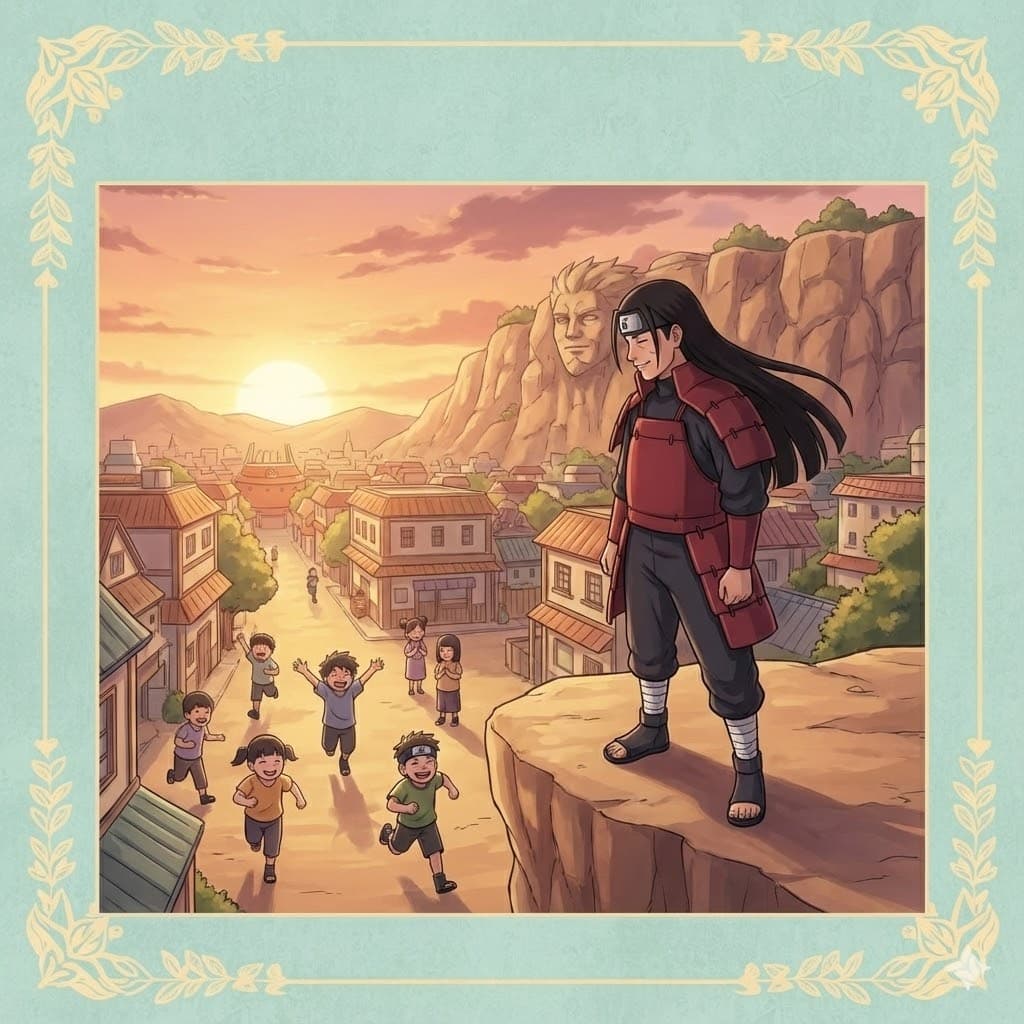
A true leader builds a world where children can laugh freely. — Hashirama Senju, Naruto Series
—What lingers after this line?
Redefining the Core of Leadership
Hashirama Senju’s words shift leadership away from power and glory toward a gentler benchmark: the sound of children laughing without fear. Rather than celebrating conquest or authority, this view treats safety, joy, and innocence as the true products of good governance. In the Naruto series, Hashirama is famed as the First Hokage, yet his legacy is not only his strength, but the village he dreamed of—a place where future generations would no longer grow up on battlefields. Thus, leadership becomes less about commanding the present and more about nurturing a humane future.
From Battlefields to Playgrounds
To understand the depth of this ideal, it helps to contrast war-torn landscapes with spaces where children play. In Naruto, the shinobi world is scarred by endless conflict, with orphans and child soldiers as routine casualties. Against this backdrop, Hashirama’s dream of a village system represents a deliberate move from chaos to community. By creating Konoha, he attempts to transform training grounds of war into streets where festivals, games, and school life can flourish. In this way, the shift from battlefield to playground becomes a concrete symbol of successful leadership.
Children’s Laughter as a Moral Compass
Using children’s laughter as a measure of success also introduces a powerful moral test. It is easy for leaders to claim victory through statistics, territory, or wealth, but carefree children are hard to fake. Their ability to laugh freely signals that their basic needs—safety, food, education, and affection—are being met. Philosophers like John Rawls, in *A Theory of Justice* (1971), argue that a just society protects its most vulnerable members. Hashirama’s criterion quietly echoes this: if the smallest voices are at ease, then the structures around them are likely compassionate and fair.
Legacy as Protection for Future Generations
Moreover, the quote highlights leadership as an intergenerational promise. Hashirama does not fight solely for his own era; he fights so that children he will never meet can grow up unburdened by his struggles. This mirrors real-world leaders who invest in schools, healthcare, and peace agreements whose benefits may only fully appear decades later. By tying leadership to children’s laughter, the Naruto narrative emphasizes that true legacy is measured not in monuments or titles, but in the everyday normalcy future generations can take for granted.
Balancing Strength and Compassion
Finally, Hashirama’s vision reconciles a crucial tension: leaders must be strong enough to confront threats, yet gentle enough to value joy and vulnerability. In the series, his overwhelming power is consistently paired with a desire for reconciliation, even with enemies like Madara Uchiha. This duality suggests that strength devoid of empathy simply extends cycles of fear, whereas strength guided by compassion can break them. When protection is motivated by the image of children laughing unafraid, power finds a humane purpose—and leadership becomes an act of guardianship rather than domination.
One-minute reflection
What does this quote ask you to notice today?
Related Quotes
6 selectedTrue leadership is recognizing the potential in others and helping them reach it. A light does not lose its brightness by lighting another flame.
lighting another flame.
True leadership involves recognizing the potential within individuals and providing them with the support and resources needed to help them achieve their full potential.
Read full interpretation →The will of fire burns brightest when shared. — Hashirama Senju, Naruto Series
Hashirama Senju, Naruto Series
Hashirama Senju’s line, “The will of fire burns brightest when shared,” captures a paradox at the heart of human motivation: some inner flames strengthen not by being guarded, but by being given. In the world of Naruto,...
Read full interpretation →If you wouldn't follow yourself, why should anyone else? — John C. Maxwell
John C. Maxwell
Maxwell’s line turns leadership inward before it points outward. In essence, he argues that credibility starts with a private standard: if your own behavior would not inspire your loyalty, your authority rests on appeara...
Read full interpretation →You cannot expect the level of excitement of your audience to be greater than your own. If you want a life that is alive, lead it with purpose. — Leonardo da Vinci
Leonardo da Vinci
Leonardo da Vinci’s insight begins with a simple but demanding truth: people rarely rise above the emotional energy of the person leading them. Whether in art, teaching, or daily life, enthusiasm is contagious precisely...
Read full interpretation →Quiet leadership is not an oxymoron. — Susan Cain
Susan Cain
At first glance, Susan Cain’s statement challenges a common cultural assumption: that leadership must be loud, charismatic, and constantly visible. By insisting that quiet leadership is not a contradiction, she reframes...
Read full interpretation →He that cannot obey, cannot command. — Benjamin Franklin
Benjamin Franklin
At its core, Benjamin Franklin’s statement argues that authority is not truly earned by status alone. A person who has never learned to follow rules, accept correction, or work within a larger order lacks the discipline...
Read full interpretation →More From Author
More from Hashirama Senju, Naruto Series →