
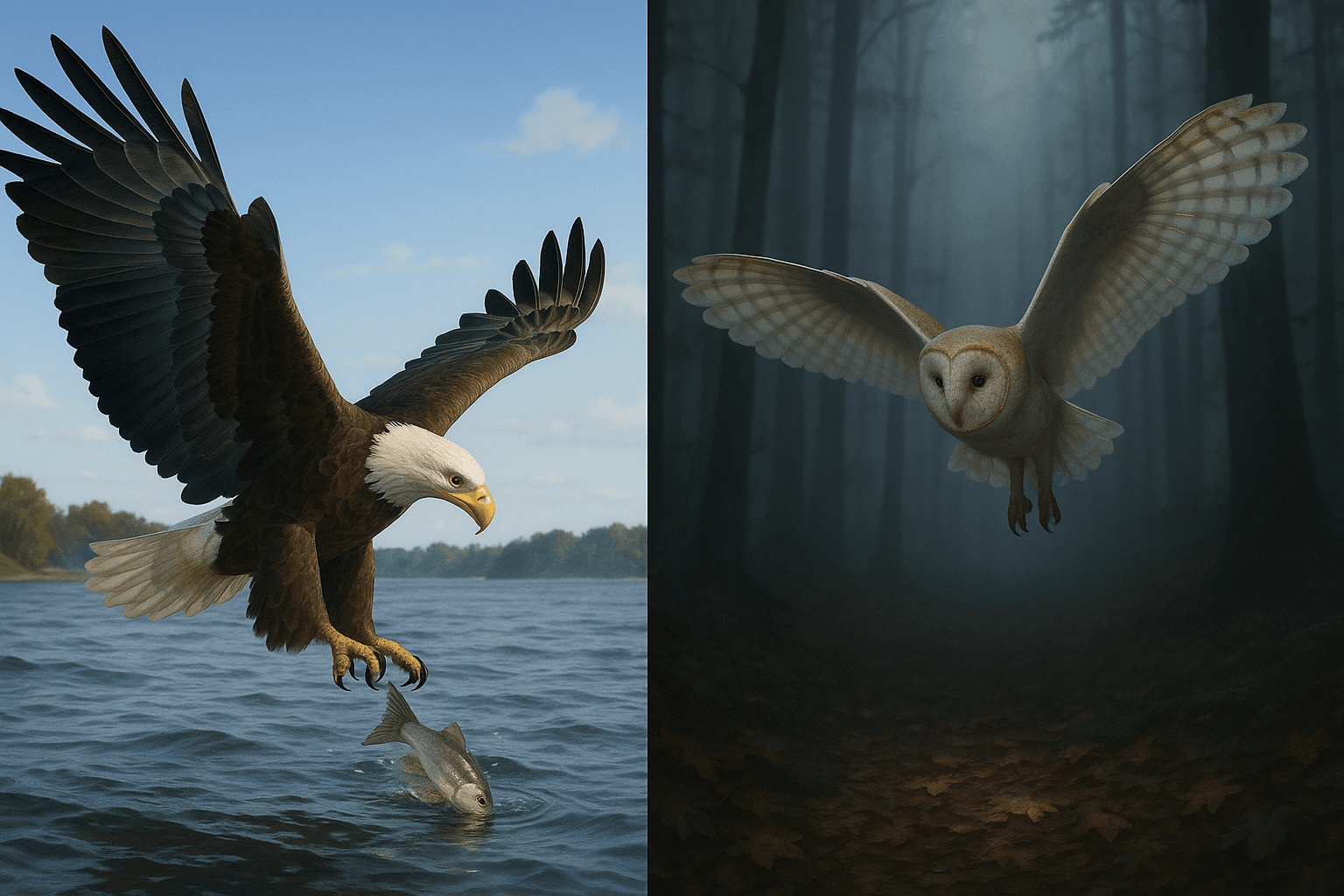
Talent hits a target no one else can hit; Genius hits a target no one else can see. — Arthur Schopenhauer
—What lingers after this line?
Defining Talent and Genius
Arthur Schopenhauer’s famous dictum draws a pivotal distinction between talent and genius. Whereas talent is marked by extraordinary execution—hitting what others miss but can still observe—genius transcends the visible altogether, aiming for possibilities unseen by contemporaries. This dichotomy invites us to interrogate not just what greatness achieves, but how it reimagines the very contours of what’s possible.
Historical Figures and Invisible Targets
Indeed, history is replete with examples that illuminate Schopenhauer’s point. Take Nikola Tesla, whose vision of wireless electricity was dismissed during his time, or Emily Dickinson, whose poetry anticipated modes of expression modern audiences would only later appreciate. In their era, their ‘targets’ were neither recognized nor understood—affirming that genius often forges ahead into unknown, invisible realms.
Imagination as the Engine of Genius
This transition from the visible to the invisible rests fundamentally on imagination. Where talent superbly refines established patterns, genius invents new paradigms. Albert Einstein’s theory of relativity, emerging from thought experiments rather than conventional measurements, exemplifies such conceptual leaps. The genius, then, is compelled by visions and intuitions unavailable to ordinary perception, mapping new territories for others to one day explore.
Cultural Reception and Misunderstanding
As a result, society's response to genius is frequently one of confusion or skepticism. Innovative thinkers often find themselves marginalized, their insights obscured by prevailing norms. Galileo Galilei, persecuted for asserting heliocentrism, illustrates how unseen targets can even provoke hostility. Only with time does broader understanding catch up, recasting the once-impenetrable vision as an obvious path forward.
The Enduring Value of Vision
Ultimately, Schopenhauer’s aphorism serves as a call to cultivate spaces for the unprecedented—to welcome those who see what others cannot. As history folds genius into the fabric of common knowledge, today’s invisible targets may become tomorrow’s shared achievements. Embracing this dynamic, we foster progress not merely by celebrating talent, but by nurturing imagination’s boldest reach.
One-minute reflection
What feeling does this quote bring up for you?
Related Quotes
6 selectedThe foundation of genius is intelligent consistency. — Henri-Frédéric Amiel
Frédéric Amiel
At first glance, Amiel’s statement challenges the popular image of genius as sudden inspiration or erratic brilliance. Instead, he proposes something steadier: greatness is built on repeated, thoughtful action.
Read full interpretation →Drawing is vision on paper. — Andrew Loomis
Andrew Loomis
At first glance, Andrew Loomis’s remark condenses the whole art of drawing into a single elegant idea: drawing is not merely the movement of a hand, but the translation of perception into form. In this sense, the page be...
Read full interpretation →A rock pile ceases to be a rock pile the moment a single man contemplates it, bearing within him the image of a cathedral. — Antoine de Saint-Exupéry
Exupéry
At first glance, Saint-Exupéry’s line seems to describe an ordinary heap of stones. Yet the moment someone looks at it while carrying the image of a cathedral within, the pile is transformed in meaning.
Read full interpretation →Sow clarity where confusion grows and watch your vision bloom. — Ada Lovelace
Ada Lovelace
Ada Lovelace frames understanding as an act of cultivation: clarity is something you “sow,” not something that merely appears. In this metaphor, confusion is not a personal failure but a kind of soil—messy, dense, and fu...
Read full interpretation →When you begin with purpose, the distant horizon rearranges itself into reachable ground. — Marcus Aurelius
Marcus Aurelius
Marcus Aurelius frames purpose not as a final achievement but as a starting posture: when you begin with a clear “why,” the shape of everything that follows changes. In Stoic terms, intention organizes attention, and att...
Read full interpretation →Tender care for your vision makes it blossom into reality. — Kahlil Gibran
Kahlil Gibran
Kahlil Gibran’s line suggests that a vision is not a cold plan but a living seed waiting to grow. Rather than arriving fully formed, our deepest aspirations begin as fragile images in the mind, easily dismissed or forgot...
Read full interpretation →More From Author
More from Arthur Schopenhauer →Every day is a small life, each awakening and rising a small birth, each new day a small youth, each going to rest and sleeping a small death. —Arthur Schopenhauer
Schopenhauer likens each day to a small life, emphasizing how every new day brings an opportunity for renewal and a fresh start, similar to being born anew.
Read full interpretation →Compassion is the basis of all morality. — Arthur Schopenhauer
Schopenhauer emphasizes that morality originates from compassion. When people feel empathy for others, they are more likely to act ethically and consider the well-being of others.
Read full interpretation →Every man takes the limits of his own field of vision for the limits of the world. — Arthur Schopenhauer
The quote points out that people tend to believe their personal view is the only reality.
Read full interpretation →One should use common words to say uncommon things. — Arthur Schopenhauer
Arthur Schopenhauer, the 19th-century philosopher, contended that the true mark of insight lies in the ability to convey complex ideas using plain words. Rather than disguising thought in elaborate or obscure language, h...
Read full interpretation →