
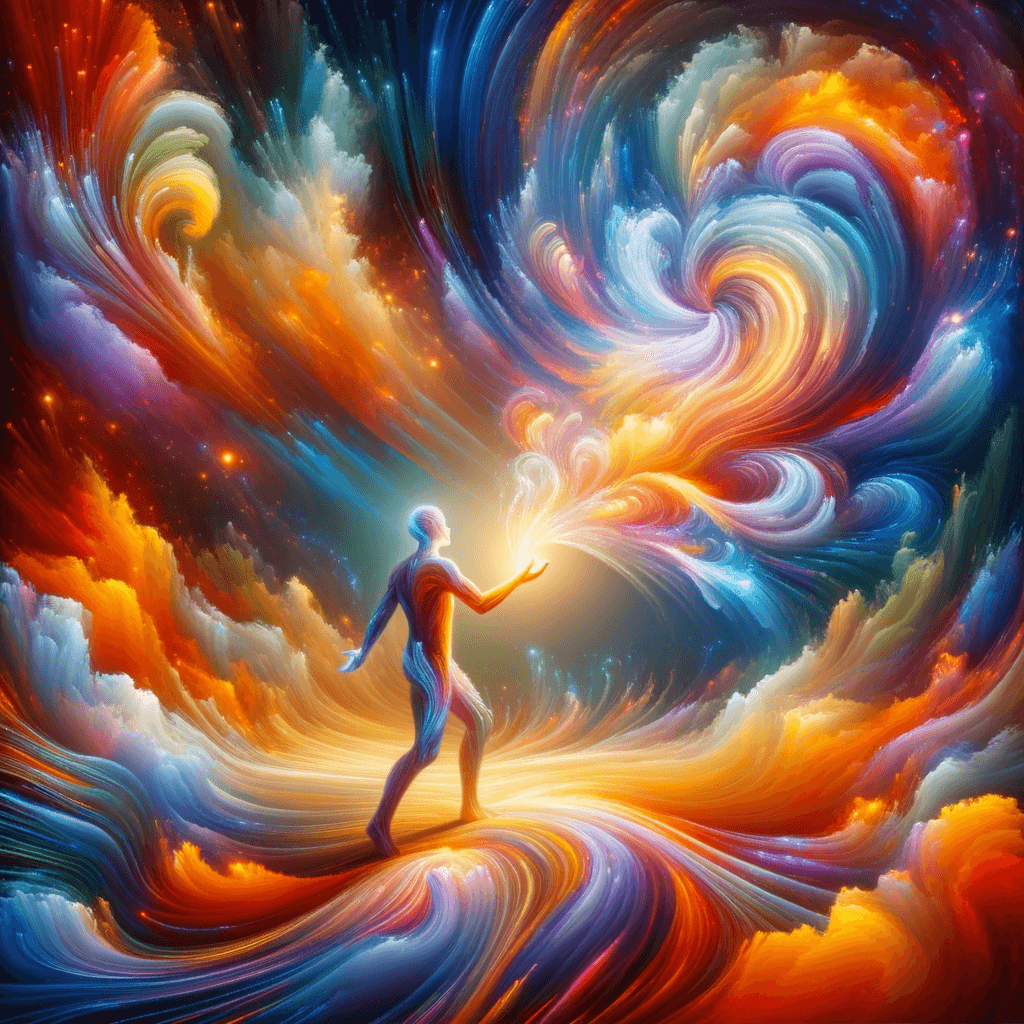
The joy of life consists in the exercise of one's energies, of one’s power, to be creative. — Doris Lessing
—What lingers after this line?
Fulfillment Through Action
This quote emphasizes that true joy is found in actively engaging with life through the use of one’s abilities, talents, and efforts to create and contribute meaningfully.
Power of Creativity
Doris Lessing highlights the importance of creativity as a source of personal satisfaction. It suggests that the act of creating, whether in art, ideas, or solutions, is what makes life rewarding and vibrant.
Energy as a Driving Force
The quote points out that happiness arises from channeling one's energy and vigor into productive work or endeavors, showing that our vitality is key to experiencing the joy of living.
Living Authentically
It implies that life is most meaningful when one exercises their unique powers and lives authentically, staying true to their passions and creative instincts.
Philosophical Perspective on Life’s Purpose
Doris Lessing offers a philosophical perspective, suggesting that life’s purpose is not passive enjoyment but active engagement and effort toward growth, change, and innovation.
One-minute reflection
What does this quote ask you to notice today?
Related Quotes
6 selectedCreativity is intelligence having fun. — George Scialabba
George Scialabba
At first glance, George Scialabba’s line turns creativity into something disarmingly simple: intelligence at play. Rather than presenting invention as grim labor or mystical inspiration, the quote suggests that original...
Read full interpretation →A creative life is an amplifying life. It’s a magnifying life. — Elizabeth Gilbert
Elizabeth Gilbert
Elizabeth Gilbert’s line suggests that creativity does not merely produce art; rather, it changes the scale at which life is felt. To call creative living an “amplifying life” is to say that attention, emotion, and meani...
Read full interpretation →To be creative means to be in love with life. You can be creative only if you love life enough that you want to enhance its beauty. — Osho
Osho
At its core, Osho’s statement proposes that creativity does not begin with technique, talent, or originality, but with affection for existence itself. In this view, a person creates because life feels precious enough to...
Read full interpretation →Understand that the power is in the principle of moving forward. — Robert Downey Jr.
Robert Downey Jr.
Robert Downey Jr.’s statement begins with a simple but forceful idea: power is not always found in control, certainty, or dramatic victory. Instead, it often emerges from the decision to keep moving, even when progress f...
Read full interpretation →In order to be open to creativity, one must have the capacity for constructive use of solitude. One must overcome the fear of being alone. — Rollo May
Rollo May
Rollo May’s insight begins with a quiet but demanding premise: creativity requires the ability to stand apart from constant noise, approval, and distraction. To be open to new ideas, a person must first become comfortabl...
Read full interpretation →Our boundaries define our personal space — and we need to be sovereign there in order to be able to step into our full power and potential. — Brené Brown
Brené Brown
Brené Brown’s insight begins with a simple but profound claim: boundaries are not walls meant to isolate us, but lines that clarify where our responsibility begins and ends. To be sovereign in our personal space means to...
Read full interpretation →More From Author
More from Doris Lessing →