
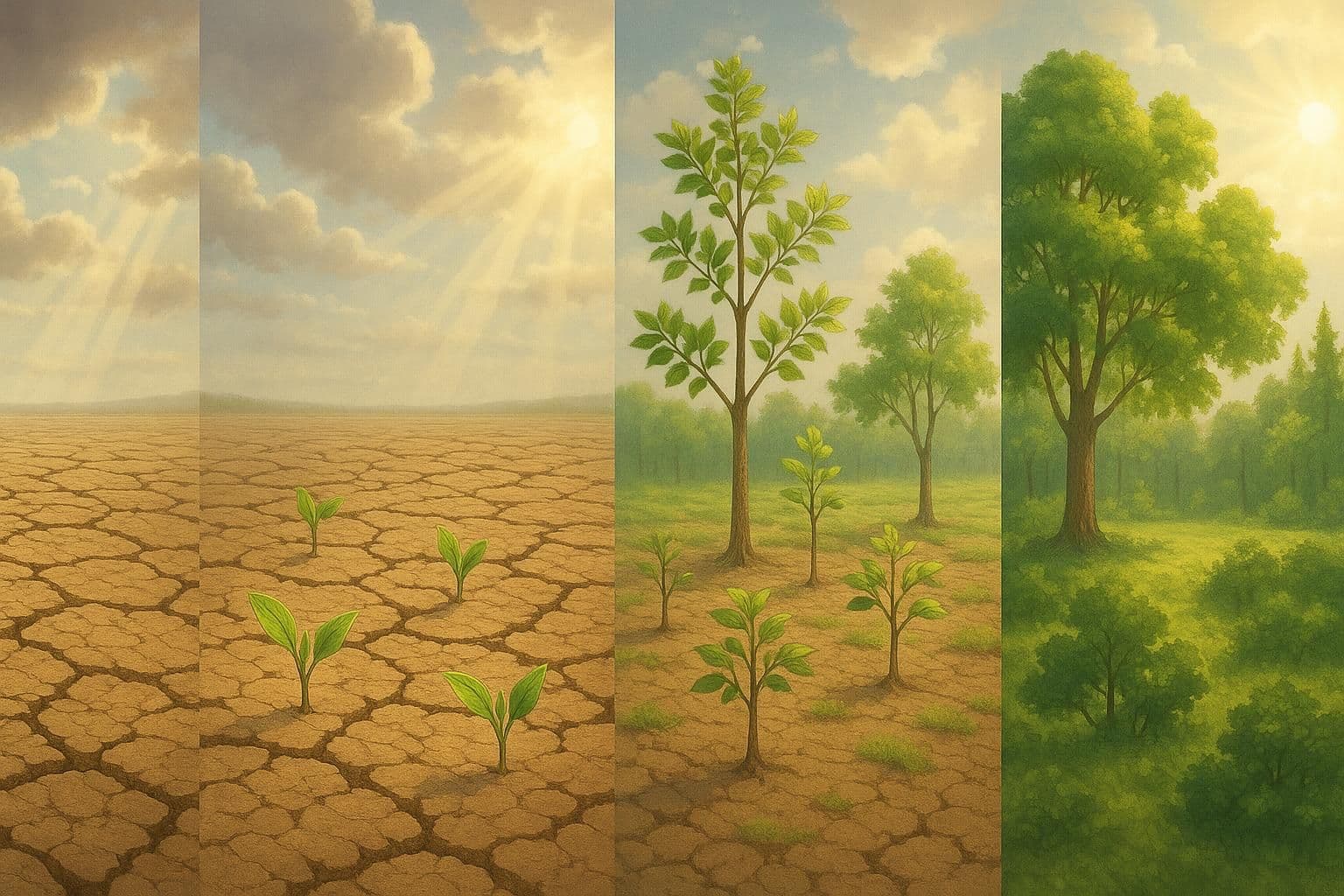
All great achievements require time, patience, and perseverance. — John Ruskin
—What lingers after this line?
The Nature of Achievement
At the heart of Ruskin’s statement lies a recognition that notable accomplishments are seldom instantaneous. History provides ample support for this view; inventors, artists, and leaders alike typically journey through long periods of effort and uncertainty before reaching their goals. The construction of grand cathedrals or the formulation of groundbreaking scientific theories serves as testament to the idea that achievement is a process rather than an event.
Time as a Crucial Ingredient
Building on this, time emerges as the silent enabler of progress. Significant undertakings demand more than mere bursts of inspiration—they require sustained commitment over years, sometimes even decades. Michelangelo’s work on the Sistine Chapel ceiling (1508–1512) spanned four laborious years, illustrating how enduring legacies are often the fruit of prolonged dedication.
The Role of Patience in Progress
Closely related is the virtue of patience. Challenges and setbacks inevitably arise during any ambitious pursuit, testing one’s resolve. Patience equips individuals to withstand frustration and delay, much like a gardener who waits patiently for the seeds to bear fruit. The patient artist or scientist can withstand failed experiments and false starts, refining their work over time as seen in Edison’s many experiments before inventing a practical lightbulb.
Perseverance Against Adversity
Transitioning from patience, perseverance stands out as the unwavering drive to keep moving forward despite obstacles. Examples abound in the annals of exploration: Ernest Shackleton’s Antarctic expedition (1914–1917) survived against the odds because of the crew’s relentless perseverance. Such stories demonstrate that tenacity, when combined with time and patience, transforms aspiration into tangible success.
Sustained Virtues in Modern Context
Bringing these insights into the present, contemporary success stories—from startup founders to Olympic athletes—continue to echo Ruskin’s wisdom. Modern research by psychologist Angela Duckworth on ‘grit’ corroborates the idea that time, patience, and perseverance are key predictors of achievement. In a fast-paced era that celebrates immediacy, Ruskin’s message remains a vital reminder that enduring accomplishments still demand these timeless attributes.
One-minute reflection
Why might this line matter today, not tomorrow?
Related Quotes
6 selectedAnything worth having is worth waiting for, and everything worth doing is worth doing with patience. — Confucius
Confucius
At its core, this saying ties value to delay. Confucius suggests that truly meaningful things do not arrive instantly; instead, they ask us to endure uncertainty, effort, and time.
Read full interpretation →The most important thing is patience: to try and to try and to try until it comes right. — William Faulkner
William Faulkner
Faulkner’s line places patience not at the margins of success, but at its very core. By repeating “to try and to try and to try,” he turns persistence into a rhythm, suggesting that achievement rarely arrives in a single...
Read full interpretation →But patience can't be acquired overnight. It's just like building up a muscle. Every day you need to work on it, to push its limits. — Eknath Easwaran
Eknath Easwaran
Eknath Easwaran frames patience not as a fixed personality trait but as a capacity that develops over time. From the outset, his comparison to building muscle changes the way we think about self-control: instead of waiti...
Read full interpretation →Slow progress today is often stable progress tomorrow. Fast growth collapses easily. Slow growth holds. — Timeless Type
Timeless Type
At first glance, slow progress can feel discouraging, especially in a culture that praises speed, sudden breakthroughs, and visible success. Yet the quote reminds us that what seems unimpressive today may become the foun...
Read full interpretation →If we are facing in the right direction, all we have to do is keep walking. — Thích Nhất Hạnh
Thich Nhat Hanh
Thích Nhất Hạnh’s words begin with a simple but profound premise: progress depends first on direction, not speed. If a person is turned toward compassion, clarity, healing, or truth, then each modest step becomes meaning...
Read full interpretation →All great achievements require time, patience, and perseverance. — John Ruskin
John Ruskin
John Ruskin’s observation highlights the essential, though often overlooked, role of time in achieving greatness. Enduring accomplishments—be it in art, science, or personal development—rarely emerge overnight.
Read full interpretation →More From Author
More from John Ruskin →Fine art is that in which the hand, the head, and the heart of man go together. — John Ruskin
John Ruskin’s remark defines fine art as a union rather than a single talent. The hand represents skilled execution, the head stands for thought and judgment, and the heart brings feeling and moral sincerity.
Read full interpretation →Quality is never an accident. It is always the result of intelligent effort. — John Ruskin
John Ruskin’s statement rejects the comforting idea that excellence simply appears on its own. Instead, it frames quality as something built through intention, discipline, and thoughtful labor.
Read full interpretation →When love and skill work together, expect a masterpiece. — John Ruskin
John Ruskin’s line begins with a simple but powerful claim: great work is rarely the product of technique alone. Skill may shape the hand, but love gives the hand a reason to care.
Read full interpretation →The highest reward for a person's toil is not what they get for it, but what they become by it. — John Ruskin
This quote highlights the idea that the process of working and putting in effort leads to personal growth and transformation. The experiences gained shape who we are more than the tangible rewards we receive.
Read full interpretation →