
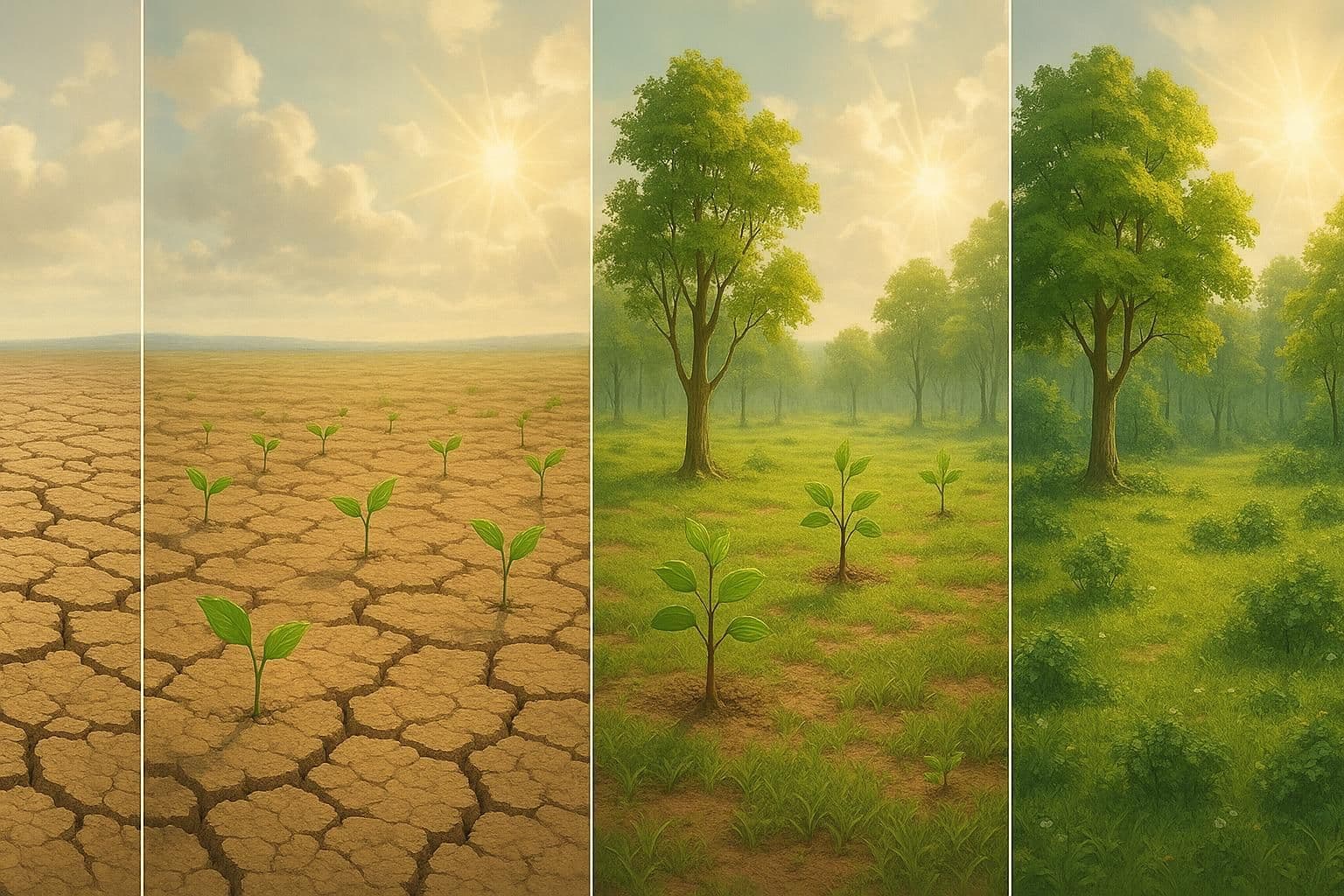
All great achievements require time, patience, and perseverance. — John Ruskin
—What lingers after this line?
Laying the Foundation: The Role of Time
John Ruskin’s observation highlights the essential, though often overlooked, role of time in achieving greatness. Enduring accomplishments—be it in art, science, or personal development—rarely emerge overnight. Instead, they are the result of a sustained process that unfolds over months, years, or even decades. For example, the construction of Notre-Dame Cathedral spanned nearly two centuries (1163–1345), its grandeur a testament to unwavering commitment and the generations that built upon each other’s labors.
Cultivating Dreams Through Patience
Closely connected to the passage of time is the necessity for patience. Progress can be slow or nonlinear, demanding a willingness to endure setbacks and uncertainties. Thomas Edison’s famously protracted efforts to invent the practical lightbulb—reportedly testing thousands of materials—exemplifies this virtue. Patience transforms frustration into learning, empowering individuals to view each delay as a step toward eventual success rather than as a defeat.
The Driving Force of Perseverance
While patience tempers our expectations, perseverance fuels action. Great achievements require consistent effort in the face of adversity, propelling us to move forward even when outcomes seem uncertain. J.K. Rowling’s persistence through a series of rejections before publishing 'Harry Potter and the Philosopher’s Stone' shows that even the most celebrated achievements can stem from repeated, dogged persistence. Through preserving momentum and resilience, people transform dreams into lasting realities.
Interdependence of Time, Patience, and Perseverance
These qualities—time, patience, and perseverance—are not isolated virtues but interdependent. Patience enables us to withstand the protracted timeline often required for significant accomplishments, while perseverance ensures that we continue working steadily during that time. Both are necessary to harness the transformative power of time, allowing fledgling ambitions to develop into achievements that endure.
Learning from History’s Greatest Achievers
History abounds with figures who exemplify Ruskin’s wisdom. Leonardo da Vinci labored for years over the 'Mona Lisa,' constantly revising and perfecting his masterpiece. The incremental innovations of scientists such as Marie Curie, who isolated two new elements through painstaking research, reflect the unwavering patience and effort underpinning truly great advancements. These stories remind us that striving for greatness is not a sprint, but a marathon—one measured not just by results, but by the character built along the way.
One-minute reflection
Why might this line matter today, not tomorrow?
Related Quotes
6 selectedLearning is a lifelong process of unlearning the need for immediate results. Patience is the discipline of trusting the slow, quiet compounding of your efforts. — Confucius
Confucius
At its core, this saying presents learning not as a race toward instant achievement, but as a gradual reshaping of expectation. The phrase “unlearning the need for immediate results” suggests that education is not only a...
Read full interpretation →The most important thing is patience: to try and to try and to try until it comes right. — William Faulkner
William Faulkner
Faulkner’s line places patience not at the margins of success, but at its very core. By repeating “to try and to try and to try,” he turns persistence into a rhythm, suggesting that achievement rarely arrives in a single...
Read full interpretation →If we are facing in the right direction, all we have to do is keep walking. — Thích Nhất Hạnh
Thich Nhat Hanh
Thích Nhất Hạnh’s words begin with a simple but profound premise: progress depends first on direction, not speed. If a person is turned toward compassion, clarity, healing, or truth, then each modest step becomes meaning...
Read full interpretation →Sometimes you have to slow down to go fast. — Jeff Olson
Jeff Olson
Jeff Olson’s line begins with a practical paradox: speed is not always created by rushing. Sometimes the quickest path forward requires pausing long enough to see the road clearly, correct mistakes early, and choose acti...
Read full interpretation →All great achievements require time, patience, and perseverance. — John Ruskin
John Ruskin
At the heart of Ruskin’s statement lies a recognition that notable accomplishments are seldom instantaneous. History provides ample support for this view; inventors, artists, and leaders alike typically journey through l...
Read full interpretation →Do the best one can. Do it over again. Then still improve, even if ever so slightly, those retouches. — Marguerite Yourcenar
Marguerite Yourcenar
Yourcenar’s words begin with a simple demand: do the best one can. Yet she immediately refuses to let effort become an excuse for stopping.
Read full interpretation →More From Author
More from John Ruskin →Fine art is that in which the hand, the head, and the heart of man go together. — John Ruskin
John Ruskin’s remark defines fine art as a union rather than a single talent. The hand represents skilled execution, the head stands for thought and judgment, and the heart brings feeling and moral sincerity.
Read full interpretation →Quality is never an accident. It is always the result of intelligent effort. — John Ruskin
John Ruskin’s statement rejects the comforting idea that excellence simply appears on its own. Instead, it frames quality as something built through intention, discipline, and thoughtful labor.
Read full interpretation →When love and skill work together, expect a masterpiece. — John Ruskin
John Ruskin’s line begins with a simple but powerful claim: great work is rarely the product of technique alone. Skill may shape the hand, but love gives the hand a reason to care.
Read full interpretation →The highest reward for a person's toil is not what they get for it, but what they become by it. — John Ruskin
This quote highlights the idea that the process of working and putting in effort leads to personal growth and transformation. The experiences gained shape who we are more than the tangible rewards we receive.
Read full interpretation →