
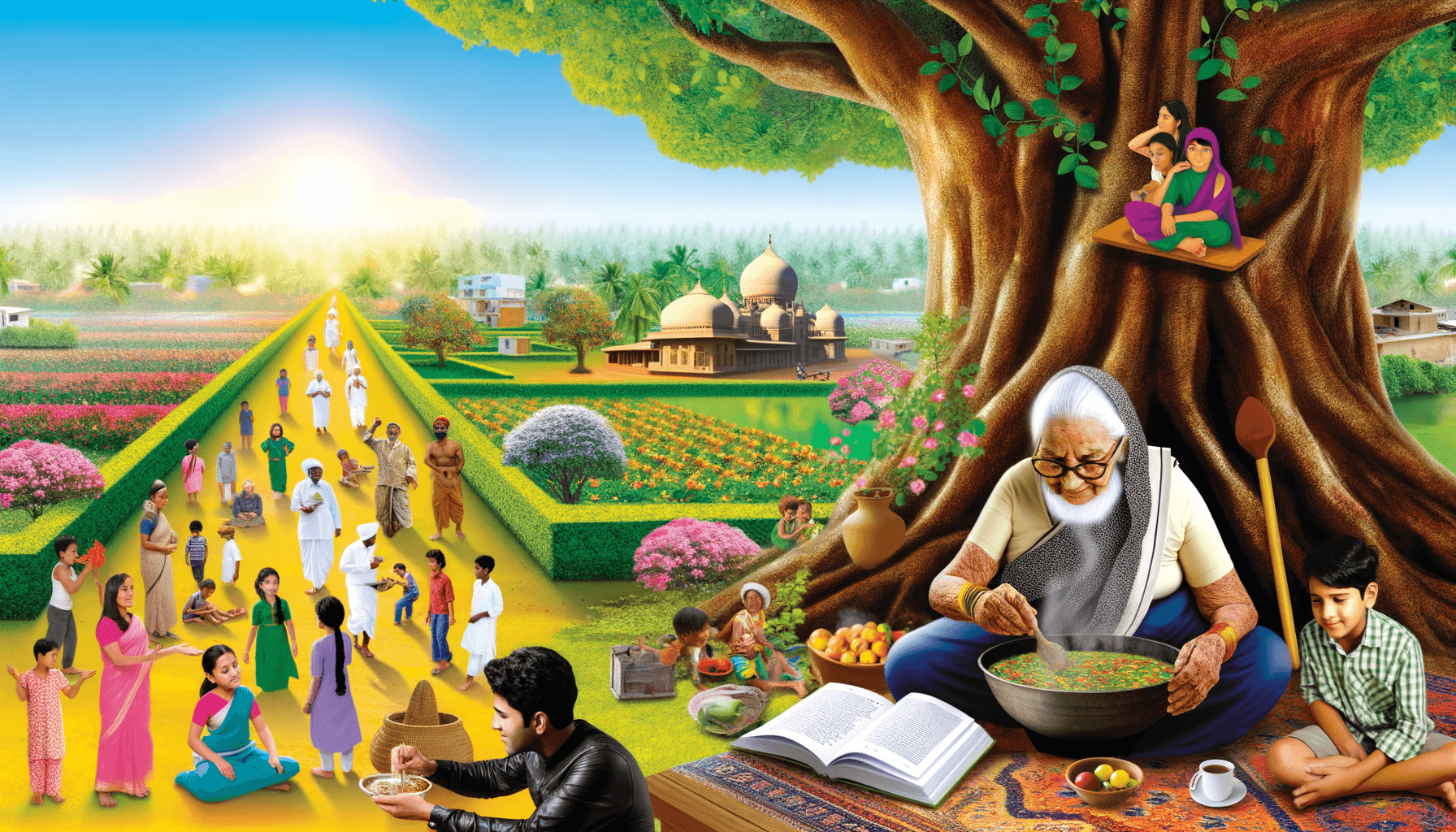
Richness is not about what we have, but about what we do with what we have. — Paulo Coelho
—What lingers after this line?
True Wealth Defined by Actions
This quote suggests that wealth is not merely about material possessions but rather about how we utilize them. True richness comes from making the most out of what we have, rather than from accumulation alone.
Generosity and Impact
It emphasizes the value of generosity and contribution. A person who shares and utilizes their resources wisely can be considered rich, regardless of their material wealth.
Perspective on Contentment
This perspective encourages gratitude and contentment. Instead of constantly striving for more, true richness comes from making meaningful use of what is already available.
Resourcefulness and Creativity
Richness can also be a measure of one's ability to be creative and resourceful. Those who use their skills, intellect, and opportunities wisely are truly wealthy in their experiences and achievements.
Philosophical and Spiritual Implication
Paulo Coelho, a renowned author, often explores themes of personal growth and spiritual wisdom. This quote aligns with a philosophical view where richness is about fulfillment, purpose, and the meaningful use of resources.
One-minute reflection
What's one small action this suggests?
Related Quotes
6 selectedTurn scarcity into a classroom; scarcity teaches creative abundance. — Paulo Coelho
Paulo Coelho
Coelho reframes scarcity from a sentence into a syllabus: when resources tighten, life becomes a classroom that forces attention, prioritization, and ingenuity. Instead of seeing lack as only deprivation, he suggests we...
Read full interpretation →Persistence is the art of finding new ways to do old things. — Paulo Coelho
Paulo Coelho
At first glance, persistence may be mistaken for simple dogged repetition—the act of doing the same task over and over. However, Paulo Coelho reframes persistence as an art that involves creative transformation, not mere...
Read full interpretation →Gather your fragments and turn them into fuel. — Paulo Coelho
Paulo Coelho
At the outset, Coelho’s line reframes damage as potential energy, inviting an inner alchemy rather than denial. The verb gather presumes agency: you do not wait for wholeness, you assemble it.
Read full interpretation →A farmer is helpless to grow grain; all he can do is provide the right conditions for the growing of grain. — Richard J. Foster
Richard J. Foster
At first glance, Foster’s farming metaphor shifts attention away from control and toward humility. A farmer cannot command a seed to sprout, just as a person cannot force true growth—whether spiritual, personal, or relat...
Read full interpretation →Stop begging God to increase your territory when you can't even maintain the territory you already have. — Iyanla Vanzant
Iyanla Vanzant
At its core, Iyanla Vanzant’s statement confronts a common contradiction: people often ask for more influence, wealth, opportunity, or responsibility before proving they can care for what is already in their hands. In th...
Read full interpretation →It is not our part here to take thought only for a season, or for a few lives of men, or for a passing age of the world. — J.R.R. Tolkien
J.R.R. Tolkien
At its core, Tolkien’s line rejects narrow, short-term thinking. He urges us to look beyond a single season, a generation, or even an era, and to measure our actions against a far larger horizon.
Read full interpretation →More From Author
More from Paulo Coelho →Have pity on those who are fearful of taking up a pen, or a paintbrush, or an instrument, or a tool because they are afraid that someone has already done so better than they could. — Paulo Coelho
Coelho’s line begins with compassion rather than criticism. He asks us to pity those who hesitate before the pen, brush, instrument, or tool because their fear is not laziness but self-erasure.
Read full interpretation →One doesn't get to be a master of one's own life by rushing. You have to learn the patience of a gardener who knows the harvest cannot be hurried. — Paulo Coelho
At its core, Paulo Coelho’s reflection challenges a modern obsession with speed. He argues that mastery over one’s life does not come from frantic action or constant acceleration, but from learning when to wait, observe,...
Read full interpretation →It is a good idea always to do something relaxing prior to making an important decision in your life. — Paulo Coelho
Paulo Coelho’s remark begins with a simple but powerful premise: important decisions are rarely improved by agitation. When the mind is tense, it tends to confuse urgency with clarity, pushing us toward choices made out...
Read full interpretation →Your 'yes' has no value until you learn to say 'no'. — Paulo Coelho
Paulo Coelho’s line hinges on a simple contrast: a “yes” only carries weight when an alternative is genuinely available. If you can’t—or won’t—say “no,” agreement becomes automatic rather than chosen, and it starts to re...
Read full interpretation →