
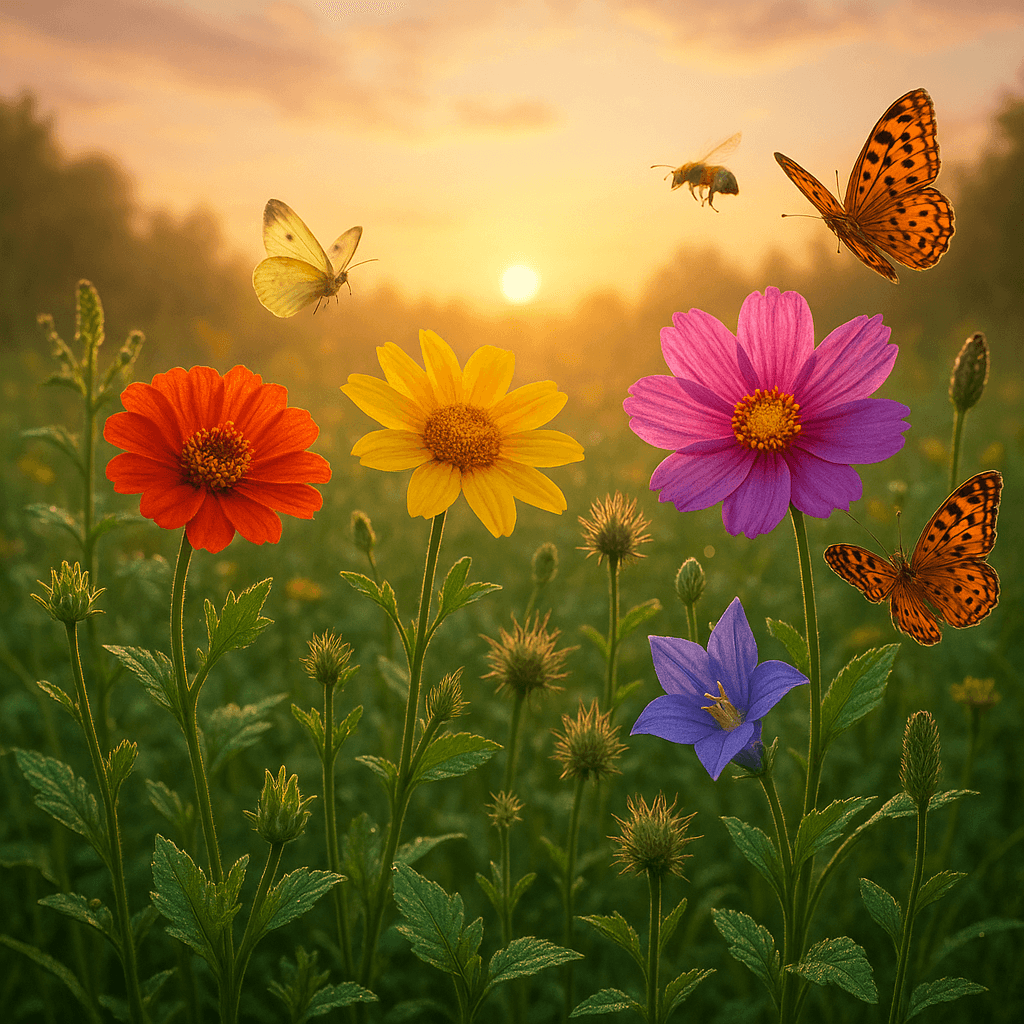
A weed is no more than a flower in disguise. — James Lowell
—What lingers after this line?
Perception and the Power of Labels
Lowell’s quote urges us to reconsider the arbitrary labels we assign to the natural world. The term 'weed' often carries a negative connotation, suggesting an undesirable or invasive plant. However, by referring to weeds as 'flowers in disguise,' Lowell highlights how perception shapes reality. What is dismissed as a nuisance in one context may be treasured for its beauty or utility in another, revealing the subjectivity embedded in our naming conventions.
Historical Shifts in Plant Value
Historically, many plants classified today as weeds were once revered for their medicinal or ornamental qualities. Dandelions, for example, were cultivated in medieval gardens for both culinary and healing purposes. Over time, shifts in agricultural practice and landscaping preference led to their demotion as weeds. This transformation demonstrates that a plant’s value is not inherent, but contingent upon societal needs and tastes.
Weeds as Symbols of Resilience
Transitioning from societal views, weeds themselves can symbolize resilience and tenacity. Thrust aside or uprooted, they appear again and again, thriving in neglected spaces. This persistence, often overlooked or maligned, mirrors the way overlooked individuals or ideas can prove indispensable when circumstances change—just as wildflowers unexpectedly brighten a fallow field.
Literary and Artistic Inspirations
Literature and art have long explored the blurred line between weed and flower. In Frances Hodgson Burnett’s *The Secret Garden* (1911), the appearance of uncultivated plants heralds the rebirth of neglected spaces—a metaphor for hidden potential. Visual artists too, like Georgia O’Keeffe, found elegance in sunflowers and wild poppies, reminding viewers that so-called weeds can inspire just as much awe as prized blooms.
Cultivating an Open Mind
Ultimately, Lowell invites us to foster greater appreciation for everyday wonders. By looking beyond superficial distinctions, we can uncover intrinsic value where least expected. This lesson extends beyond botany, encouraging empathy and curiosity in all areas of life. In reevaluating what we dismiss as weeds, we discover that the difference between nuisance and beauty often lies solely in our point of view.
One-minute reflection
What's one small action this suggests?
Related Quotes
6 selectedA weed is no more than a flower in disguise. — James Lowell
James Lowell
James Lowell’s statement draws attention to the powerful role perception plays in defining what is considered valuable or undesirable. By asserting that a weed is just a ‘flower in disguise,’ he destabilizes the rigid bo...
Read full interpretation →If you want to move forward, you must first give yourself permission to stand still. Perspective is often the result of stopping long enough to actually see. — Alain de Botton
Alain de Botton
At first glance, Alain de Botton’s line seems contradictory: how can standing still help us move forward? Yet that tension is precisely his point.
Read full interpretation →Stop looking for the lens. Be the prism. — Shaan Puri
Shaan Puri
At first glance, Shaan Puri’s line overturns a common habit: waiting for the right lens through which to view the world. A lens implies borrowed perspective, something external that clarifies reality for us.
Read full interpretation →To the river, the stone is an obstacle; to the stone, the river is erosion. Perspective births both truth and conflict. — Monika Ajay Kaul
Monika Ajay Kaul
Monika Ajay Kaul’s image of the river and the stone immediately turns a simple natural scene into a meditation on perception. To the river, the stone interrupts motion; to the stone, the river slowly wears away form.
Read full interpretation →Reflect upon your present blessings, of which every man has plenty; not on your past misfortunes, of which all men have some. — Charles Dickens
Charles Dickens
At its heart, Dickens’s sentence asks for a deliberate shift in attention. Rather than denying pain, he urges us to look first at the blessings still present in our lives, however ordinary they may seem.
Read full interpretation →Perspective is the ability to see the bigger picture rather than being focused on the immediate pain. — Robert Greene
Robert Greene
Robert Greene’s line begins with a simple but demanding claim: perspective is not the denial of pain, but the capacity to place pain within a wider frame. In other words, the moment may hurt intensely, yet it does not al...
Read full interpretation →More From Author
More from James Lowell →Creativity is not the finding of a thing, but the making something out of it after it is found. — James Russell Lowell
James Russell Lowell’s line shifts attention away from the romantic myth of the sudden genius who invents from nothing. Instead, he argues that creativity truly begins after the initial encounter—after an idea, object, p...
Read full interpretation →A weed is no more than a flower in disguise. — James Lowell
James Lowell’s statement draws attention to the powerful role perception plays in defining what is considered valuable or undesirable. By asserting that a weed is just a ‘flower in disguise,’ he destabilizes the rigid bo...
Read full interpretation →