
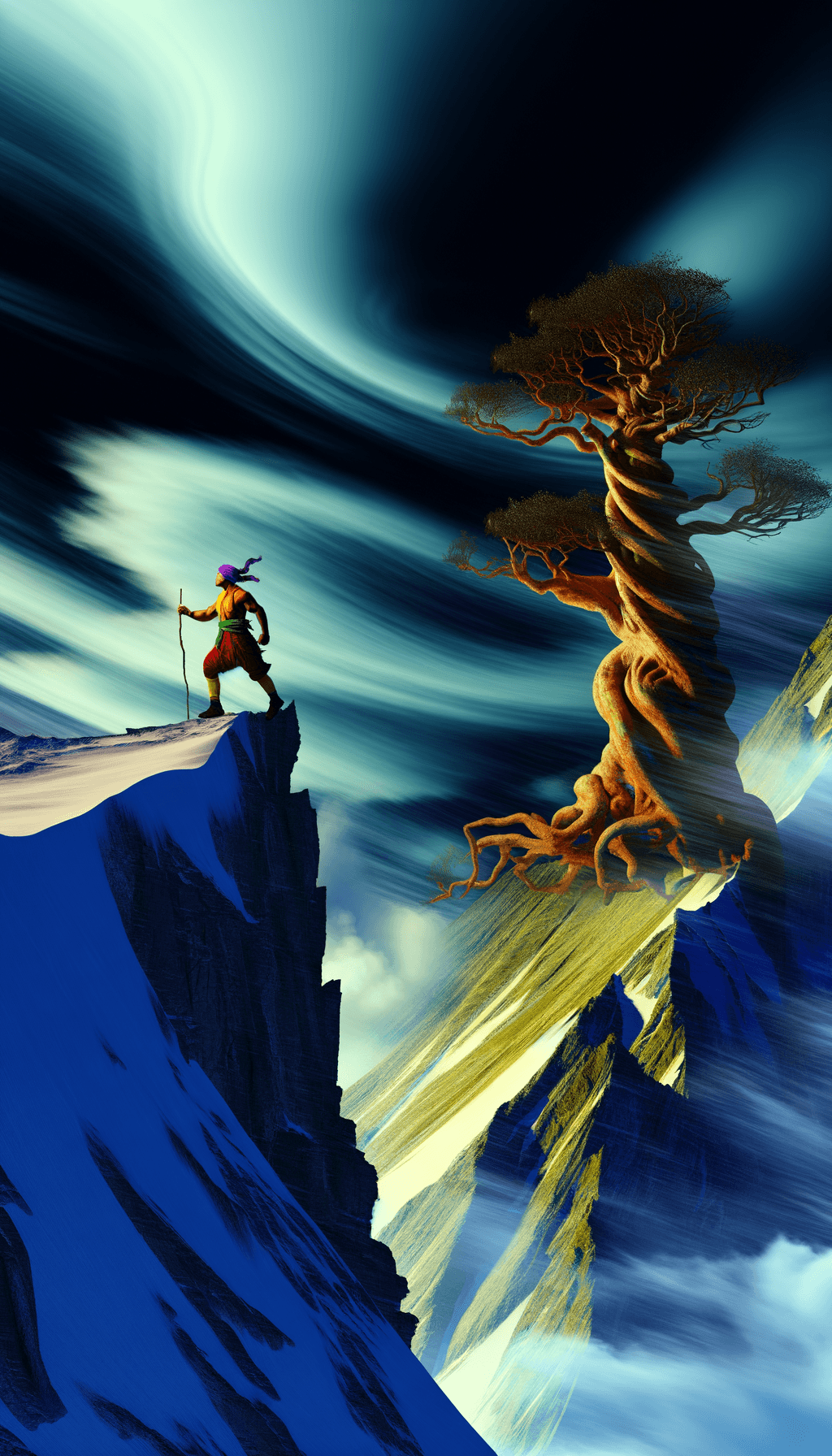
Endurance is a way of life. — John Muir
—What lingers after this line?
Perseverance in Life
This quote highlights the importance of perseverance as a fundamental part of life. It suggests that enduring challenges and hardships is not just an occasional necessity but a constant practice.
Connection to Nature
John Muir, a renowned naturalist, spent much of his life exploring and advocating for nature. The quote may reflect his belief that endurance is crucial not only in human life but also in the natural world, where survival depends on patience and resilience.
Overcoming Obstacles
Endurance helps individuals push through difficulties and setbacks. Muir’s statement encourages a mindset where persistence becomes second nature in facing life's trials.
Philosophical Perspective
This quote can be interpreted as a broader life philosophy, suggesting that a fulfilling life is built upon the ability to endure pain, hardships, and struggles with strength and determination.
Influence of Muir’s Experiences
Muir's extensive travels and environmental efforts required immense physical and mental endurance. His experiences show that perseverance was essential to his achievements and personal growth, reinforcing the message in this quote.
One-minute reflection
Where does this idea show up in your life right now?
Related Quotes
6 selectedKeep your compass fixed on purpose; storms only reshape the coastline. — John Muir
John Muir
John Muir’s image begins with a tool meant for orientation: the compass. By urging us to keep it “fixed on purpose,” he implies that purpose is not a mood or a passing preference but a stable reference point that helps u...
Read full interpretation →Don't fight the challenges. Just find a new way to stand. — Germany Kent
Germany Kent
Germany Kent’s words begin with a quiet reversal of instinct: instead of treating every challenge as an enemy to defeat, she invites us to reconsider our posture toward difficulty. The emphasis is not on surrender, but o...
Read full interpretation →Optimist: someone who figures that taking a step backward after taking a step forward is not a disaster, it's more like a cha-cha. — Robert Brault
Robert Brault
Robert Brault’s line begins with a witty redefinition: an optimist is not someone who denies backward motion, but someone who interprets it differently. Instead of treating a setback as proof of failure, the optimist see...
Read full interpretation →A mind grows by staying with difficulty long enough for the experience to change it. — Mary Catherine Bateson
Mary Catherine Bateson
Mary Catherine Bateson’s observation begins with a quiet but demanding truth: the mind does not grow merely by encountering difficulty, but by remaining with it. Challenge becomes transformative only when we resist the u...
Read full interpretation →When you are friends with your storm, you dance, instead of getting blown away. — Michael Bassey Johnson
Michael Bassey Johnson
Michael Bassey Johnson’s line begins with a striking reversal: the storm is not merely an enemy to survive, but a force one can learn to understand. In this sense, the storm may represent grief, fear, conflict, uncertain...
Read full interpretation →Just because your light flickers does not mean it is about to go out. — Yohancé Salimu
Yohancé Salimu
At first glance, Yohancé Salimu’s line separates appearance from reality. A flicker suggests instability, fatigue, or interruption, yet it does not automatically signal extinction.
Read full interpretation →More From Author
More from John Muir →Keep your compass fixed on purpose; storms only reshape the coastline. — John Muir
John Muir’s image begins with a tool meant for orientation: the compass. By urging us to keep it “fixed on purpose,” he implies that purpose is not a mood or a passing preference but a stable reference point that helps u...
Read full interpretation →Climb toward what frightens you; the view will widen your courage. — John Muir
Muir’s aphorism reshapes fear from a wall into a slope. To “climb toward what frightens you” is to accept fear as gradient rather than gate, trusting that elevation alters perception.
Read full interpretation →Stand steady in small acts; they carve the canyon of your legacy. — John Muir
The metaphor is geological before it is moral: water, patient and persistent, sculpts stone. Over millions of years, steady flow incises bedrock, a process that the Grand Canyon dramatizes across 5–6 million years of dow...
Read full interpretation →The mountains are calling and I must go. - John Muir
This quote personifies mountains as having a voice that calls out to the individual, suggesting a magnetic or spiritual pull that nature exerts on those who appreciate it.
Read full interpretation →