
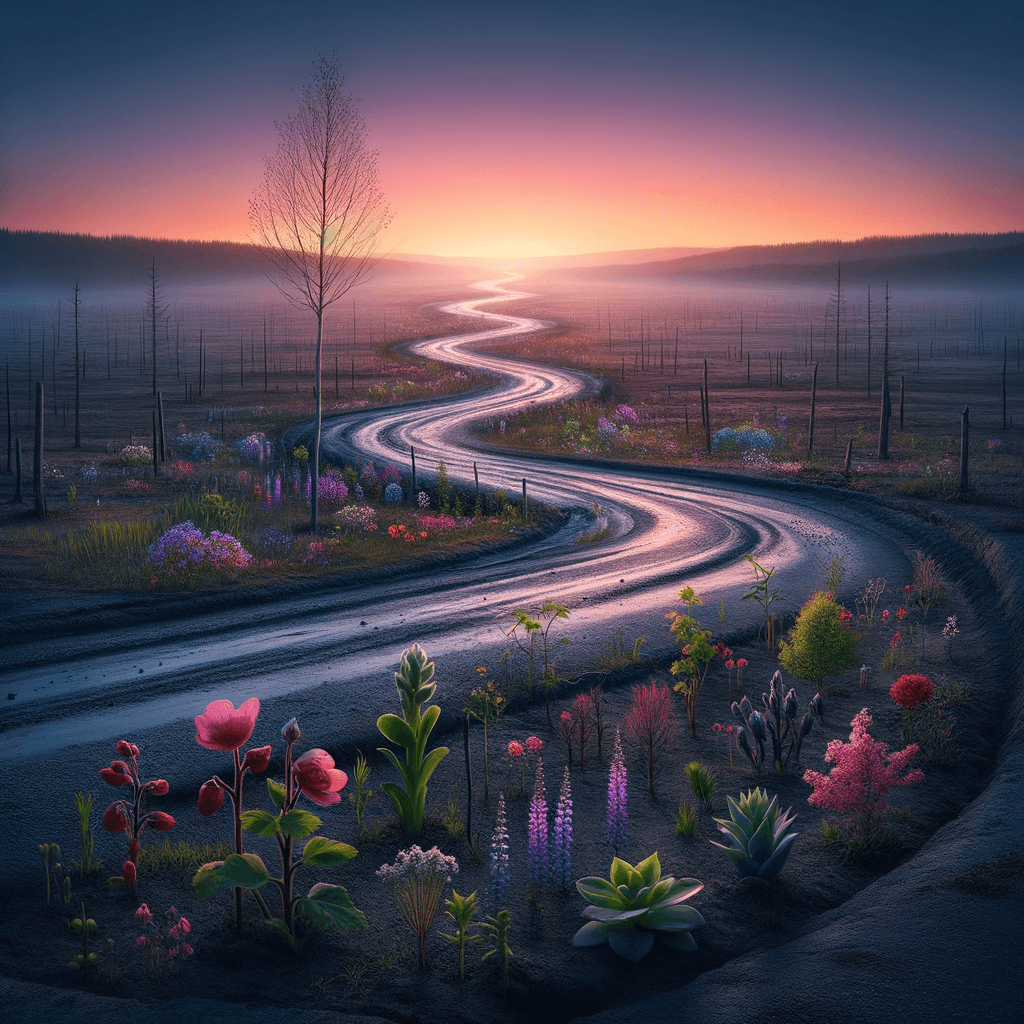
Everything will be okay in the end. If it’s not okay, it’s not the end. — John Lennon
—What lingers after this line?
Optimism and Hope
This quote conveys a sense of hope and optimism, suggesting that no matter how difficult the situation is, a positive outcome will eventually be reached.
Perseverance in Adversity
It encourages perseverance through tough times, emphasizing that struggles signify an ongoing journey rather than a final destination.
Perspective on Life's Challenges
The quote urges individuals to view life's challenges as temporary and to trust that better days lie ahead, reinforcing patience and persistence.
Circular Nature of Resolution
The idea expressed reflects a belief in the cyclical nature of life: even during tough times, situations resolve and come full circle toward peace and 'okayness.'
Philosophical Depth
John Lennon, known for his philosophical reflections, often used his words to inspire self-assurance and resilience, encouraging people to trust the natural progression of life.
One-minute reflection
Where does this idea show up in your life right now?
Related Quotes
6 selectedA good-enough novel violently written now is better than a perfect novel meticulously written never. — Elizabeth Gilbert
Elizabeth Gilbert
Elizabeth Gilbert’s line immediately shifts the argument from artistic purity to artistic existence. A “good-enough” novel, even one “violently written,” has entered the world and can move, provoke, or comfort someone; b...
Read full interpretation →Just because your light flickers does not mean it is about to go out. — Yohancé Salimu
Yohancé Salimu
At first glance, Yohancé Salimu’s line separates appearance from reality. A flicker suggests instability, fatigue, or interruption, yet it does not automatically signal extinction.
Read full interpretation →There is no road too long to the man who advances deliberately and without undue haste; there are no honors too distant to the man who prepares himself for them with patience. — Jean de La Bruyère
Jean de La Bruyère
At its core, La Bruyère’s line praises steady movement over restless speed. A long road feels intimidating only when seen all at once; once it is broken into deliberate steps, distance loses much of its power.
Read full interpretation →Today's tears water tomorrow's gardens. — Matshona Dhliwayo
Matshona Dhliwayo
At first glance, Matshona Dhliwayo’s line transforms grief into something unexpectedly fertile. Tears, usually seen as signs of pain or loss, become water for a future garden, suggesting that suffering is not merely endu...
Read full interpretation →There are no soft grounds in life. Just places to water and plough. — Athésia
Athésia
At first glance, Athésia’s line dismisses the hope that life might eventually deliver a permanently gentle terrain. There are, in this view, no naturally soft grounds waiting for us—no stage where effort disappears and g...
Read full interpretation →Hope is passion for the possible. — Søren Kierkegaard
Søren Kierkegaard
At first glance, Kierkegaard’s line transforms hope from a passive feeling into an active force. To call hope “passion for the possible” means that hope is not mere daydreaming; rather, it is an inward energy that leans...
Read full interpretation →More From Author
More from John Lennon →Life is what happens to you while you’re busy making other plans. - John Lennon
This quote highlights the unpredictable nature of life. Despite our best efforts to plan and control our circumstances, life often takes unexpected turns that reshape our experiences.
Read full interpretation →Life is what happens to you while you're busy making other plans. - John Lennon
This quote highlights that life is full of unexpected events and occurrences that happen regardless of our plans. It serves as a reminder to stay flexible and adapt to changes.
Read full interpretation →Life is what happens when you're busy making other plans. - John Lennon
This quote suggests that life is inherently unpredictable and that events often unfold in ways we don't anticipate. While we may be busy planning our futures, life itself is happening in the present moment.
Read full interpretation →Life is what happens when you're busy making other plans. - John Lennon
This quote suggests that life is full of surprises and unexpected events. Despite our best efforts to plan and control, many aspects of life are unpredictable.
Read full interpretation →