
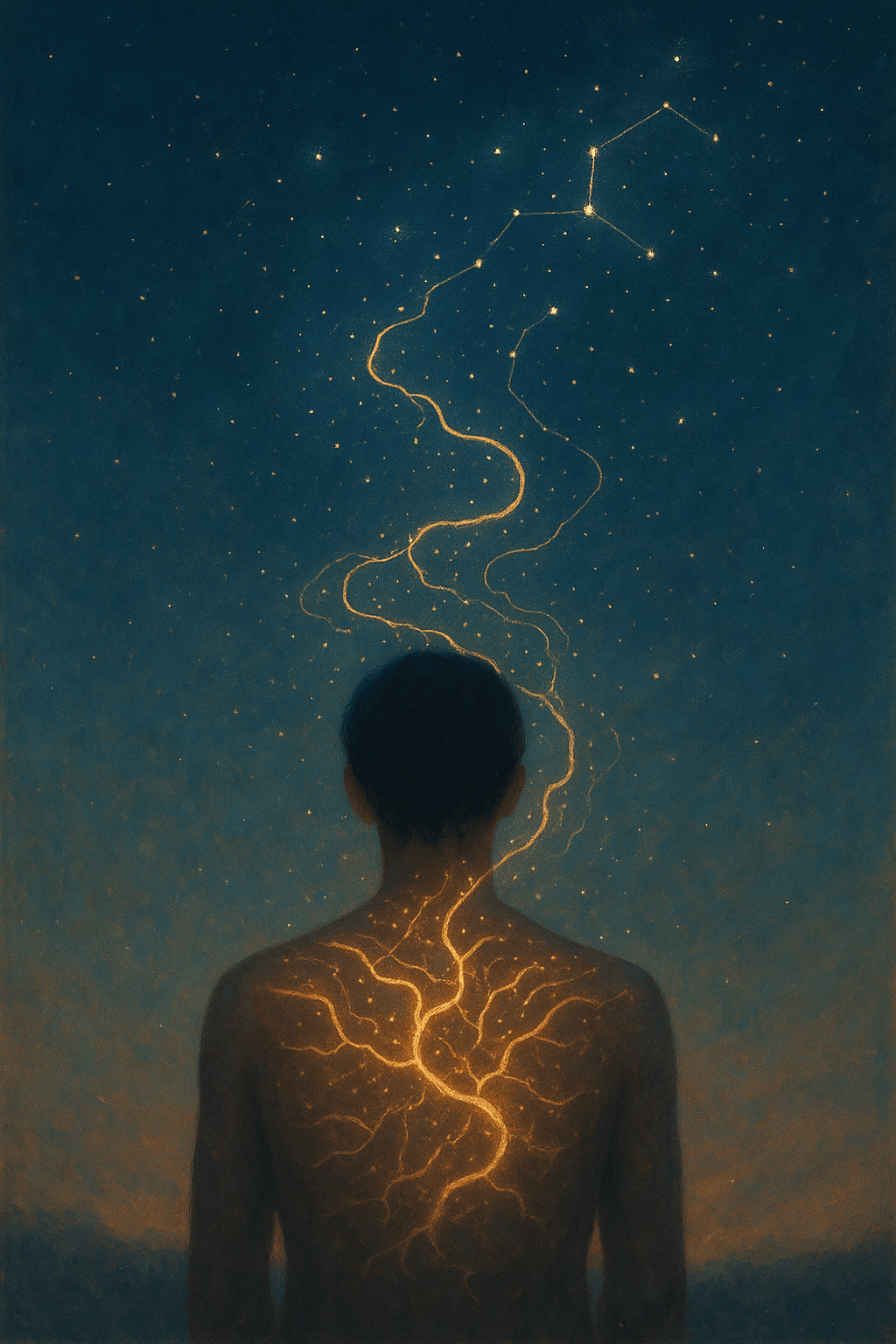
Turn your scars into maps that guide others — Anne Frank
—What lingers after this line?
From Wounds to Waypoints
Anne Frank’s insight, “Turn your scars into maps that guide others,” invites us to see our pain not as a dead end but as a path. A scar marks where something hurt us, yet it also shows that healing has begun. When she suggests turning scars into maps, she is asking us to transform private suffering into shared wisdom. Rather than hiding what has hurt us, we can trace its outline and offer it as a route for someone else to follow, or avoid. In this way, our most difficult experiences become waypoints, helping others navigate similar terrain with a little less fear and a little more clarity.
The Moral Geography of Experience
Extending this metaphor, scars sketch a kind of moral geography—regions of risk and islands of resilience. Just as explorers once drew coastlines based on dangerous voyages, individuals trace emotional or ethical coastlines with each hardship endured. Viktor Frankl’s *Man’s Search for Meaning* (1946), written after surviving Nazi camps, charts this terrain by showing how purpose can emerge from horror. His account, like Anne Frank’s diary, is not merely testimony; it functions as a map that outlines where despair lies and where meaning can still be found, even under the harshest conditions.
Vulnerability as Cartography
To turn scars into maps, we must first be willing to show them. This requires vulnerability—an openness that can feel risky, especially in cultures that prize perfection. Yet authors like Brené Brown, in *Daring Greatly* (2012), argue that such honesty is precisely what connects us. When someone names their trauma, failure, or grief, they are effectively saying, “Here is where I was lost, and here is how I found my way.” Their story becomes a charted route, giving others both language and landmarks for their own journeys through uncertainty and pain.
Guiding Without Glorifying Pain
However, transforming scars into maps does not mean romanticizing suffering. Rather than seeking out pain for its own sake, the idea emphasizes what we do with pain once it finds us. Stories like Chimamanda Ngozi Adichie’s *Half of a Yellow Sun* (2006) show that recounting war and loss can honor both the devastation and the resilience that follow. By presenting hardship honestly—neither minimizing nor glorifying it—such narratives guide readers through ethical questions: how to remain humane under pressure, how to grieve without becoming hardened, and how to rebuild after destruction.
Responsibility to Future Travelers
If our scars can become maps, then we hold a quiet responsibility to future travelers. Survivors of injustice, from civil rights activists to refugees, often choose to speak so that others may be spared their path. The testimonies collected in the USC Shoah Foundation’s oral histories, for example, serve both as warnings and as beacons of endurance. By documenting where hatred leads, they help future generations recognize the early signs of danger and choose different routes. In this sense, sharing scars is an act of stewardship, preserving hard-earned knowledge for those who come after us.
Finding Meaning in Shared Pathways
Ultimately, Anne Frank’s metaphor points toward a communal understanding of meaning. A map is only useful when it is shared, and so the transformation of scars into guides suggests that our lives are intertwined. When one person’s survival story prevents another’s despair, private sorrow acquires public value. Over time, countless individual maps begin to overlap, forming a collective atlas of human endurance. By adding our own routes—no matter how modest—we participate in a larger project: turning suffering into orientation, loneliness into solidarity, and fear into a path that is, at last, lit for someone else.
One-minute reflection
Where does this idea show up in your life right now?
Related Quotes
6 selectedKeep a small light burning in your hands — enough to move forward when doubts gather. — Anne Frank
Anne Frank
Anne Frank’s image of a small light asks us to honor modest, portable hope. It is not a blazing bonfire or a noon sun; it is a flame cupped in two hands, vulnerable yet steady.
Read full interpretation →Don't fight the challenges. Just find a new way to stand. — Germany Kent
Germany Kent
Germany Kent’s words begin with a quiet reversal of instinct: instead of treating every challenge as an enemy to defeat, she invites us to reconsider our posture toward difficulty. The emphasis is not on surrender, but o...
Read full interpretation →Optimist: someone who figures that taking a step backward after taking a step forward is not a disaster, it's more like a cha-cha. — Robert Brault
Robert Brault
Robert Brault’s line begins with a witty redefinition: an optimist is not someone who denies backward motion, but someone who interprets it differently. Instead of treating a setback as proof of failure, the optimist see...
Read full interpretation →A mind grows by staying with difficulty long enough for the experience to change it. — Mary Catherine Bateson
Mary Catherine Bateson
Mary Catherine Bateson’s observation begins with a quiet but demanding truth: the mind does not grow merely by encountering difficulty, but by remaining with it. Challenge becomes transformative only when we resist the u...
Read full interpretation →When you are friends with your storm, you dance, instead of getting blown away. — Michael Bassey Johnson
Michael Bassey Johnson
Michael Bassey Johnson’s line begins with a striking reversal: the storm is not merely an enemy to survive, but a force one can learn to understand. In this sense, the storm may represent grief, fear, conflict, uncertain...
Read full interpretation →Just because your light flickers does not mean it is about to go out. — Yohancé Salimu
Yohancé Salimu
At first glance, Yohancé Salimu’s line separates appearance from reality. A flicker suggests instability, fatigue, or interruption, yet it does not automatically signal extinction.
Read full interpretation →More From Author
More from Anne Frank →Keep a quiet hope alive and let it guide the brave choices you make. — Anne Frank
Anne Frank’s line begins with a surprising premise: hope can be quiet. Instead of the loud optimism that denies fear or hardship, she points to a steadier inner posture—something you keep alive privately, even when circu...
Read full interpretation →If doubt knocks, invite determination to answer the door — Anne Frank
Anne Frank’s line turns an abstract struggle into a vivid scene: doubt becomes an unexpected visitor, and the self becomes a home with agency over who gets attention. By imagining doubt “knocking,” the quote admits that...
Read full interpretation →Everyone has inside of him a piece of good news. — Anne Frank
Anne Frank’s line begins with a quiet insistence: no matter what a person shows on the outside, something hopeful exists within them. By calling it “good news,” she frames human goodness not as a vague ideal but as a dis...
Read full interpretation →Keep your spirit written on paper; dreams sharpen into designs there. — Anne Frank
Anne Frank’s line begins with an intimate instruction: keep your spirit on paper. In other words, writing can hold what feels too shifting to carry solely in the mind—hopes, grief, curiosity, and resolve.
Read full interpretation →