
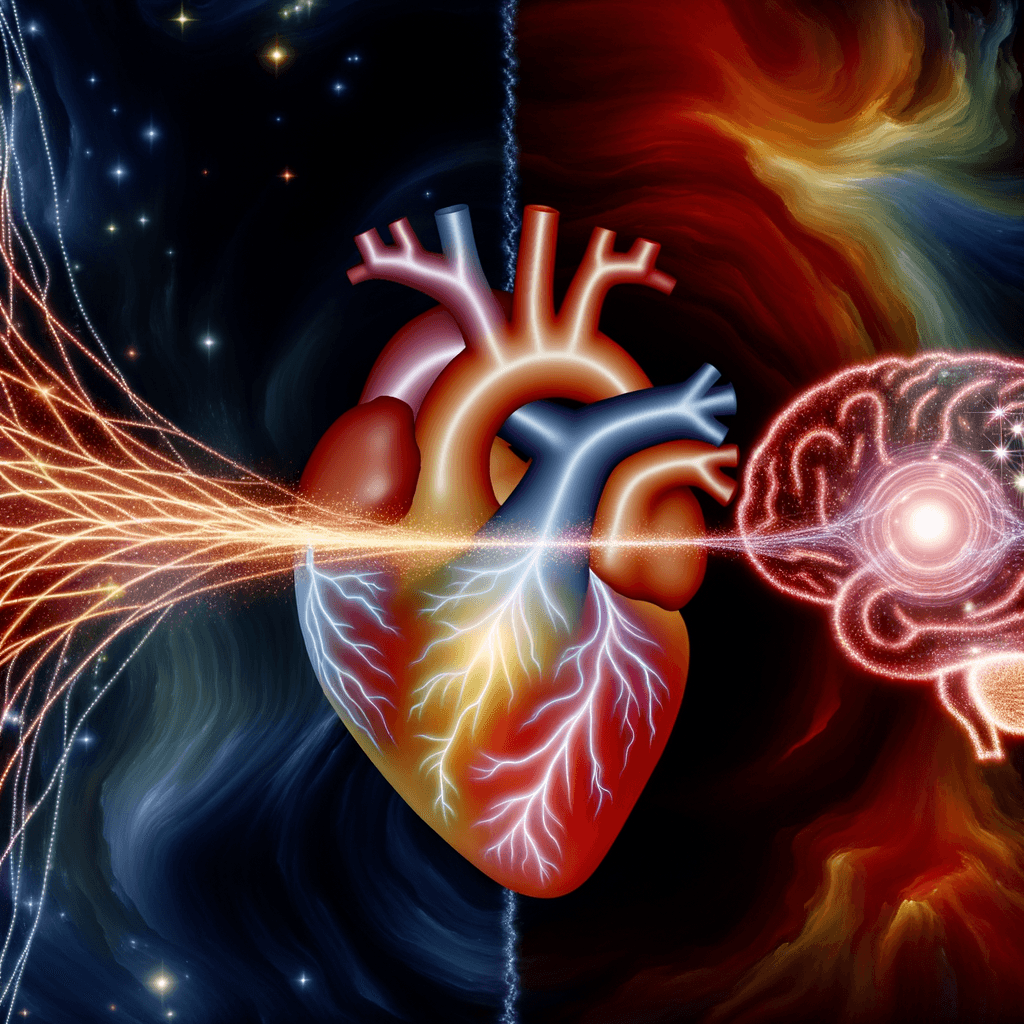
The heart is the chief feature of a functioning mind. — Frank Lloyd Wright
—What lingers after this line?
Interconnection of Emotion and Intellect
This quote suggests that emotions and intellect are not separate but deeply interconnected. A truly functioning mind is not just rational but also guided by emotions and empathy.
The Role of Passion in Thought
Wright implies that logic alone is not enough; passion and emotions are essential for meaningful decision-making and creativity.
Holistic Thinking
True intelligence involves both analytical thinking and emotional awareness. The heart symbolizes compassion and intuition, which complement rational thought.
Architectural Philosophy
Frank Lloyd Wright, a renowned architect, believed in designing structures that harmonize with human emotions and the natural world. His statement may reflect his belief that creativity and intellect must be driven by passion and human-centered values.
The Balance Between Reason and Feeling
This quote advocates that a well-functioning mind does not suppress emotions but integrates them into reasoning, leading to greater wisdom and understanding.
One-minute reflection
Why might this line matter today, not tomorrow?
Related Quotes
6 selectedFollow your heart, but take your brain with you. — Franklin P. Jones, USA.
Franklin P. Jones, USA.
This quote emphasizes the importance of finding a balance between your emotions and rational thinking. While it encourages pursuing one's passions and feelings, it also highlights the necessity of using logic to guide th...
Read full interpretation →It is not enough to know your craft – you have to have feeling. — Edouard Manet
Edouard Manet
At first glance, Manet’s remark seems simple: skill matters, but skill by itself is incomplete. To know one’s craft is to understand the mechanics—composition, color, timing, form, structure.
Read full interpretation →The creative process is a journey of 95 percent intuitive, seat-of-the-pants, at-the-moment decisions that you can't even explain. — George Saunders
George Saunders
George Saunders presents creativity not as a tidy formula but as a lived, improvisational act. At the heart of his claim is the idea that most artistic choices arise in motion, before the mind can neatly justify them.
Read full interpretation →The goal is to get to the point where you're not thinking anymore. You're just reacting to the magic. — Rick Rubin
Rick Rubin
Rick Rubin’s line points to a subtle creative destination: the moment thinking stops being the driver and becomes, at most, a quiet passenger. Instead of deliberating over each choice, the artist responds in real time—li...
Read full interpretation →In an age of technical speed, the most valuable skills are the human ones: empathy, adaptability, and the quiet strength of emotional intelligence. — Chamidu Weerasinghe
Chamidu Weerasinghe
Chamidu Weerasinghe’s quote begins with a simple observation: technology accelerates everything—communication, production, decision-making—until speed feels like the natural condition of modern life. Yet as our tools bec...
Read full interpretation →Bold beginnings are born of listening to the tiny urgings of your heart. — Sappho
Sappho
Sappho frames courage not as a sudden thunderclap but as the outcome of attention: bold beginnings arise when we listen closely to what feels quietly true. The phrase “tiny urgings” suggests something easily dismissed—an...
Read full interpretation →More From Author
More from Frank Lloyd Wright →The beauty of craftsmanship points to the beauty of the source of the craftsmanship. — Frank Lloyd Wright
Frank Lloyd Wright’s remark begins with a simple observation: when we encounter exquisite craftsmanship, we are moved not only by the object itself but also by the mind and spirit behind it. A finely joined chair, a care...
Read full interpretation →The thing always happens that you really believe in; and the belief in a thing makes it happen. — Frank Lloyd Wright
Frank Lloyd Wright’s statement underscores the profound influence that belief has in shaping outcomes. He asserts that events come to pass not merely by chance, but because they are infused with conviction.
Read full interpretation →An idea is salvation by imagination. — Frank Lloyd Wright
Frank Lloyd Wright’s statement, 'An idea is salvation by imagination,' challenges us to see creativity as our path to progress and redemption. By equating the act of imagining with salvation, Wright positions the human c...
Read full interpretation →