
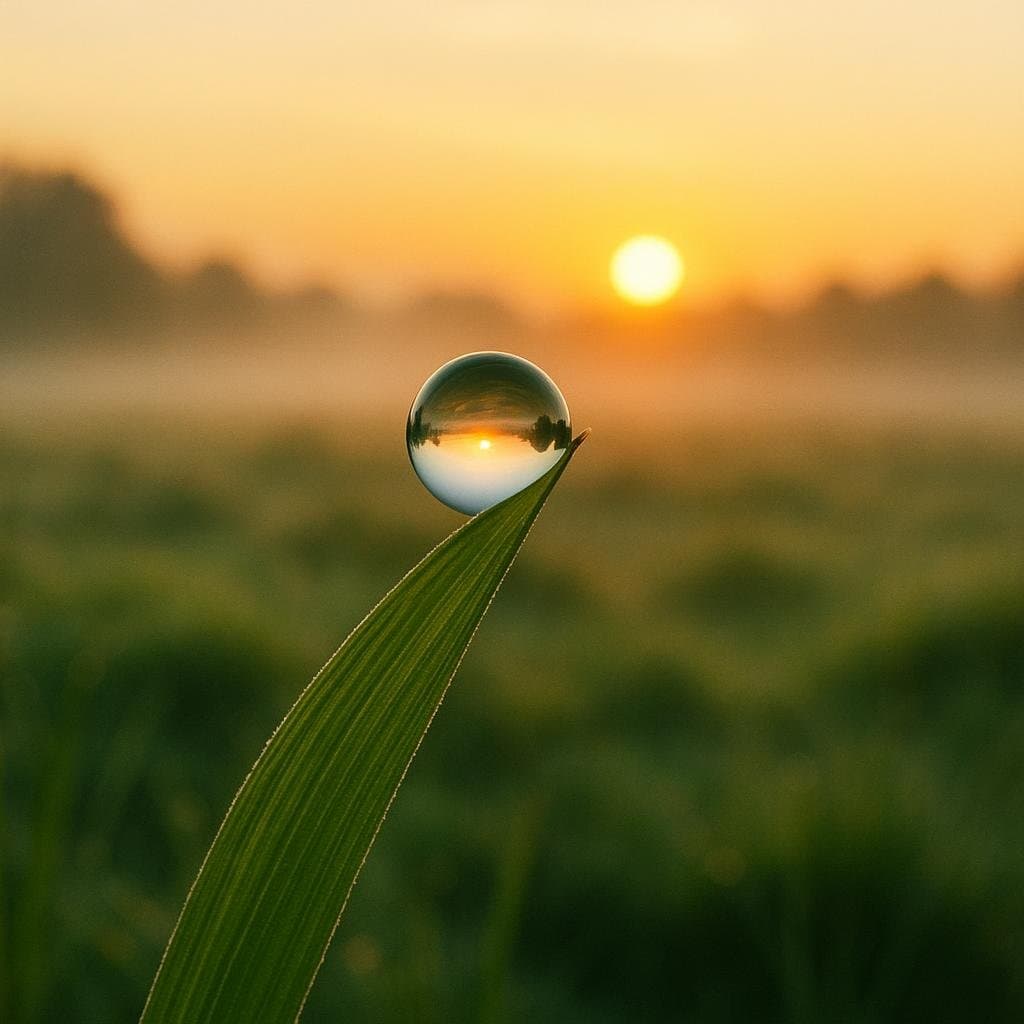
The simple things are also the most extraordinary things. — Paulo Coelho
—What lingers after this line?
The Wisdom of Simplicity
Paulo Coelho’s insight invites us to reflect on how everyday moments, often overlooked, hold remarkable power. In a world enamored with complexity, Coelho turns our gaze to the inherent beauty and meaning found in life’s simplest acts—a shared meal, a walk in nature, or a kind smile. He encourages us to recognize that true wonder can reside not in the extravagant, but in ordinary experiences approached with awareness.
Historical Perspectives on the Extraordinary Ordinary
Throughout history, thinkers and artists have explored the profound within the mundane. For example, Henry David Thoreau’s *Walden* (1854) documents his pursuit of a simpler, more intentional life in the woods, revealing how the unadorned routines of daily existence can lead to spiritual insight. By valuing simplicity, Thoreau and Coelho both remind us that awe is not reserved solely for grand events or achievements.
The Role of Mindfulness
Building on this idea, mindfulness practices teach us to be fully present in each moment, amplifying our appreciation of the ordinary. Buddhist monk Thich Nhat Hanh writes about finding happiness washing dishes or breathing mindfully—a testament to Coelho’s assertion. Cultivating such awareness allows us to uncover extraordinary richness in tasks we might otherwise dismiss as trivial.
Moments That Matter Most
Furthermore, many people recall that their most cherished memories are rooted in simple pleasures: laughter with family, the first blossoms of spring, or the warmth of sunlight on their face. These instances, though outwardly modest, linger in our minds and shape our sense of fulfillment. Coelho’s words express a universal truth—what is subtle can often feel most meaningful.
Embracing Simplicity in Modern Life
Finally, in today’s fast-paced society, returning to simplicity can be an act of courage and clarity. Minimalist movements and slow-living philosophies exemplify a cultural shift toward valuing less over more, focusing on depth rather than breadth. As we consciously choose to honor the ordinary, we rediscover, as Coelho reminds us, that life’s simplest things are astonishingly extraordinary.
Recommended Reading
As an Amazon Associate, we earn from qualifying purchases.
One-minute reflection
Why might this line matter today, not tomorrow?
Related Quotes
6 selectedIt is nice when I have days off to go home and relax and literally take the weight off my shoulders and enjoy the simple things. — Michael B. Jordan
Michael B. Jordan
At its heart, Michael B. Jordan’s reflection presents rest not as laziness, but as a vital form of release.
Read full interpretation →Sometimes, the simple things are more fun and meaningful than all the banquets in the world. — E.A. Bucchianeri
E.A. Bucchianeri
At first glance, Bucchianeri’s line contrasts modest pleasures with extravagant abundance, yet its deeper point is about value rather than scale. A banquet symbolizes excess, display, and public celebration, while ‘simpl...
Read full interpretation →Beauty does not reserve itself for special elite moments or instances; it does not wait for perfection but is present already secretly in everything. — John O'Donohue
John O'Donohue, Ireland.
At its core, John O'Donohue’s line rejects the idea that beauty belongs only to exceptional events, refined settings, or culturally approved masterpieces. Instead, he proposes something more generous: beauty is not ratio...
Read full interpretation →Create a small miracle each morning, and the world will learn its name. — Toni Morrison
Toni Morrison
Toni Morrison’s line treats “miracle” not as a rare, thunderclap event but as something intentionally made—small, repeatable, and close at hand. By placing it “each morning,” she frames renewal as a daily craft rather th...
Read full interpretation →Make the ordinary miraculous by tending it with persistent love. — Albert Camus
Albert Camus
Camus’s line shifts “the miraculous” away from rare spectacle and toward deliberate attention. Instead of waiting for life to become extraordinary on its own, he implies we can cultivate wonder through how we show up eac...
Read full interpretation →Sometimes the smallest things take up the most room in your heart. — A.A. Milne, UK.
A.A. Milne, UK.
This quote highlights how seemingly insignificant moments or gestures can have a profound emotional impact, suggesting that love and affection can be found in the little things.
Read full interpretation →More From Author
More from Paulo Coelho →It is a good idea always to do something relaxing prior to making an important decision in your life. — Paulo Coelho
Paulo Coelho’s remark begins with a simple but powerful premise: important decisions are rarely improved by agitation. When the mind is tense, it tends to confuse urgency with clarity, pushing us toward choices made out...
Read full interpretation →Your 'yes' has no value until you learn to say 'no'. — Paulo Coelho
Paulo Coelho’s line hinges on a simple contrast: a “yes” only carries weight when an alternative is genuinely available. If you can’t—or won’t—say “no,” agreement becomes automatic rather than chosen, and it starts to re...
Read full interpretation →Dare to begin where fear says to stop; the first step redraws the map — Paulo Coelho
Paulo Coelho’s line treats fear less as a warning and more as a border we mistakenly accept as permanent. When fear says “stop,” it often isn’t pointing to actual danger; it’s signaling uncertainty, inexperience, or the...
Read full interpretation →Maybe the journey isn't so much about becoming anything. Maybe it's about un-becoming everything that isn't really you. — Paulo Coelho
Paulo Coelho’s line reframes personal growth as an act of subtraction. Instead of imagining the self as a project that must be upgraded with new traits, titles, or achievements, he suggests the deeper task is removing wh...
Read full interpretation →