
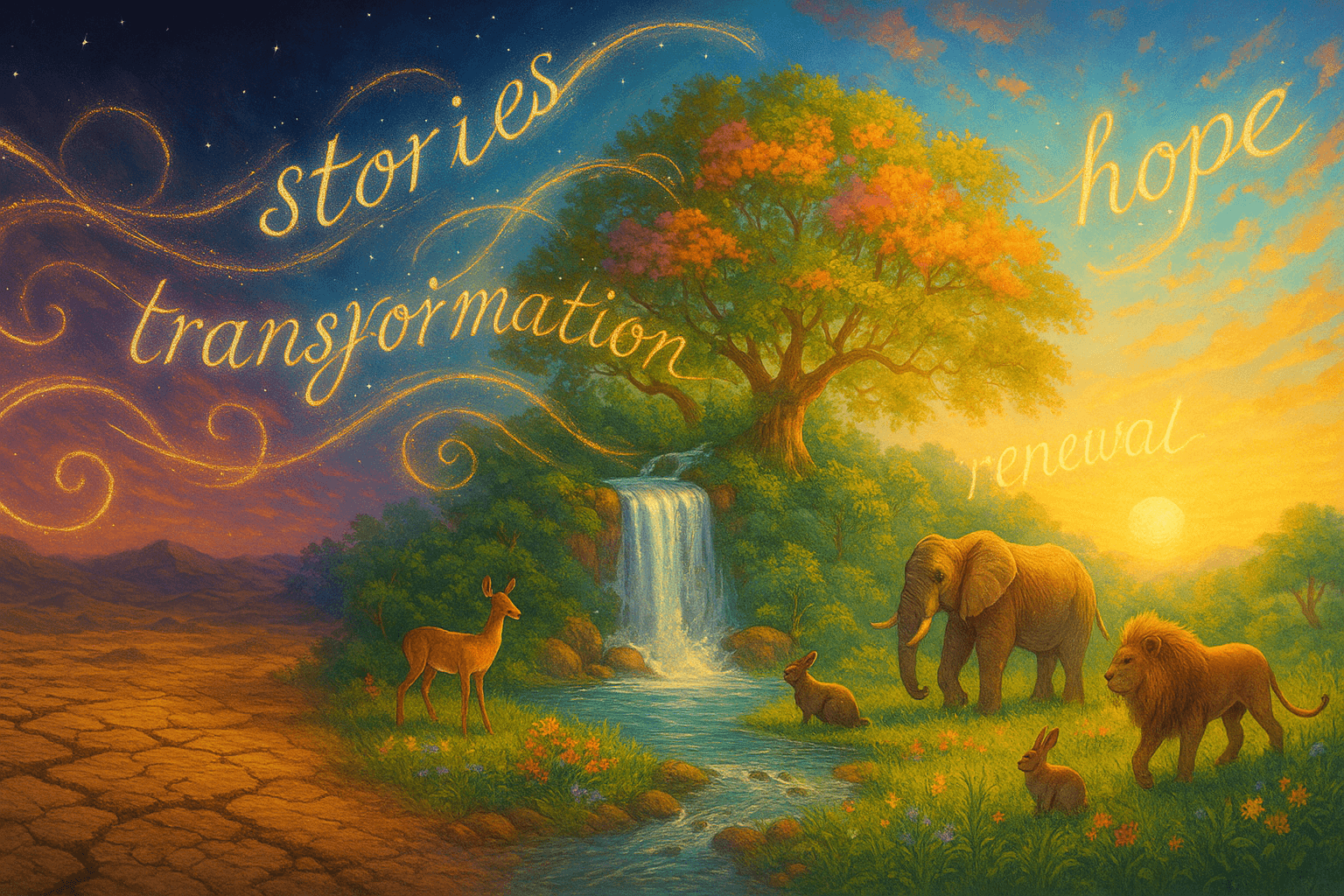
Those who tell stories rule the world. — Hopi Proverb
—What lingers after this line?
The Universality of Storytelling
From ancient fireside gatherings to contemporary digital platforms, storytelling has been a constant in human civilization. This Hopi proverb highlights the profound influence that stories wield across cultures and epochs, suggesting that those who craft and share narratives hold a unique power to shape beliefs and behavior. As seen in Homer’s oral epics, or even folktales passed through generations, storytelling forms the backbone of cultural identity.
Storytellers as Custodians of Memory
Moving from universality to function, stories often serve as vessels for collective memory. They preserve traditions, values, and histories that might otherwise fade with time. For example, in Chinua Achebe’s novel 'Things Fall Apart' (1958), oral traditions are depicted as the heartbeat of Igbo society—guarding wisdom and ensuring survival. Such narrators are not mere entertainers but custodians who safeguard a community’s essence.
Influence Over Hearts and Minds
The transition from preservation to influence is subtle yet powerful. Stories have the ability to sway emotions and mold perspectives. Political leaders, advertisers, and activists alike use narrative techniques to inspire loyalty, spark change, or challenge norms. Abraham Lincoln, famously moved by Harriet Beecher Stowe’s 'Uncle Tom’s Cabin' (1852), acknowledged the novel’s role in influencing attitudes toward slavery—demonstrating the political agency of storytelling.
Shaping Cultural and Social Realities
Beyond individual persuasion, stories collectively define what a society values or rejects. Consider the role of national myths in unifying people—America’s Founding Fathers crafted a narrative of liberty and opportunity, while classical Greek tragedies taught lessons about hubris and justice. Through shared narratives, communities establish their boundaries, aspirations, and ultimately, their destinies.
The Storyteller’s Responsibility
Finally, with such power comes great responsibility. Storytellers shape not only the worldviews of listeners but also future paths for societies. Modern journalists, filmmakers, and influencers must recognize the weight their stories carry. Misleading or divisive narratives can sow discord, while truthful and compassionate storytelling can foster understanding and unity—reminding us why, as the proverb suggests, those who tell stories truly rule the world.
One-minute reflection
What does this quote ask you to notice today?
Related Quotes
6 selectedIt is not the voice that commands the story: it is the ear. — Italo Calvino
Italo Calvino
At first glance, Calvino’s line overturns a common assumption about storytelling. We often praise the speaker, the narrator, or the authorial voice as the force that leads a tale forward.
Read full interpretation →Every story I create, creates me. I write to create myself. — Octavia E. Butler
Octavia E. Butler
At first glance, Octavia E. Butler’s remark turns writing into more than expression; it becomes a process of becoming.
Read full interpretation →Our stories are medicine for the present and lessons for the future. — Chag Lowry
Chag Lowry
Chag Lowry’s line begins by treating story not as entertainment but as care: something administered in the middle of real conditions. In the present, people reach for narratives to name what hurts, what’s changing, and w...
Read full interpretation →Begin each chapter with kindness and your story will find readers — Jane Austen
Jane Austen
Jane Austen’s advice treats a chapter opening as more than a technical necessity; it’s an invitation. To “begin…with kindness” implies that the first sentences should feel like a door held open rather than a test the rea...
Read full interpretation →Tell stories with your work; let creation sing the possibilities you imagine. — Alice Walker
Alice Walker
Alice Walker’s invitation to “tell stories with your work” suggests that every act of creation—whether writing, painting, coding, or organizing a community event—can carry a narrative. Rather than treating work as a seri...
Read full interpretation →Stories change the world when they are carried into action. — Chinua Achebe
Chinua Achebe
Chinua Achebe’s claim insists that a story’s true power is proven not in admiration but in movement. He suggests that narratives become transformative when they shape choices, alter habits, and reorganize collective life...
Read full interpretation →More From Author
More from Hopi Proverb →