#Boundary Setting
Quotes tagged #Boundary Setting
Quotes: 11

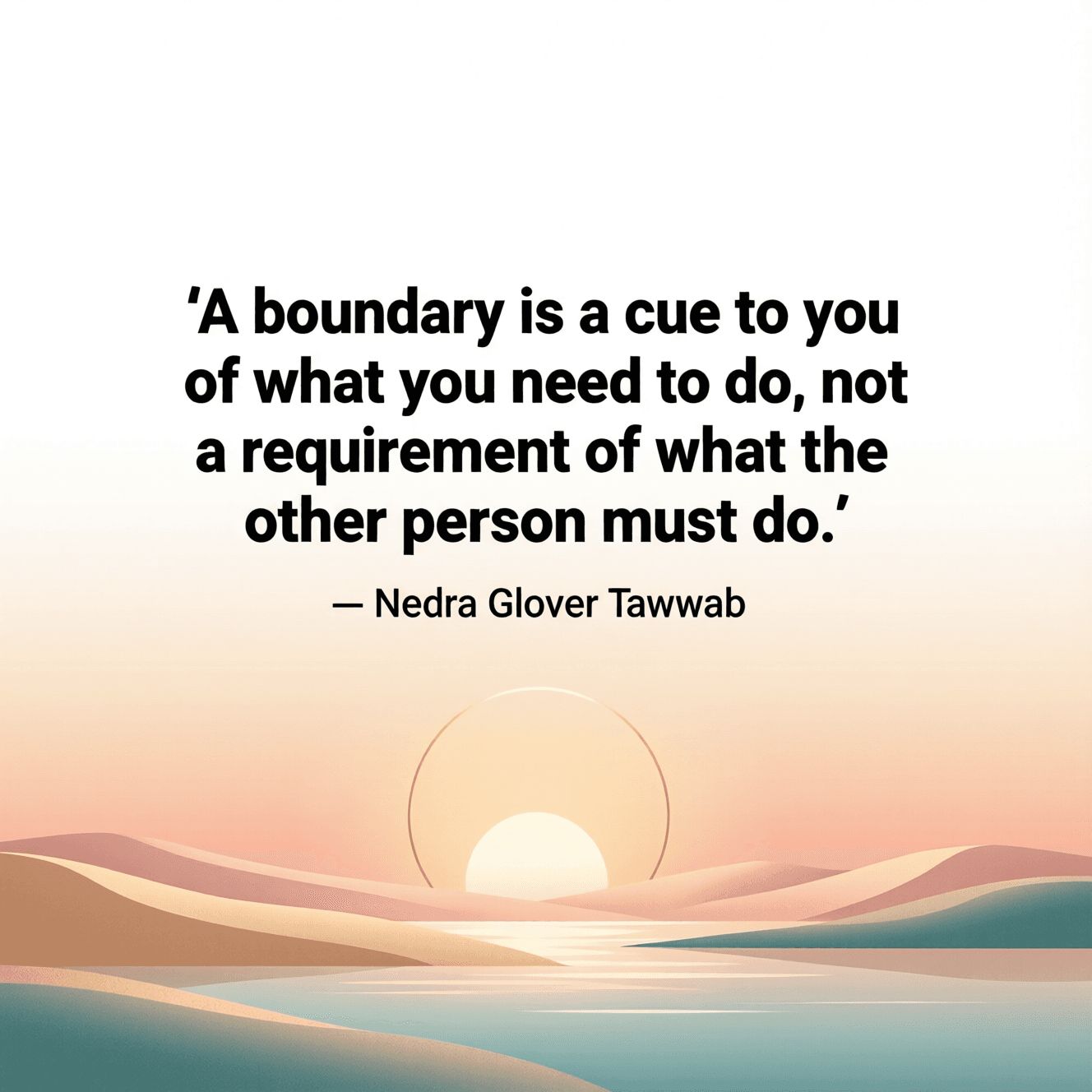
Boundaries as Clarity, Not Cruelty or Guilt
Once boundaries are understood as clarity, the next question is why they can provoke anger or offense. A “no” can disrupt expectations, routines, or a sense of entitlement—especially when someone is accustomed to access without needing to ask. In everyday life, that may look like a friend who always assumes you’ll cover plans, a relative who expects instant availability, or a coworker who offloads tasks at the last minute. Because “no” is a friction point, it reveals what the relationship was relying on. If the connection depends on your compliance, the boundary doesn’t create the conflict so much as expose it. [...]
Created on: 2/6/2026

No, Boundaries, and the Price of Peace
Moving beyond the grammar of “no,” the quote anchors the message in a deeper goal: peace. Peace here isn’t laziness or avoidance; it’s the internal steadiness that comes from living in alignment with one’s limits. When peace is treated as valuable, boundaries stop looking like walls and start looking like maintenance—like locking your door at night. This perspective challenges the assumption that being “good” means being endlessly available. Instead, it suggests that emotional well-being is a legitimate priority, not a prize you earn after everyone else is satisfied. [...]
Created on: 2/5/2026

Mastery Through Subtraction, Not Endless Addition
The quote reframes mastery as an act of selection rather than accumulation. Instead of measuring progress by how much you pack into a day, it argues that excellence comes from choosing what deserves your limited attention—and refusing what does not. This shift matters because time isn’t the only constraint; energy, clarity, and patience are finite too. As a result, mastery begins to look less like heroic productivity and more like disciplined priority: doing fewer things, but doing them with depth. [...]
Created on: 2/5/2026

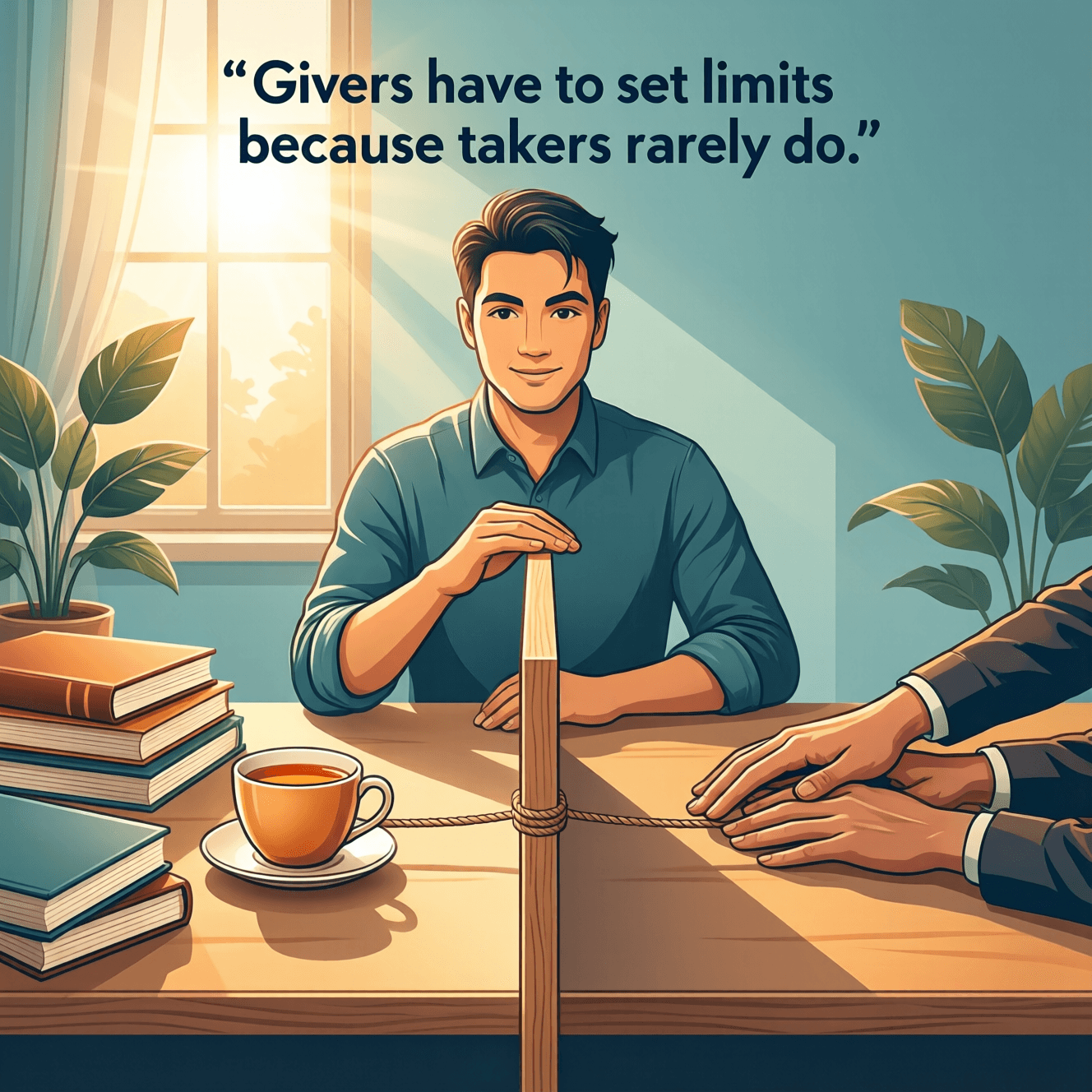
Why Givers Must Set Firm Boundaries
Rachel Wolchin’s line distills a recurring social imbalance: people who naturally give—time, care, attention, money—often assume others will self-regulate their demands. However, “takers” operate differently, pursuing what they can get rather than what is fair, which means the relationship’s equilibrium doesn’t correct itself. As a result, the giver’s generosity can quietly become the very mechanism that enables overreach. From there, the quote shifts responsibility to the person most likely to be depleted: the giver. It’s not an accusation against giving; it’s an argument that generosity without limits invites a one-sided dynamic that grows more entrenched over time. [...]
Created on: 2/4/2026

How Boundaries Make Love Possible for Both
Because boundaries involve limits, they can be confused with controlling behavior. The difference is direction: a boundary describes what I will do to care for myself, while control dictates what you must do to ease me. “I will leave the room if yelling starts” is a boundary; “You are not allowed to be angry” is control. This distinction keeps Hemphill’s idea from being weaponized. Boundaries are not a moral high ground or a threat; they’re an honest statement of capacity—how close I can be without losing respect for either of us. [...]
Created on: 2/4/2026

Boundaries as Courageous Acts of Self-Love
Moving from the individual to the relational, boundaries can actually increase trust. Clear limits reduce guesswork and prevent unspoken contracts like “I’ll do this for you, and you’ll owe me later.” Over time, that clarity can make relationships feel safer and more predictable. A simple anecdote illustrates this: a team member who says, “I don’t answer emails after 7 p.m., but I’ll respond first thing,” may initially face pushback. Yet the consistency often leads colleagues to respect that limit—and to communicate more thoughtfully—because expectations are transparent. [...]
Created on: 1/30/2026

The Quiet Power of Saying No
Once strength is seen as choice, boundaries become its practical expression. Saying no draws a line around time, attention, health, and dignity, clarifying what you will and will not trade away. This is especially important because modern life rewards availability; without boundaries, even meaningful goals can be crowded out by urgent requests. As a result, “no” functions like a filter. It preserves room for work that matters, relationships that are reciprocal, and rest that restores—making it a protective act rather than a selfish one. [...]
Created on: 1/20/2026