#Community Support
Quotes tagged #Community Support
Quotes: 5

Resilience Grows Strongest Through Community Support
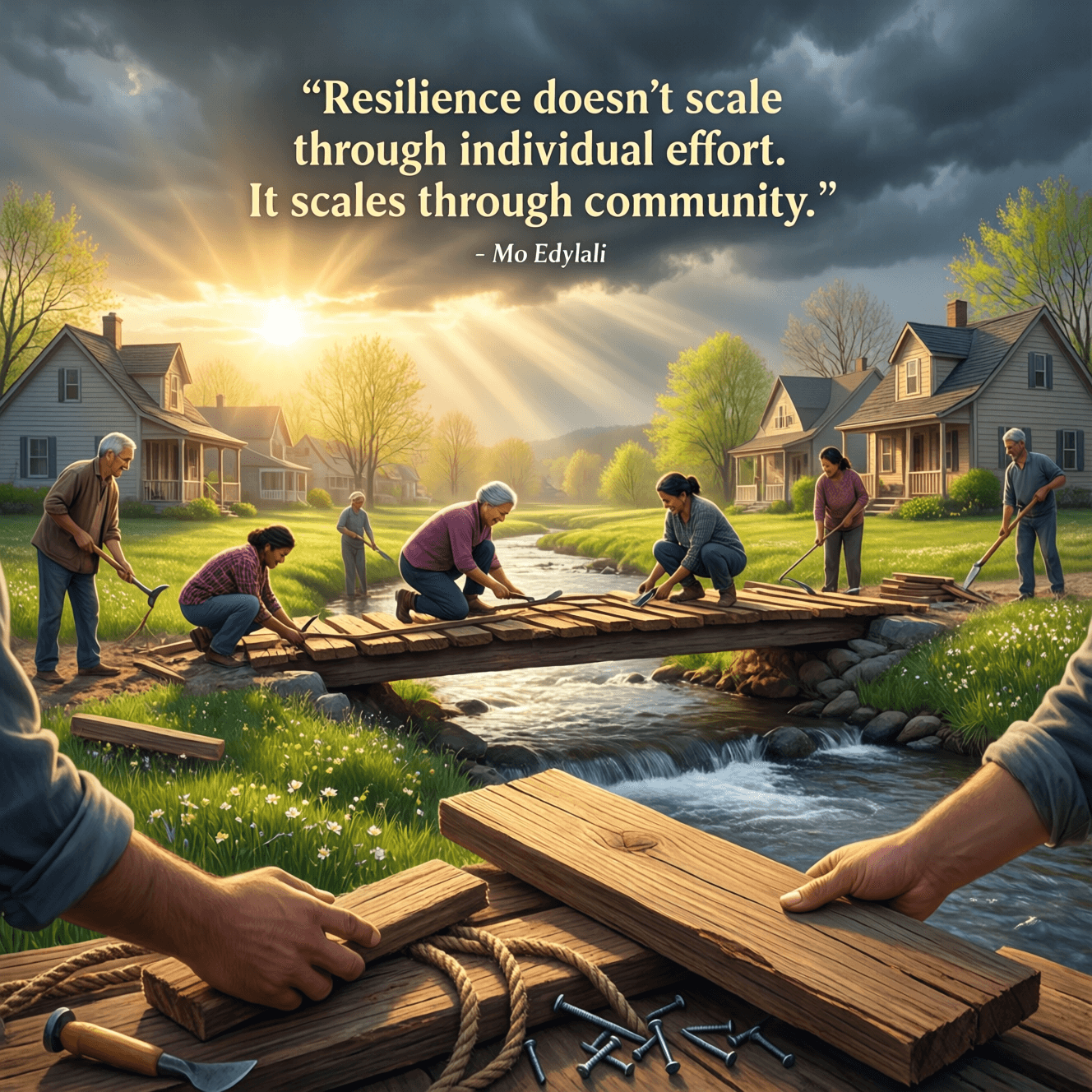
One concrete way community turns into scalable resilience is mutual aid—people directly meeting one another’s needs without waiting for formal institutions to catch up. Historically, mutual aid societies offered pooled resources for funerals, illness, or unemployment, creating a buffer that no single member could have maintained alone. Moving from principle to everyday life, mutual aid can be as small as a childcare swap among parents or as coordinated as a neighborhood food distribution after a storm. These arrangements don’t just help one person survive; they create a template others can adopt, strengthening the entire group over time. [...]
Created on: 2/8/2026

Healing Happens Through Connection, Not Isolation
Finally, hooks’ statement is an ethical invitation: to treat interdependence as a mature form of strength rather than a mark of weakness. Asking for help, joining communities of care, and offering support in return are not detours from healing; they are part of its route. This conclusion also expands outward: if healing is rarely solitary, then responsibility is shared. Families, institutions, and communities matter—not just as backdrops but as active participants in whether people can recover. In that light, the quote becomes both a personal guide and a social critique: we heal best when we build worlds where connection is possible and care is ordinary. [...]
Created on: 1/29/2026

Look for the Helpers, Find Resilience
At the outset, Fred Rogers recalls his mother’s counsel as a way to steady a child’s mind in the face of frightening headlines: when fear spikes, redirect attention toward those who are helping. This simple reframe does not deny danger; rather, it widens the lens so courage and care share the frame with chaos. Rogers repeated the line across interviews and writings, turning a family saying into a public ethic. In doing so, he offered a habit of perception that children can actually practice—looking for paramedics, neighbors, and volunteers—as an antidote to helplessness. [...]
Created on: 9/22/2025

Finding the Helpers: Hope in Every Crisis
Seeing helpers invites participation: donate blood, join a Community Emergency Response Team, check on elders, or contribute to local mutual-aid funds. Neighborhoods with strong "collective efficacy"—shared trust and willingness to intervene—experience less violence and greater recovery after shocks (Sampson, Raudenbush, & Earls, Science, 1997). Practically, start small: learn basic first aid, map resources on your block, and practice a communication plan. Each act compounds, transforming observers into co-stewards. As engagement grows, we also notice gaps no volunteer can fill alone, which turns our attention to the systems that shape who needs help in the first place. [...]
Created on: 8/31/2025

Encourage One Another and Build Each Other Up - 1 Thessalonians 5:11
Building each other up contributes to better mental health by promoting positivity and reducing feelings of isolation. Encouragement acts as a buffer against stress and discouragement. [...]
Created on: 9/3/2024