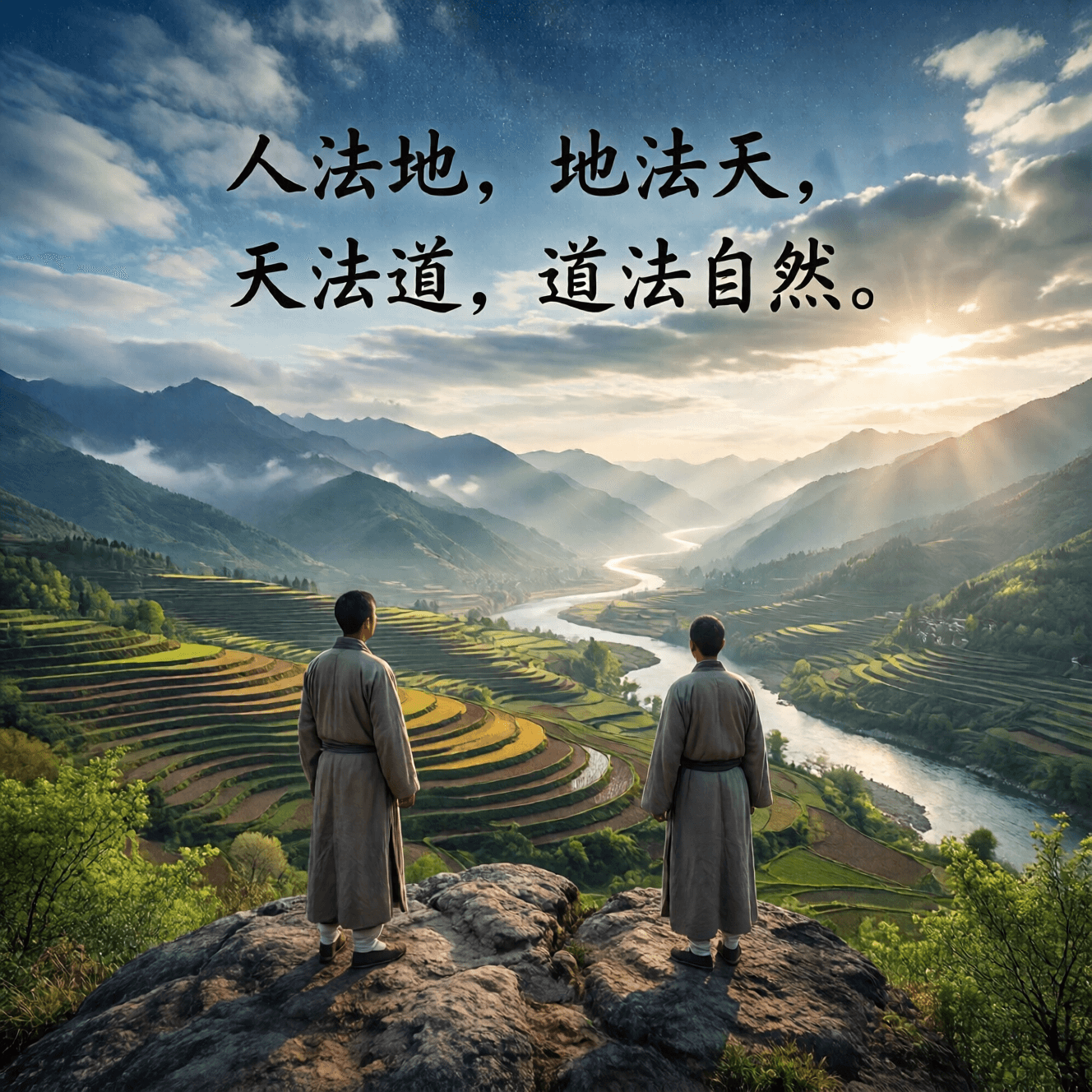
With “天法道,” Laozi distinguishes between visible order and the deeper principle that makes order possible. Heaven’s rhythms may appear regular, yet they are not ultimate; they are expressions. The Dao, as portrayed in the Dao De Jing (c. 4th–3rd century BC), is the underlying “Way” that cannot be fully captured by names, yet manifests as the coherence of the world. In other words, the sky’s patterns are not self-grounding; they are traces of something more fundamental.
This shift matters because it prevents us from mistaking any single system—calendar, ritual, ideology, even science—as the final authority. Systems can illuminate patterns, but the Dao is prior to them. Having moved from the human scale to cosmic order, Laozi’s final line then clarifies what even the Dao “follows.” [...]