
Planting Kindness to Cultivate Lasting Courage
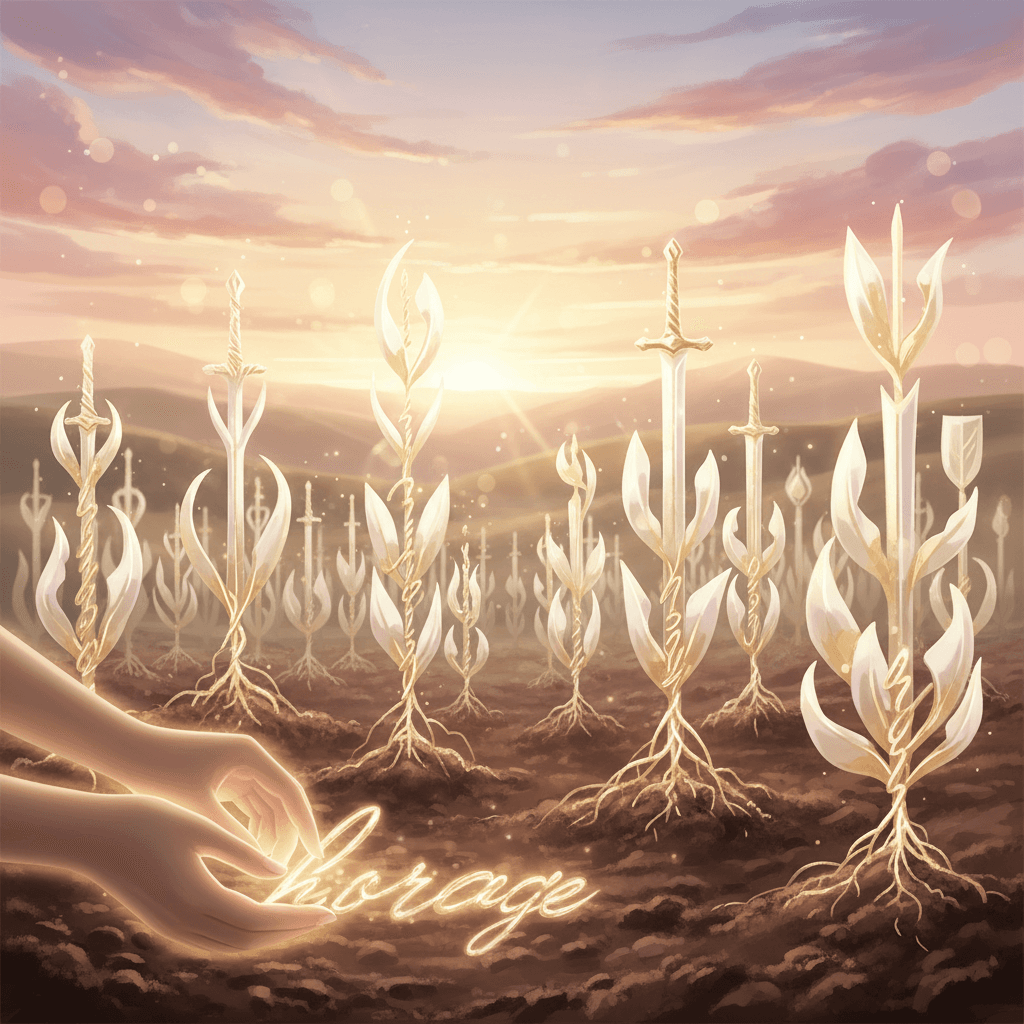
Plant words of kindness; harvest a field of courage. — Kahlil Gibran
—What lingers after this line?
Seeds of Speech and the Soil of the Heart
Kahlil Gibran’s image of planting words of kindness treats language as a living seed rather than a fleeting sound. Every remark, encouragement, or gentle reply enters the hidden soil of another person’s inner life, where it may take root long after the speaker has forgotten it. Just as a farmer trusts that buried seeds will sprout in time, Gibran suggests we trust that kind words, though small and often unnoticed, begin an invisible process of growth in ourselves and others.
How Kindness Becomes Inner Strength
Moving from the seed to the harvest, Gibran links kindness directly to courage, implying that gentle speech does not weaken people but fortifies them. When someone hears consistent affirmation—“I believe in you,” “You can try again,” “You matter”—they slowly internalize a sense of worth that makes risk and resilience possible. This transformation mirrors how supportive parenting or mentoring nurtures confidence: the more a person is met with compassion instead of contempt, the braver they become in facing setbacks and uncertainty.
The Courage Generated by Community
Extending the metaphor to a field, Gibran shifts from individuals to communities. A single seed yields a stalk, but many seeds yield a harvest; likewise, scattered acts of kindness can reshape the emotional climate of a group. Classrooms where students habitually encourage one another, or workplaces where colleagues respond constructively to mistakes, become fields of courage. In such environments, people dare to share new ideas and admit fears because they trust that the surrounding voices will sustain, not shame, them.
Breaking the Cycle of Harshness and Fear
Yet the metaphor also reveals its opposite: when harsh words are planted, the crop is often fear and withdrawal. Criticism laced with contempt may produce short-term obedience but rarely true bravery. Through contrast, Gibran’s line offers an alternative cycle: replace habitual sarcasm or dismissiveness with deliberate kindness and the emotional ecosystem begins to change. Over time, those who once felt too afraid to speak or act discover that they are repeatedly met with patience, which emboldens them to step forward again.
Choosing What We Plant Each Day
Ultimately, Gibran’s proverb is an invitation to conscious cultivation. Every conversation becomes a small act of sowing, and we decide whether to scatter seeds of kindness or thorns of discouragement. Just as a diligent farmer accepts that growth is gradual and seasonal, we must accept that the courage inspired by our words may appear slowly and unpredictably. Even so, by consistently choosing language that dignifies rather than diminishes, we participate in raising a field of people more willing to stand up, speak out, and live bravely.
Recommended Reading
One-minute reflection
What's one small action this suggests?
Related Quotes
6 selectedSpeak with kindness, act with conviction, and the world listens back. — Kahlil Gibran
Kahlil Gibran
Gibran’s line links three elements—kindness, conviction, and response—into a quiet theory of influence. He implies that people don’t listen merely because someone is loud or clever; they listen when the speaker’s tone lo...
Read full interpretation →Carry your kindness like a banner into the streets. — Kahlil Gibran
Kahlil Gibran
Gibran’s metaphor of carrying kindness like a banner immediately evokes visibility, courage, and declaration. A banner is not tucked away; it is raised high, meant to be seen from afar.
Read full interpretation →Measure your worth by the kindness you return, not by the applause you gather. — Kahlil Gibran
Kahlil Gibran
Kahlil Gibran’s insight invites a quiet but radical shift: from living for the world’s reaction to living for the good we do within it. Instead of tallying praise, followers, or public recognition, he suggests we look in...
Read full interpretation →Plant your truth in the soil of kindness and it will feed the world. — Kahlil Gibran
Kahlil Gibran
At the outset, Gibran’s image turns truth into a seed: potent, yet dependent on the soil that receives it. He suggests that facts or convictions, when rooted in kindness, gain the conditions to germinate rather than boun...
Read full interpretation →Harvest courage by practicing it daily; bravery is a crop of steady tending. — Kofi A. Annan
Kofi A. Annan
Kofi A. Annan frames bravery not as a lightning strike of heroism but as an agricultural process: you “harvest” it only after you’ve done the quieter work of planting and tending.
Read full interpretation →Rarely are we more exposed than when we are being kind. — James Baldwin
James Baldwin
At first glance, Baldwin’s line appears simple, yet it quickly reveals a harder truth: kindness is never merely polite behavior. When we are kind, we lower our defenses and allow another person to see what we value, what...
Read full interpretation →More From Author
More from Kahlil Gibran →March on. Do not tarry. To go forward is to move toward perfection. — Kahlil Gibran
Gibran’s opening imperative—“March on. Do not tarry.”—sets a tone of disciplined urgency.
Read full interpretation →There must be spaces in your togetherness, and let the winds of the heavens dance between you. — Kahlil Gibran
Gibran’s line opens with a gentle paradox: he speaks to people who are already “together,” yet insists that togetherness is healthiest when it includes room. Rather than portraying love as fusion, he frames it as a relat...
Read full interpretation →Our anxiety does not come from thinking about the future, but from wanting to control it. — Kahlil Gibran
Kahlil Gibran reframes anxiety as something more specific than mere anticipation. The future itself—uncertain, unfolding, and not yet real—doesn’t automatically distress us; rather, distress appears when we demand certai...
Read full interpretation →Work on the bright corner of your world and light will spread. — Kahlil Gibran
Kahlil Gibran’s line points to a deceptively simple strategy for change: begin with what is closest and most workable. “Your world” need not mean the entire planet; it can mean your desk, your household, your street, or...
Read full interpretation →