
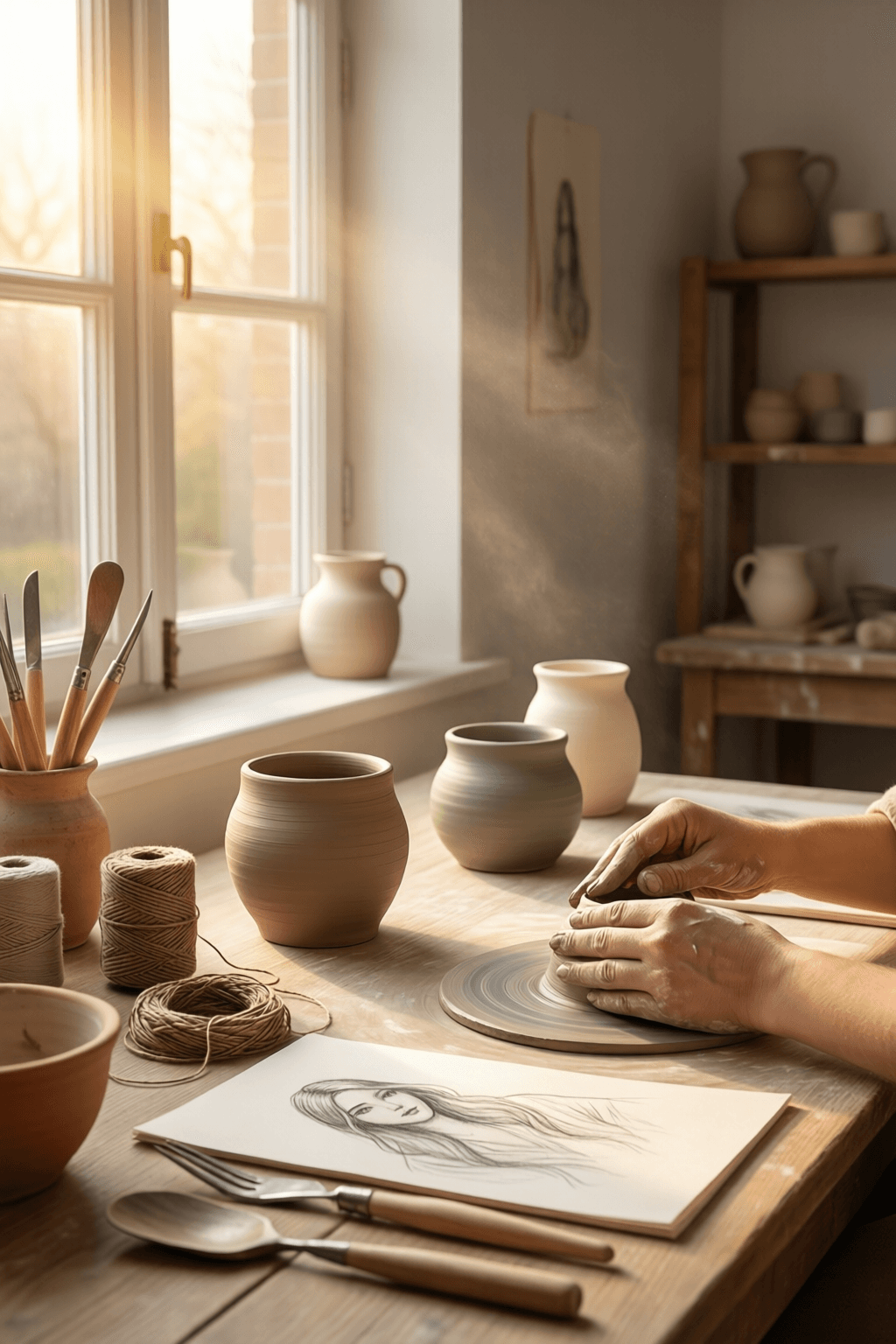
The whole culture is telling you to hurry, while the art tells you to take your time. Always listen to the art. — Junot Díaz
—What lingers after this line?
A Warning Against Constant Rush
Junot Díaz sets up an immediate conflict between two powerful forces: culture, which demands speed, and art, which asks for patience. In everyday life, people are pushed to produce faster, decide sooner, and move on quickly, as though slowness were a kind of failure. Against that pressure, his quote suggests that art preserves a different rhythm—one that values attention over efficiency. From this starting point, the statement becomes more than advice about painting or novels; it becomes a philosophy of living. To “listen to the art” is to resist the frantic tempo of modern life and to trust that some truths only appear when we stop rushing past them.
Culture’s Obsession With Speed
Seen more closely, Díaz’s use of “the whole culture” points to a broad social condition rather than a personal inconvenience. Modern economies reward immediacy: instant messages, rapid consumption, accelerated news cycles, and the expectation of constant availability. As Hartmut Rosa argues in Social Acceleration (2013), modernity often compresses time until people feel perpetually behind, no matter how much they accomplish. Because of that, hurry becomes internalized. People begin to measure worth by output and responsiveness, treating contemplation as indulgence. Díaz’s quote pushes back on this mindset, implying that cultural urgency may be powerful, but it is not necessarily wise.
Why Art Demands Patience
In contrast, art usually refuses to reveal itself all at once. A novel asks to be read over hours; a film builds meaning through pacing; a painting often deepens the longer one stands before it. John Keats’s idea of “negative capability” in his 1817 letters similarly praises the ability to remain with uncertainty rather than forcing quick conclusions. Therefore, art teaches not just appreciation but endurance. It trains the mind to dwell, to notice, and to accept ambiguity. By telling us to take our time, art offers a form of education that runs counter to a culture addicted to immediate answers.
Slowness as a Form of Attention
Once patience enters the picture, the quote also becomes a meditation on attention. To take one’s time with art is to grant it sustained presence, and that same discipline can extend to other parts of life: conversation, memory, grief, and love. Simone Weil wrote in Gravity and Grace (1947) that attention is among the rarest and purest forms of generosity, a claim that fits Díaz’s insight closely. In that sense, slowness is not laziness but care. Art asks us to look again, to hear nuance, and to resist the urge to flatten experience into quick judgments. What begins in the gallery or on the page can become a more humane way of meeting the world.
A Subtle Act of Resistance
As the quote unfolds, listening to art begins to sound almost political. Choosing depth over speed challenges systems that prefer people distracted, efficient, and endlessly moving. The slow cinema of directors like Andrei Tarkovsky, especially Mirror (1975), demonstrates this vividly: its lingering images ask viewers not to consume but to inhabit time differently. Thus, Díaz’s closing command—“Always listen to the art”—carries moral force. It suggests that art is not merely decoration within culture but a countervoice to it, preserving forms of reflection that hurried societies often erode.
Living by Art’s Tempo
Finally, the quote invites a practical question: what would it mean to live according to art’s tempo rather than culture’s? It might mean reading without multitasking, allowing creative work to mature, or refusing the pressure to turn every experience into immediate content. Many writers have described this necessity; Toni Morrison, in interviews about her craft, often emphasized the disciplined time required for language to find its true form. In the end, Díaz offers a simple but demanding ethic. Culture may shout, but art often speaks in a slower register, and hearing it requires deliberate quiet. By choosing that quieter voice, we recover not only better art, but a fuller experience of being alive.
Recommended Reading
As an Amazon Associate, we earn from qualifying purchases.
One-minute reflection
What feeling does this quote bring up for you?
Related Quotes
6 selectedThe artist must elect to fight for the beauty of the work, stitch by patient stitch, against the rush of the world. — Ursula K. Le Guin
Ursula K. Le Guin
Ursula K. Le Guin’s line begins with a deliberate verb: the artist must “elect.” In other words, beauty is not an accident or a luxury but a conscious choice made in resistance to haste.
Read full interpretation →The craft of living is a slow art, requiring the courage to be ordinary and the patience to be consistent. — Parker Palmer
Parker Palmer
Parker Palmer’s line frames living not as a sudden achievement but as a craft, something formed through repetition, attention, and humility. By calling it a “slow art,” he shifts the focus away from dramatic breakthrough...
Read full interpretation →The beauty of craftsmanship is that it is a dialogue with time, a slow resistance against the rush of the world. — Richard Sennett
Richard Sennett
At its core, Richard Sennett’s line presents craftsmanship as more than skilled labor; it becomes a moral and temporal stance. To make something carefully is to refuse the culture of haste, where speed is often mistaken...
Read full interpretation →Doing what's right sometimes requires patience. — Daisaku Ikeda
Daisaku Ikeda
At first glance, Daisaku Ikeda’s remark sounds simple, yet it points to a difficult truth: ethical action rarely delivers immediate rewards. Doing what is right often means resisting the urge for quick victory, recogniti...
Read full interpretation →To do anything to a high standard, you must be prepared to be bored for long periods of time. — James Clear
James Clear
James Clear’s observation cuts against the modern preference for constant stimulation. At first glance, high achievement looks exciting from the outside, yet the path toward it is usually repetitive, slow, and uneventful...
Read full interpretation →There is no royal road to anything. One thing at a time, all things in succession. That which grows fast, withers as rapidly. That which grows slowly, endures. — J. G. Holland
J. G. Holland
J. G.
Read full interpretation →More From Author
More from Junot Díaz →