Tags
#Art
Quotes: 9
Quotes tagged #Art

Art’s Quiet Rebellion Against Cultural Hurry
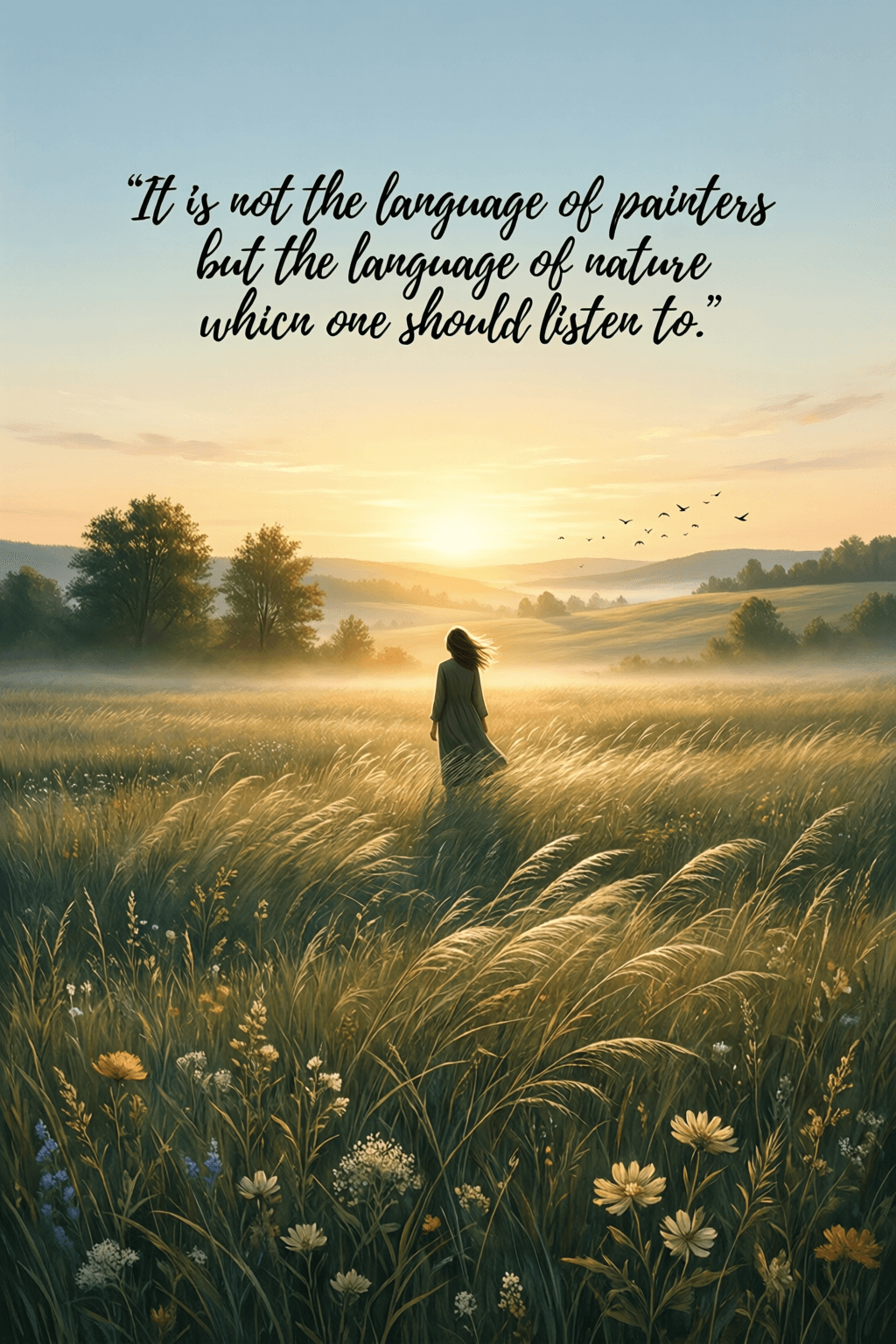
As the quote unfolds, listening to art begins to sound almost political. Choosing depth over speed challenges systems that prefer people distracted, efficient, and endlessly moving. The slow cinema of directors like Andrei Tarkovsky, especially Mirror (1975), demonstrates this vividly: its lingering images ask viewers not to consume but to inhabit time differently. Thus, Díaz’s closing command—“Always listen to the art”—carries moral force. It suggests that art is not merely decoration within culture but a countervoice to it, preserving forms of reflection that hurried societies often erode. [...]
Created on: 3/24/2026

Art as a Vision of What Could Be
In the present moment, hooks’s insight feels especially urgent because contemporary life often floods audiences with relentless realism—statistics, crises, and spectacle. While truth-telling remains essential, constant exposure to what is broken can produce paralysis. Art answers this problem by pairing witness with invention, helping people endure reality without surrendering to it. Ultimately, the quote suggests that art fulfills its highest purpose when it enlarges human consciousness. It tells us where we are, certainly, but then carries us further, toward where we might go. In that movement from fact to possibility, art becomes not an escape from the world but a way of remaking it. [...]
Created on: 3/22/2026

Art as Breathing Room for the Spirit
At its core, John Updike’s remark frames art not as luxury but as necessity. By calling it “space” and “breathing room,” he suggests that art gives the inner life a pause from pressure, noise, and obligation. In this view, paintings, poems, novels, and music do not merely decorate existence; they make it inhabitable. This metaphor matters because breathing is automatic yet essential. Likewise, people may not always notice their need for art until life feels constricted. Updike’s phrasing implies that art opens an interior chamber where the spirit can recover itself, reminding us that nourishment is not only physical or practical but also emotional and imaginative. [...]
Created on: 3/21/2026

Art as Escape Without Physical Departure
Yet Tharp’s line does not celebrate mere withdrawal. Instead, it hints that art provides a restorative form of escape, one that returns us to life with renewed clarity. Virginia Woolf’s A Room of One’s Own (1929) suggests that creative space allows the mind to gather itself, and that gathering can be a form of survival rather than indulgence. For someone overwhelmed by routine, sketching for an hour or losing oneself in a film may not solve every problem, but it can loosen the grip of pressure. In that way, artistic escape resembles sleep or prayer: a pause that heals, reorganizes feeling, and makes endurance possible. [...]
Created on: 3/19/2026

Art as the Ultimate Expression of Individualism
Extending this discussion, the creative process itself is often an act of self-discovery. Philosopher Jean-Paul Sartre argued that through creation, individuals define their essence and confront their unique perspectives. Each brushstroke or written word serves as a declaration of self—highlighting how art transforms internal experiences into tangible forms that communicate individuality to the world. [...]
Created on: 7/11/2025

The Spirit of Humanity in Art – Franz Kafka
For Kafka, the presence of humanity means that the artwork should engage viewers or readers on emotional and intellectual levels, fostering empathy and understanding. [...]
Created on: 4/7/2025

The Essence of All Beautiful Art is Gratitude - Friedrich Nietzsche
Friedrich Nietzsche, a 19th-century German philosopher, often focused on existential themes, questioning the meaning of life, art, and human values. In connecting gratitude with art, Nietzsche aligns his philosophy with the idea that art transcends utility and becomes a celebration of life’s intrinsic values. [...]
Created on: 9/16/2024