
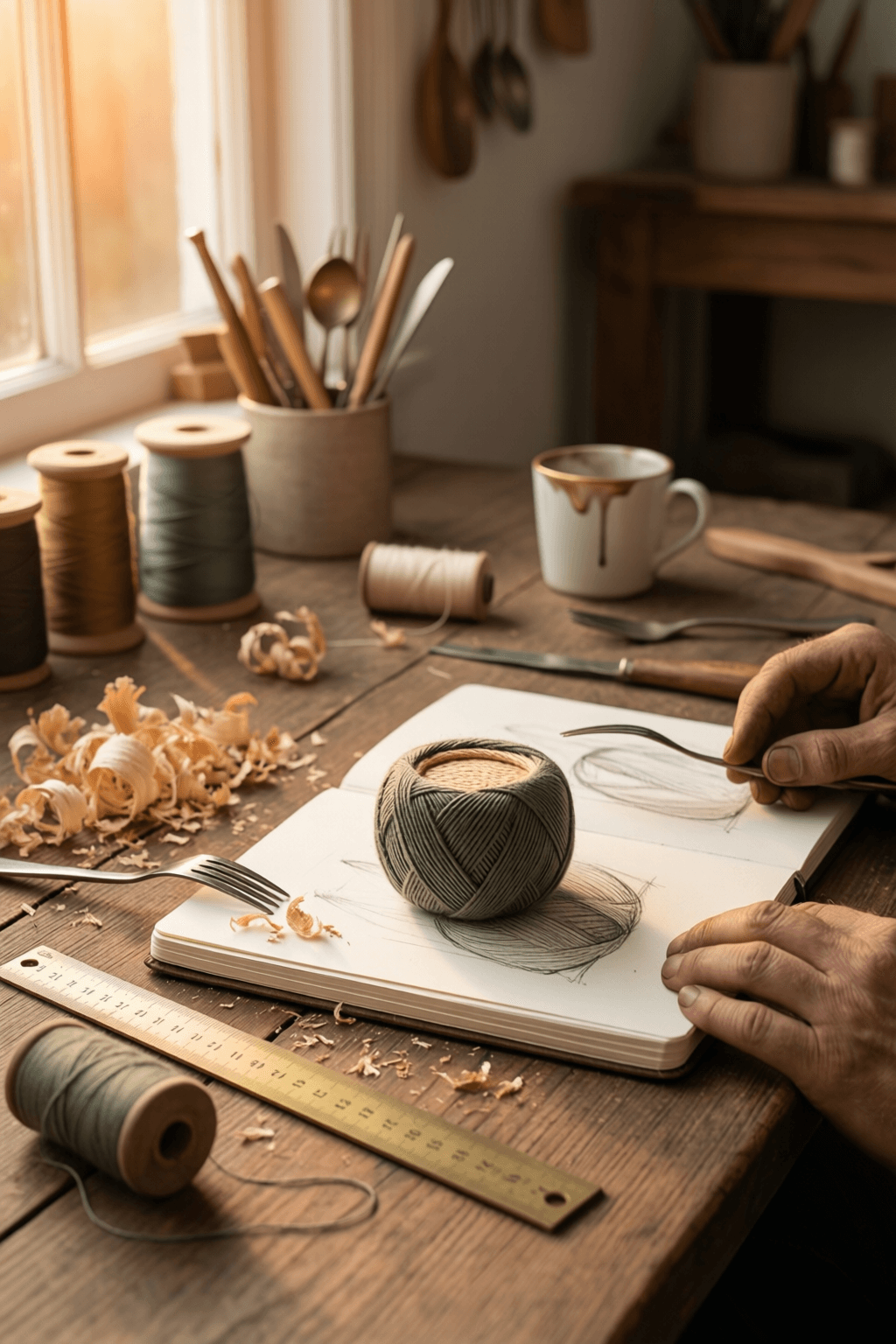
The mark of all good art is not that the thing done is done exactly or finely, but that it is worked out with the head and the workman's heart. — Oscar Wilde
—What lingers after this line?
Beyond Mere Technical Perfection
Oscar Wilde immediately shifts the standard by which art is judged. Rather than praising work simply because it is exact, polished, or finely executed, he argues that true artistic value comes from something deeper: thought joined to feeling. In other words, precision alone may impress the eye, yet it does not necessarily move the soul. This distinction matters because many objects can be expertly made without becoming memorable art. A flawless surface may display discipline, but Wilde insists that greatness appears when a maker’s intelligence shapes the work and the maker’s inner life animates it. Thus, technique becomes not the destination, but the vessel for meaning.
The Union of Intellect and Emotion
From there, Wilde’s phrase “the head and the workman’s heart” reveals art as a union of design and devotion. The head suggests judgment, structure, and imagination under control; the heart suggests sincerity, care, and human presence. Good art, therefore, is neither cold calculation nor raw emotion alone, but a conversation between the two. This balance can be seen across traditions. Leonardo da Vinci’s notebooks, for instance, show relentless analytical curiosity, while the tenderness of works like the “Virgin of the Rocks” conveys emotional depth. As Wilde implies, art becomes compelling when thought gives it form and feeling gives it life.
Why Craft Still Matters
Even so, Wilde does not dismiss craftsmanship. His point is subtler: exactness and fineness are admirable, but they are insufficient by themselves. A skilled hand remains essential, because without craft the artist cannot fully realize an idea or communicate emotion with clarity. Yet craft serves the larger purpose of embodying a vision. William Morris’s Arts and Crafts movement in the late nineteenth century, a world Wilde knew well, offers a useful parallel. Morris valued beautiful workmanship, but he also believed objects should reflect thought, integrity, and joy in making. In that sense, Wilde is not lowering the bar for art; he is raising it from mere finish to meaningful creation.
The Human Presence in the Work
As the quotation unfolds, the word “workman” becomes especially telling. Wilde honors not only the inspired genius but also the maker whose labor carries personality and conscience into the finished piece. This idea restores dignity to artistic labor by suggesting that art bears traces of the person who made it—their patience, struggle, affection, and conviction. That is why handmade works often feel distinct even when imperfect. A Japanese tea bowl admired in the spirit of wabi-sabi, for example, may contain asymmetry or roughness, yet those qualities can heighten its humanity. Accordingly, Wilde invites us to look for evidence of lived attention rather than machine-like flawlessness.
A Critique of Empty Refinement
Consequently, Wilde’s remark also serves as a quiet warning against art that is merely decorative or technically showy. A work may dazzle with surface brilliance and still feel vacant if no genuine thought or inward investment shaped it. The problem is not beauty itself—Wilde famously loved beauty—but beauty detached from imaginative and emotional substance. This criticism echoes later responses to academic painting in the nineteenth century, when some artists and critics felt that polished convention had become lifeless. By contrast, Vincent van Gogh’s letters (1880s) repeatedly stress the need to put one’s feeling into the work. Wilde’s statement belongs to that larger defense of art as an expression of living consciousness.
What the Quote Still Teaches Us
Finally, Wilde’s insight remains remarkably current because it applies beyond galleries and poems. We still value creations—whether a novel, a building, a film, or even a crafted tool—that show intelligence guided by care. People respond not only to what was made, but to the sense that someone truly meant it. For that reason, the quotation offers a lasting definition of artistic integrity. Good art is not reduced to accuracy, polish, or fashionable style; it is work thoroughly thought through and deeply felt. In the end, Wilde reminds us that what endures in art is the rare fusion of mastery, intention, and heart.
One-minute reflection
Where does this idea show up in your life right now?
Related Quotes
6 selectedCraftsmanship is the quality of design, shown in something by the skill, time, and attention to detail put in by the artist. — Canvs Editorial
Canvs Editorial
At its core, this statement presents craftsmanship as visible care. Design is not treated as mere decoration, but as the outward result of discipline, patience, and practiced skill.
Read full interpretation →Fine art is that in which the hand, the head, and the heart of man go together. — John Ruskin
John Ruskin
John Ruskin’s remark defines fine art as a union rather than a single talent. The hand represents skilled execution, the head stands for thought and judgment, and the heart brings feeling and moral sincerity.
Read full interpretation →The artist must be a craftsman; he must know his materials, his tools, and his methods. — Henri Matisse
Henri Matisse
Henri Matisse’s statement immediately shifts attention from inspiration to discipline. Rather than treating art as a purely mysterious gift, he insists that the artist is first a craftsman—someone who understands how thi...
Read full interpretation →He who works with his hands and his head is a craftsman. He who works with his hands and his head and his heart is an artist. — Francis of Assisi
Francis of Assisi
Francis of Assisi draws a graceful line between skill and art by adding one decisive element: the heart. In his view, working with the hands and the head produces competence, discipline, and useful creation—the marks of...
Read full interpretation →In the end, you win through superior craftsmanship, not marketing. — Robert Greene
Robert Greene
Robert Greene’s statement cuts through the glamour of promotion by placing true advantage in the work itself. Marketing may attract attention, but craftsmanship earns trust, loyalty, and endurance.
Read full interpretation →The beauty of a finely worked object points to the beauty of the craftsmanship. — Paul Klee
Paul Klee
Paul Klee’s statement begins with a simple but powerful observation: a beautiful object does not merely please the eye; it points beyond itself to the intelligence, patience, and skill that shaped it. The object becomes...
Read full interpretation →More From Author
More from Oscar Wilde →Always forgive your enemies; nothing annoys them so much. — Oscar Wilde
At first glance, Oscar Wilde’s remark sounds like simple moral advice, yet its brilliance lies in its inversion of expectation. Instead of presenting forgiveness as saintly self-denial, he recasts it as a sly strategy: t...
Read full interpretation →It is only shallow people who require years to get rid of an emotion. A man who is master of himself can end a sorrow as easily as he can invent a pleasure. — Oscar Wilde
Oscar Wilde’s remark is deliberately provocative, drawing a sharp line between those ruled by feeling and those who govern it. At first glance, he seems almost cruel in dismissing prolonged sorrow as a mark of shallownes...
Read full interpretation →Everything in moderation, including moderation. — Oscar Wilde
Oscar Wilde’s line, “Everything in moderation, including moderation,” works by first borrowing a familiar moral rule and then twisting it into a paradox. If moderation is always good, then we should practice it without e...
Read full interpretation →I am so clever that sometimes I don't understand a single word of what I am saying. — Oscar Wilde
Oscar Wilde’s line works first as a comic confession: he portrays himself as so dazzlingly intelligent that his own speech becomes unintelligible even to him. Yet the humor also hints at self-awareness, because Wilde is...
Read full interpretation →