
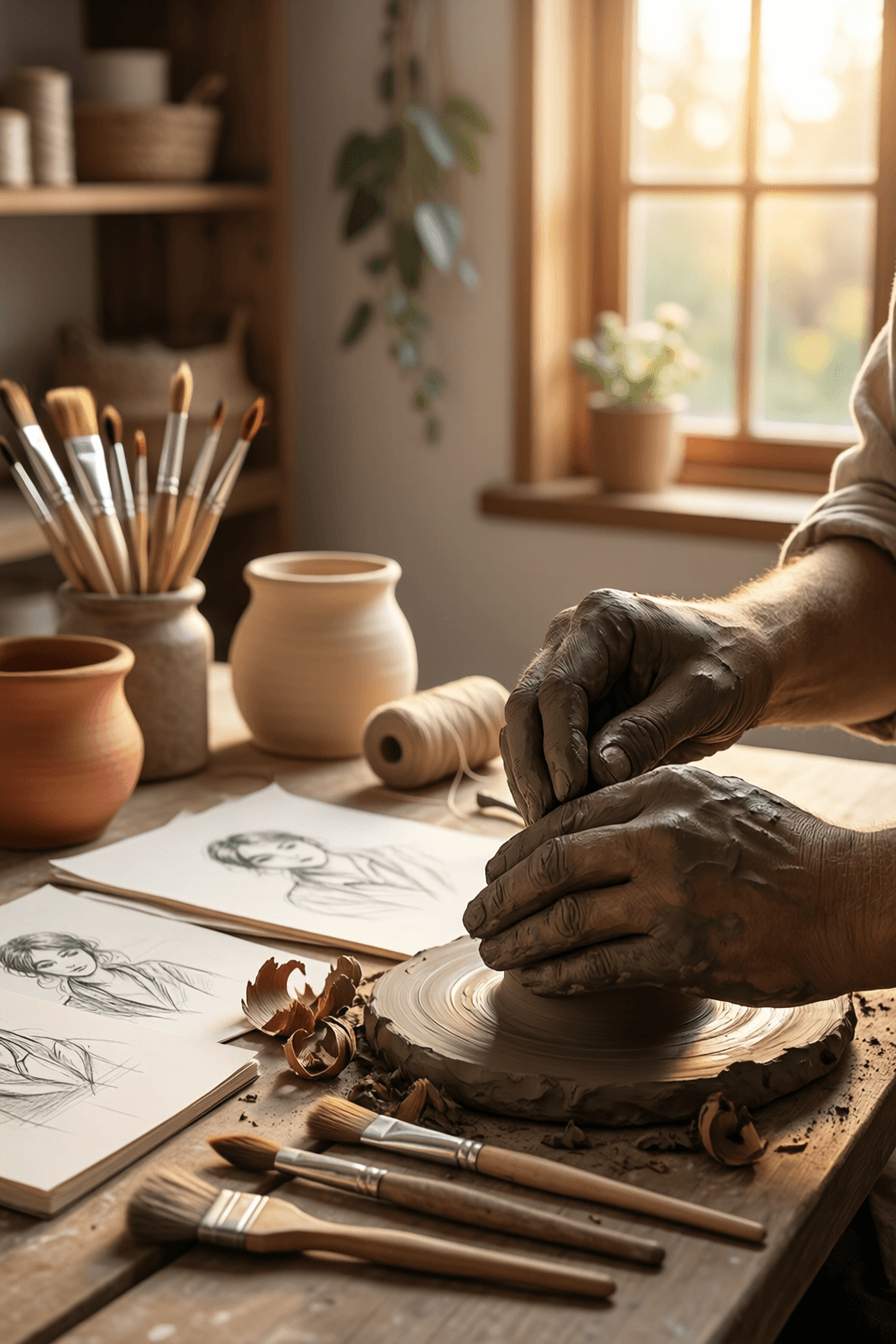
He who works with his hands and his head is a craftsman. He who works with his hands and his head and his heart is an artist. — Francis of Assisi
—What lingers after this line?
The Quote’s Central Distinction
Francis of Assisi draws a graceful line between skill and art by adding one decisive element: the heart. In his view, working with the hands and the head produces competence, discipline, and useful creation—the marks of a craftsman. Yet when feeling, devotion, and inner sincerity enter the process, the work becomes something more than correct or functional. From this starting point, the quote does not diminish craftsmanship; rather, it elevates it. It suggests that art begins where technique and intellect are infused with humanity. What changes is not merely the object produced, but the spirit carried into it.
Why Hands and Head Matter First
Before the heart can transform work, the hands and head must already be engaged. The hands represent practice, repetition, and physical labor, while the head stands for planning, judgment, and knowledge. Together, they form the foundation of any serious making, whether in woodworking, music, architecture, or writing. Consequently, Francis’s statement recognizes that art is not pure emotion spilling outward without structure. Renaissance workshops, for example, depended on rigorous training long before a painter developed a personal voice. In that sense, the quote honors discipline as the necessary ground from which deeper expression can rise.
The Heart as the Source of Meaning
What, then, does the heart add? It introduces empathy, love, conviction, and the desire to communicate something inwardly true. A chair built with skill may serve its purpose beautifully, but a chair shaped with care for the user’s comfort, dignity, and delight begins to carry an emotional intelligence beyond utility. Moreover, this idea appears throughout artistic history. Leo Tolstoy’s What Is Art? (1897) argues that art transmits feeling from one person to another; likewise, Francis implies that art is not only made well but felt deeply. The heart turns labor into expression and creation into connection.
Craftsman and Artist as Related Roles
Importantly, the quotation should not be read as a harsh division between two separate kinds of people. Instead, it presents a continuum: the craftsman is not excluded from art, but stands at its threshold. By bringing emotion and moral presence into work, the maker crosses from technical success into artistic significance. This transition can be seen in everyday life as much as in museums. A cook following a recipe with precision shows craft; a cook preparing the same meal to comfort a grieving friend adds heart, and the act becomes expressive. Thus, Francis frames artistry less as status than as depth of intention.
A Spiritual View of Creative Labor
Seen in light of Francis of Assisi’s broader life, the quote also carries a spiritual undertone. Francis was known for valuing humility, devotion, and love in ordinary action, so his words imply that work is never merely mechanical. When the whole person enters the task—body, mind, and soul—labor itself becomes a form of offering. Accordingly, the artist is not simply someone who decorates reality, but someone who serves it with reverence. Whether or not the work is religious, this perspective treats making as an ethical act. The heart matters because it reveals how one relates to others, to beauty, and to the purpose behind creation.
Its Relevance in Modern Work
Even today, the quote remains strikingly relevant because many professions reward efficiency more visibly than care. Designers, teachers, engineers, and surgeons all rely on hands and head, yet the work becomes memorable when joined by heart—when accuracy is paired with compassion, imagination, or moral responsibility. In the end, Francis offers a durable standard for excellence. True artistry is not limited to painters or poets; it appears wherever technical ability and intelligence are animated by feeling. The quote therefore invites us to ask not only whether our work is skillful, but whether it carries enough sincerity to become fully human.
One-minute reflection
What feeling does this quote bring up for you?
Related Quotes
6 selectedFine art is that in which the hand, the head, and the heart of man go together. — John Ruskin
John Ruskin
John Ruskin’s remark defines fine art as a union rather than a single talent. The hand represents skilled execution, the head stands for thought and judgment, and the heart brings feeling and moral sincerity.
Read full interpretation →The artist must be a craftsman; he must know his materials, his tools, and his methods. — Henri Matisse
Henri Matisse
Henri Matisse’s statement immediately shifts attention from inspiration to discipline. Rather than treating art as a purely mysterious gift, he insists that the artist is first a craftsman—someone who understands how thi...
Read full interpretation →There are two men inside the artist, the poet and the craftsman. One is born a poet. One becomes a craftsman. — Emile Zola
Émile Zola
At first glance, Zola’s remark divides the artist into two figures: the poet and the craftsman. Yet the contrast is not meant to split art into separate worlds, but to show that creation depends on both impulse and disci...
Read full interpretation →Craftsmanship means an uncompromising dedication to excellence and durability. It means doing a job to the very best of your ability, simply because that is the basis of integrity. — The Craftsmanship Initiative
The Craftsmanship Initiative
At its core, this statement defines craftsmanship as more than technical skill; it presents excellence as an ethical obligation. To work with care, precision, and patience is not merely to produce something attractive or...
Read full interpretation →The mark of all good art is not that the thing done is done exactly or finely, but that it is worked out with the head and the workman's heart. — Oscar Wilde
Oscar Wilde
Oscar Wilde immediately shifts the standard by which art is judged. Rather than praising work simply because it is exact, polished, or finely executed, he argues that true artistic value comes from something deeper: thou...
Read full interpretation →In the end, you win through superior craftsmanship, not marketing. — Robert Greene
Robert Greene
Robert Greene’s statement cuts through the glamour of promotion by placing true advantage in the work itself. Marketing may attract attention, but craftsmanship earns trust, loyalty, and endurance.
Read full interpretation →More From Author
More from Francis of Assisi →Start by doing what's necessary; then do what's possible; and suddenly you are doing the impossible. — Francis of Assisi
This quote emphasizes the importance of taking a gradual approach to achieving goals. Starting with necessary tasks lays a foundation for further progress.
Read full interpretation →Start by doing what's necessary; then do what's possible; and suddenly you are doing the impossible. — Francis of Assisi
This quote emphasizes the importance of beginning with essential tasks before progressively tackling more ambitious ones. It suggests that great achievements are built step by step.
Read full interpretation →A single sunbeam is enough to drive away many shadows. — Francis of Assisi
This quote illustrates how even the smallest amount of positivity, symbolized by a sunbeam, has the power to drive away negativity, depicted as shadows. It emphasizes that hope, no matter how small, can dispel despair or...
Read full interpretation →For it is in giving that we receive. — Francis of Assisi
This quote reflects the idea that by giving selflessly to others, we gain something even greater in return, whether it’s gratitude, joy, or spiritual fulfillment.
Read full interpretation →