
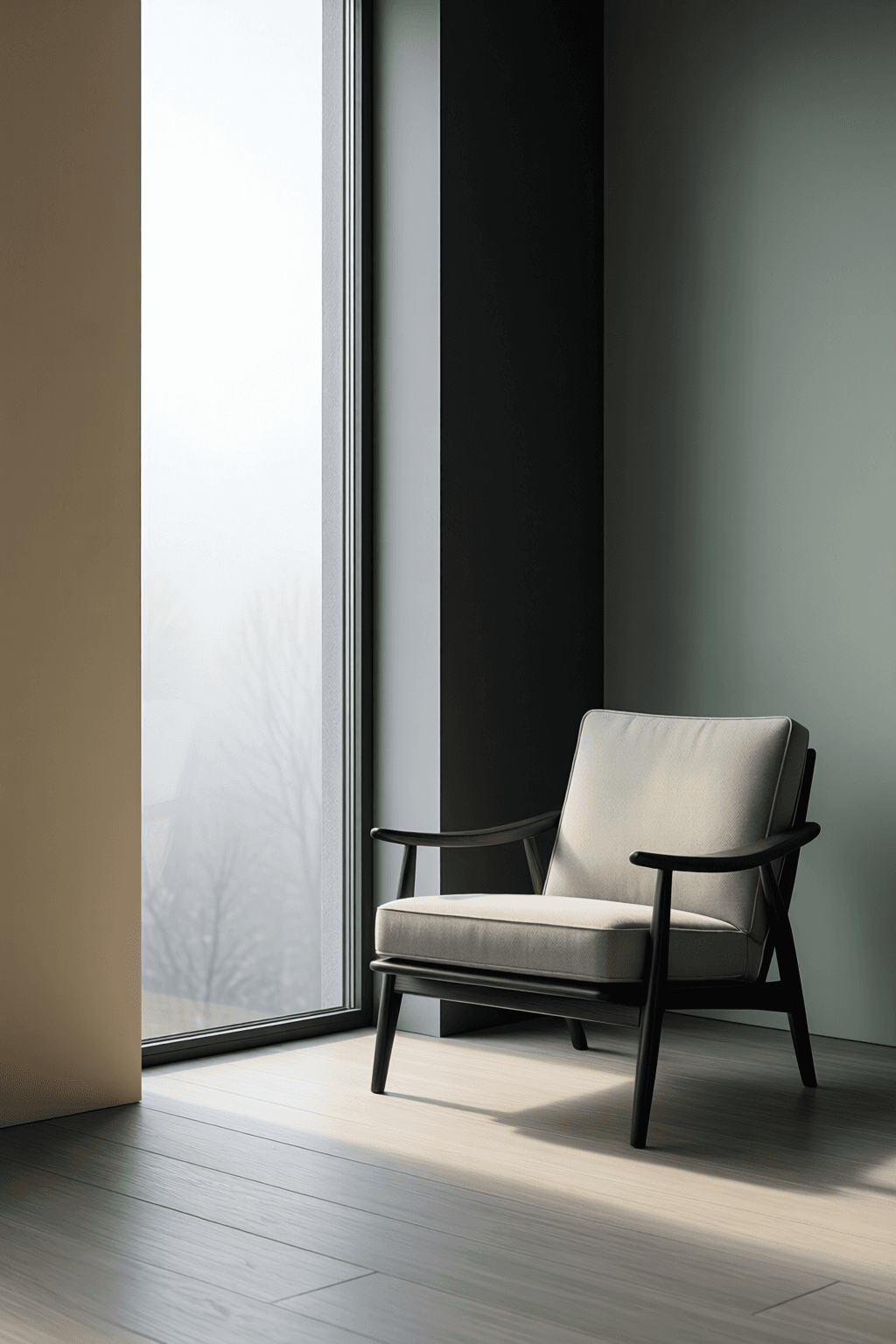
The whole value of solitude depends upon oneself: it may be a sanctuary or a prison, a haven of repose or a place of punishment. — Philip Hamerton
—What lingers after this line?
The Double Nature of Being Alone
At first glance, Philip Hamerton’s remark presents solitude as neither inherently good nor bad, but profoundly shaped by the person who enters it. To one mind, being alone becomes a sanctuary—a space for restoration, reflection, and quiet freedom. To another, the same silence can harden into confinement, making solitude feel less like peace and more like a sentence. This contrast is what gives the quotation its force. Hamerton suggests that external conditions matter less than inner disposition: solitude reflects the emotional and moral state we bring into it. In that sense, being alone is not a fixed experience but a changing environment, one that reveals whether we are at home with ourselves or estranged from our own company.
Character as the Architect of Solitude
From there, the quote leads naturally to a deeper claim: the value of solitude depends upon self-knowledge and inner discipline. A person with cultivated interests, emotional resilience, or spiritual steadiness may find hours alone richly inhabited. By contrast, someone burdened by restlessness or unresolved conflict may discover that solitude amplifies discomfort rather than easing it. Montaigne’s Essays (1580) offer a useful parallel, especially when he describes withdrawing into himself to build an ‘inner room’ of freedom. His example suggests that solitude becomes livable when one has furnished the mind with thought, memory, and perspective. Thus Hamerton is not merely describing solitude; he is quietly arguing that our interior life determines whether aloneness nourishes or punishes us.
When Solitude Becomes Sanctuary
Seen in a more hopeful light, solitude can serve as a haven of repose because it removes the noise that often scatters attention. In such moments, people recover their sense of proportion: worries shrink, creativity returns, and emotional strain softens. Henry David Thoreau’s Walden (1854) famously turns withdrawal into an experiment in clarity, showing how distance from society can sharpen rather than diminish one’s contact with life. Yet this sanctuary is not mere escape. More importantly, restorative solitude allows a person to listen inwardly without constant interruption. A painter refining a canvas in silence, or a grieving person taking a long solitary walk, may discover that aloneness provides exactly the stillness needed for healing. In this way, Hamerton’s ‘haven of repose’ becomes a place where the self regains coherence.
When Silence Turns Punitive
However, Hamerton balances that hopeful vision with a darker possibility: solitude can also become a place of punishment. Without inner stability, silence may cease to feel spacious and instead feel accusatory. Thoughts loop, regrets grow louder, and the absence of companionship begins to resemble abandonment. What was once imagined as freedom can quickly take on the atmosphere of a cell. This is why the metaphor of prison is so apt. Fyodor Dostoevsky’s Notes from Underground (1864) portrays a consciousness so entangled in resentment and self-scrutiny that inward retreat becomes torment rather than liberation. The lesson is not that solitude is dangerous in itself, but that unexamined pain often becomes more visible when distractions disappear. In that sense, isolation does not create suffering so much as uncover it.
Solitude as a Test of Self-Relation
Because of this tension, solitude can be understood as a test of our relationship with ourselves. If we can endure our own thoughts with patience, curiosity, or even affection, then solitude tends to open into depth. If we meet ourselves with fear or contempt, then the same condition closes in. Hamerton’s statement therefore points beyond social circumstances and toward the quality of self-companionship. Modern psychology supports this distinction. Donald Winnicott’s essay ‘The Capacity to Be Alone’ (1958) argues that the ability to be alone is not mere isolation but a developmental achievement rooted in inner security. His insight connects elegantly with Hamerton’s view: solitude is bearable, even fruitful, when the self has become a reliable presence rather than an adversary.
Learning to Transform Aloneness
Finally, the quotation carries a practical implication: if solitude’s value depends upon oneself, then it can be shaped, not merely endured. Habits such as reading, prayer, journaling, artistic work, or reflective walking can convert empty time into meaningful retreat. Little by little, a person learns not simply to escape loneliness, but to cultivate a richer interior life that makes solitude hospitable. For that reason, Hamerton’s insight is ultimately neither pessimistic nor romantic. Instead, it is demanding. It asks each person to consider what they bring into silence—peace or agitation, attention or avoidance, maturity or fear. Solitude then ceases to be a passive condition and becomes an inner measure: a mirror showing whether we have made of ourselves a refuge, or a prison.
One-minute reflection
Where does this idea show up in your life right now?
Related Quotes
6 selectedSolitude is the place of purification. — Martin Buber
Martin Buber
At first glance, Martin Buber’s statement presents solitude not as emptiness, but as a refining space. By calling it “the place of purification,” he suggests that stepping away from noise, social performance, and distrac...
Read full interpretation →Being alone at home is like having a sanctuary for your soul, where you can recharge, reflect, and rediscover the beauty of your own company. — Melody Beattie
Melody Beattie
At its core, Melody Beattie’s quote transforms the ordinary idea of being alone at home into something sacred. Rather than framing solitude as emptiness, she presents it as a sanctuary—a place where the self is protected...
Read full interpretation →The artist works by locating the world in himself. — Gertrude Stein
Gertrude Stein
At first glance, Gertrude Stein’s line suggests that art does not begin with the outer world alone, but with the artist’s inner ability to absorb and reinterpret it. To ‘locate the world in himself’ means that experience...
Read full interpretation →When you are offended at any man's fault, turn to yourself and study your own failings. Then you will forget your anger. — Epictetus
Epictetus
At its core, Epictetus urges a decisive change in direction: instead of fixing our attention on another person’s fault, we should examine our own weaknesses. This inward turn reflects the heart of Stoic ethics, especiall...
Read full interpretation →It is a beautiful thing to be able to pause, to breathe, and to remember who you are. — Haemin Sunim
Haemin Sunim
Haemin Sunim’s words begin with something deceptively simple: the ability to pause. In a culture that often rewards speed, reaction, and constant productivity, stopping can feel almost radical.
Read full interpretation →The mind needs solitude in the same way a forest needs quiet after a storm. It is not because nothing is happening; it is because that is when everything begins to grow. — Pico Iyer
Pico Iyer
Pico Iyer compares the mind to a forest recovering after a storm, and the image immediately shifts our understanding of solitude. Rather than treating aloneness as emptiness, he presents it as a necessary period of renew...
Read full interpretation →More From Author
More from Philip Hamerton →