
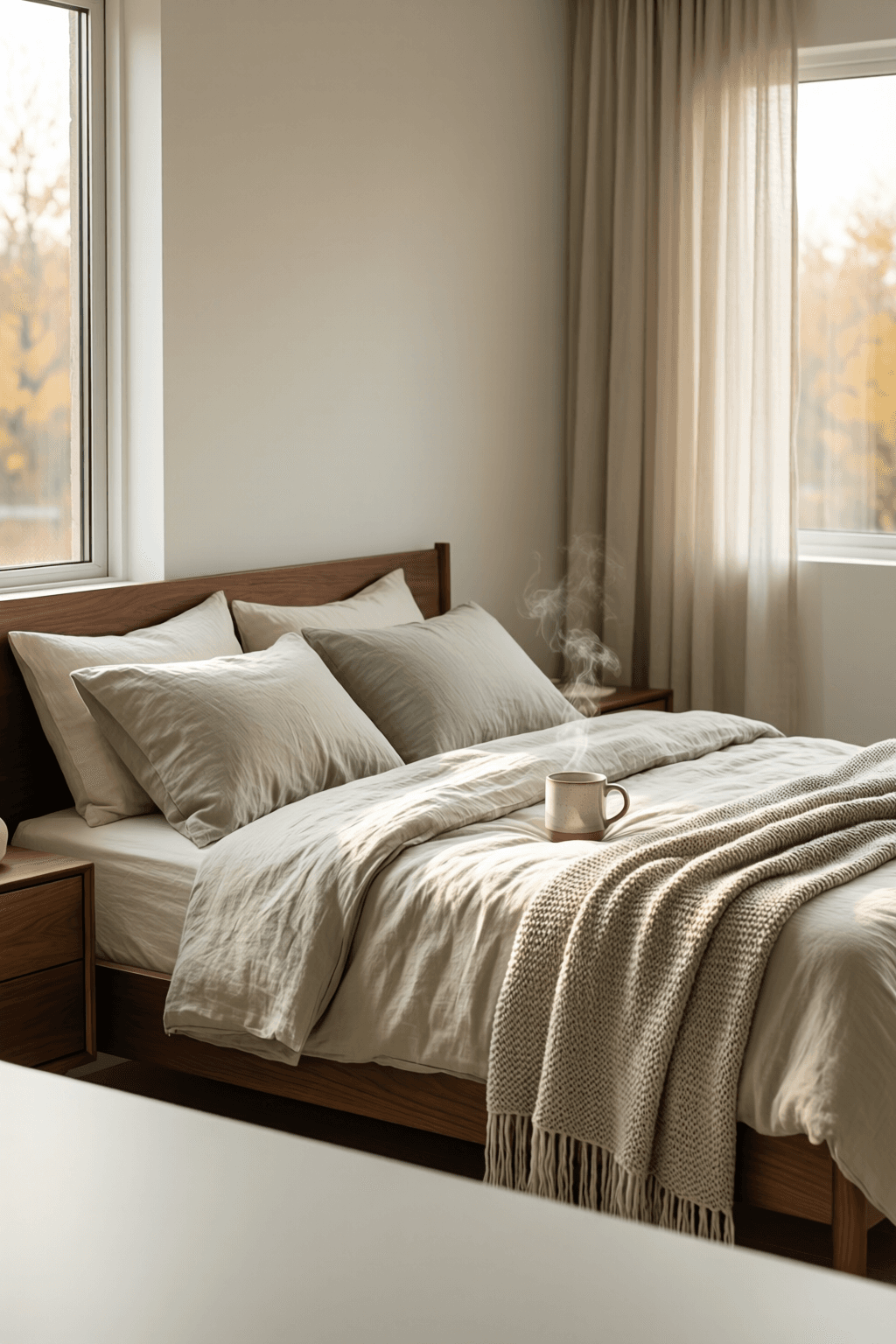
There is nothing like staying at home for real comfort. — Jane Austen
—What lingers after this line?
The Quiet Certainty of Home
At first glance, Jane Austen’s line seems simple, yet its force lies in its calm certainty: no pleasure, status, or novelty quite matches the comfort of home. Rather than praising luxury, she points to a deeper ease—the feeling of being settled in a place where one can fully exhale. In that sense, comfort is not merely physical softness but emotional permission to be oneself. This idea fits naturally within Austen’s world, where drawing rooms, family routines, and domestic habits often reveal more about happiness than grand adventures do. In novels such as Emma (1815), home is not just a backdrop but a moral and emotional center, suggesting that real contentment often grows from familiarity, affection, and belonging.
Comfort Beyond Material Ease
From there, Austen’s remark invites a distinction between comfort and indulgence. A home need not be extravagant to feel restorative; indeed, what makes it precious is often its personal texture—the favorite chair, the known sounds, the rhythm of ordinary life. Consequently, home becomes comforting because it is shaped by memory and repeated care, not because it dazzles the eye. This perspective also explains why people often long for home even after pleasant travel. The world may entertain us, yet home receives us. In psychological terms, attachment research influenced by John Bowlby’s work in the mid-20th century suggests that security is rooted in dependable refuge. Austen’s insight anticipates that truth by linking comfort to emotional grounding rather than display.
Austen’s Domestic Vision
Seen in the broader context of Austen’s writing, the quote reflects her sensitivity to domestic life as a serious human subject. While some readers associate home with confinement in Regency England, Austen repeatedly shows that the quality of one’s home life shapes judgment, character, and relationships. Thus, staying at home can signify not withdrawal from life but participation in its most meaningful bonds. For example, Pride and Prejudice (1813) contrasts households in telling ways: Longbourn, Pemberley, and Rosings each reflect the values of those who inhabit them. As a result, Austen suggests that home is not merely shelter but a living expression of temperament and care. Her statement about comfort, therefore, carries both emotional warmth and social insight.
The Human Need for Belonging
Moreover, the quote endures because it speaks to a universal need for belonging. Home is where identity is reinforced through small rituals—meals, conversations, solitude, and shared habits. Even when life outside is exciting, it is often home that gathers the scattered parts of the self back together. In this way, comfort becomes inseparable from recognition: to be home is to be known. Writers across time echo this sentiment. Homer’s Odyssey, composed around the 8th century BC, is driven by Odysseus’s desire not merely to survive but to return home. Although Austen’s tone is gentler, the underlying truth is similar: however far one travels, the heart seeks a place where its presence feels natural rather than negotiated.
A Modern Resonance
Finally, Austen’s observation remains strikingly relevant in a restless age that often celebrates constant movement. Today, when productivity, travel, and public life are frequently treated as measures of success, her words offer a corrective. They remind us that rest is not laziness and that choosing the familiar can be a form of wisdom. Real comfort may lie less in acquiring more than in returning to what steadies us. For that reason, the quote continues to resonate across generations. It affirms the dignity of domestic peace and the emotional richness of ordinary life. Austen does not deny the pleasures of the wider world; instead, she gently concludes that none of them quite surpasses the enduring consolation of being at home.
Recommended Reading
As an Amazon Associate, we earn from qualifying purchases.
One-minute reflection
What does this quote ask you to notice today?
Related Quotes
6 selectedYour home should be the place where the day softens around the edges. — Unknown (removed per constraints) -> Let's use: "Home is not a place; it is a feeling of being able to handle whatever the world throws at you." — Cheryl Richardson
Cheryl Richardson
At first glance, Cheryl Richardson’s quote shifts the meaning of home away from geography and architecture. Home is no longer merely a house, apartment, or hometown; instead, it becomes an emotional condition—a steady in...
Read full interpretation →The ultimate luxury is being able to relax and enjoy your home. — Billy Baldwin
Billy Baldwin
Billy Baldwin’s remark shifts the idea of luxury away from expensive objects and toward a deeply personal experience: ease. Rather than defining wealth by grand décor or rare materials, he suggests that true refinement a...
Read full interpretation →There is a special kind of peace that comes from being home alone, where you can truly be yourself. — John Ed Pearce
John Ed Pearce
At its heart, John Ed Pearce’s reflection captures a calm that is difficult to reproduce anywhere else: the peace of having a space entirely to oneself. Home alone, a person is briefly released from social performance, e...
Read full interpretation →It is not my wish to stay home so much that I become isolated, but to use the comforting influence of my home to restore and gather myself. — Maureen Brady
Maureen Brady
Maureen Brady draws an important distinction at the very beginning: staying home is not necessarily an act of avoidance. Instead, she frames home as a place of renewal, where a person can recover energy and emotional cla...
Read full interpretation →Happiness grows at our own firesides, and is not to be picked in strangers’ gardens. — Douglas Jerrold
Douglas Jerrold
Douglas Jerrold’s evocative metaphor draws on the warmth and familiarity of one’s own fireside to represent the essence of true happiness. Rather than viewing happiness as an external commodity, Jerrold suggests it is cu...
Read full interpretation →We must all do what we can to help one another. — Jane Austen
Jane Austen
At first glance, Jane Austen’s line sounds modest, yet its moral force is striking: each person carries some responsibility for the well-being of others. The phrase “what we can” is especially important, because it does...
Read full interpretation →More From Author
More from Jane Austen →We must all do what we can to help one another. — Jane Austen
At first glance, Jane Austen’s line sounds modest, yet its moral force is striking: each person carries some responsibility for the well-being of others. The phrase “what we can” is especially important, because it does...
Read full interpretation →True luxury is not about excess, but the absence of stress and the presence of soul in your surroundings. — Jane Austen
At first glance, luxury is often associated with abundance, ornament, and visible wealth. Yet this quote reframes the idea entirely, suggesting that genuine richness lies not in excess but in relief: a life with less str...
Read full interpretation →Arrange kindness like stars in the sky; it will guide your nights. — Jane Austen
Jane Austen’s line turns kindness into a celestial image: small points of light arranged with intention, bright enough to matter when the world goes dark. By choosing “stars,” she implies that kindness is not a single gr...
Read full interpretation →Begin each chapter with kindness and your story will find readers — Jane Austen
Jane Austen’s advice treats a chapter opening as more than a technical necessity; it’s an invitation. To “begin…with kindness” implies that the first sentences should feel like a door held open rather than a test the rea...
Read full interpretation →