
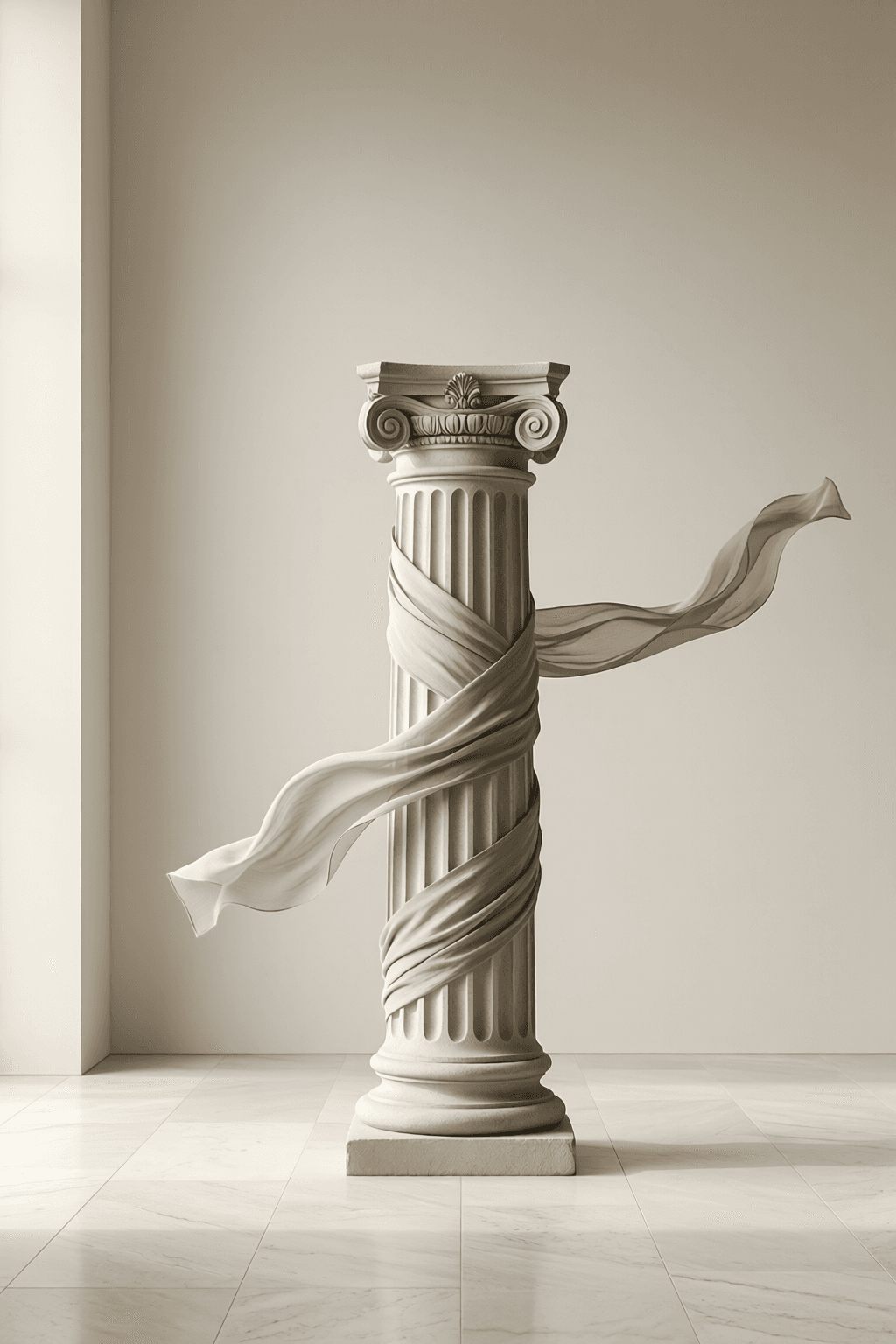
Strength lies in restraint. — Seneca
—What lingers after this line?
Power That Does Not Need Display
At first glance, Seneca’s line seems simple, yet it overturns a common assumption: that strength must be loud, forceful, or visibly dominant. Instead, he suggests that genuine power reveals itself most clearly when a person could act impulsively but chooses not to. In that sense, restraint is not weakness or hesitation; it is disciplined control over one’s own capacities. This idea fits the broader Stoic tradition found in Seneca’s Letters to Lucilius (c. AD 65), where mastery of the self matters more than mastery of others. A person who cannot govern anger, pride, or appetite may appear powerful for a moment, but inwardly remains unstable. Thus, restraint becomes the clearest proof that one’s strength is real and not merely theatrical.
The Stoic Art of Self-Mastery
From there, Seneca’s thought leads naturally to the Stoic belief that the hardest battles are internal. To restrain oneself when provoked, frightened, or tempted requires more courage than simply surrendering to emotion. Marcus Aurelius’ Meditations (c. AD 180) echoes this spirit when he repeatedly urges calm judgment over reactive passion, showing how Roman philosophy treated composure as a mark of character. Moreover, Stoicism does not ask people to become emotionless. Rather, it asks them to prevent emotion from becoming their ruler. In this light, restraint is an active discipline, a deliberate pause between feeling and action. That pause is where strength lives, because it shows that reason still holds authority.
Restraint in Moments of Conflict
This principle becomes especially vivid in conflict. Anyone can lash out, escalate an insult, or answer injury with more injury; such reactions are immediate and often satisfying. However, Seneca invites us to see that the harder and nobler act is measured response. In On Anger (De Ira, c. AD 41), he warns that anger resembles temporary madness, making restraint a safeguard against self-inflicted harm. Consequently, restraint preserves not only dignity but effectiveness. A leader who stays calm under attack can think clearly, while an enraged opponent often defeats himself. History repeatedly confirms this pattern: those who keep command of themselves are better able to command events. What looks like passivity from the outside may therefore be the highest form of control.
Moral Strength and Mercy
Yet Seneca’s phrase also carries an ethical dimension. Restraint is not merely strategic; it can be humane. A strong person who chooses mercy demonstrates a deeper kind of confidence than one who insists on domination. Shakespeare’s The Merchant of Venice (c. 1596) captures a related ideal when Portia says that mercy is mightiest in the mightiest, linking power with the ability to withhold harm. In everyday life, this appears in small but decisive acts: a parent who corrects without cruelty, a judge who distinguishes justice from vengeance, or a friend who refuses to weaponize another’s weakness. In each case, restraint turns strength outward as protection rather than aggression. That is why it often earns trust where raw force only produces fear.
A Lesson for Modern Life
Finally, Seneca’s insight feels especially relevant in a world that rewards instant reaction. Social media encourages outrage, workplaces often prize assertiveness over reflection, and public culture can mistake volume for authority. Against that backdrop, restraint may seem unfashionable; nevertheless, it remains one of the clearest signs of maturity. To practice restraint today is to delay the angry message, to listen before replying, or to decline an easy display of superiority. These acts may look small, but they require inner steadiness. Seneca’s sentence endures because it reminds us that true strength is not proven by how much power we can unleash, but by how wisely we can hold it back.
One-minute reflection
What's one small action this suggests?
Related Quotes
6 selectedThe strongest person controls the self, not others. — Seneca
Seneca
Seneca’s statement turns the usual idea of power inside out. Instead of praising the person who dominates rivals, commands attention, or bends others to their will, he locates real strength in self-command.
Read full interpretation →Restraint is not fear. It is control. — Seneca
Seneca
At first glance, Seneca’s line separates two behaviors that can look similar from the outside: stepping back and shrinking away. Fear retreats because it feels overpowered, whereas restraint pauses because it possesses c...
Read full interpretation →If you would live your life with ease, you must learn to command your impulses rather than be governed by them. — Seneca
Seneca
At its core, Seneca’s statement argues that ease in life does not come from controlling circumstances, but from governing oneself. The Stoic philosopher redirects attention inward, suggesting that peace depends less on l...
Read full interpretation →You do not have to obey every thought that enters your mind. — Epictetus
Epictetus’ reminder begins with a simple but liberating distinction: a thought may appear in the mind, but it does not have to become a command. In the Stoic tradition, this gap between impression and response is where h...
Read full interpretation →You are not responsible for your first thought, but you are responsible for your second thought. — Viktor Frankl
Viktor Frankl
At its core, the quotation distinguishes between what arises automatically and what we deliberately endorse. A first thought may be reflexive, inherited, fearful, angry, or conditioned by habit; it appears before moral j...
Read full interpretation →We are not victims of our impulses or emotions; we have the power to control them. It is time to relinquish the excuses. — Allie Brosh
Allie Brosh
At its core, Allie Brosh’s quote rejects the comforting idea that emotions and impulses are irresistible forces. Instead, it insists that human beings possess agency: the ability to pause, choose, and act deliberately ev...
Read full interpretation →More From Author
More from Seneca →The willing are led by fate, the reluctant are dragged. — Seneca
Seneca’s line captures a central Stoic conviction: life unfolds according to forces larger than individual preference. Yet the quote is not a call to helplessness.
Read full interpretation →The heart is great which shows moderation in the midst of prosperity. — Seneca
Seneca’s observation begins with a quiet but demanding standard: true greatness is not proven by success itself, but by restraint when success arrives. Prosperity can enlarge appetites, inflate pride, and make excess app...
Read full interpretation →Whatever you are doing, do it with a sense of purpose, not merely to pass the time. — Seneca
Seneca’s counsel begins with a simple but demanding idea: life should not be treated as something to be spent carelessly. For the Stoics, time was not a disposable background to action but the very material of character.
Read full interpretation →The strongest person controls the self, not others. — Seneca
Seneca’s statement turns the usual idea of power inside out. Instead of praising the person who dominates rivals, commands attention, or bends others to their will, he locates real strength in self-command.
Read full interpretation →