
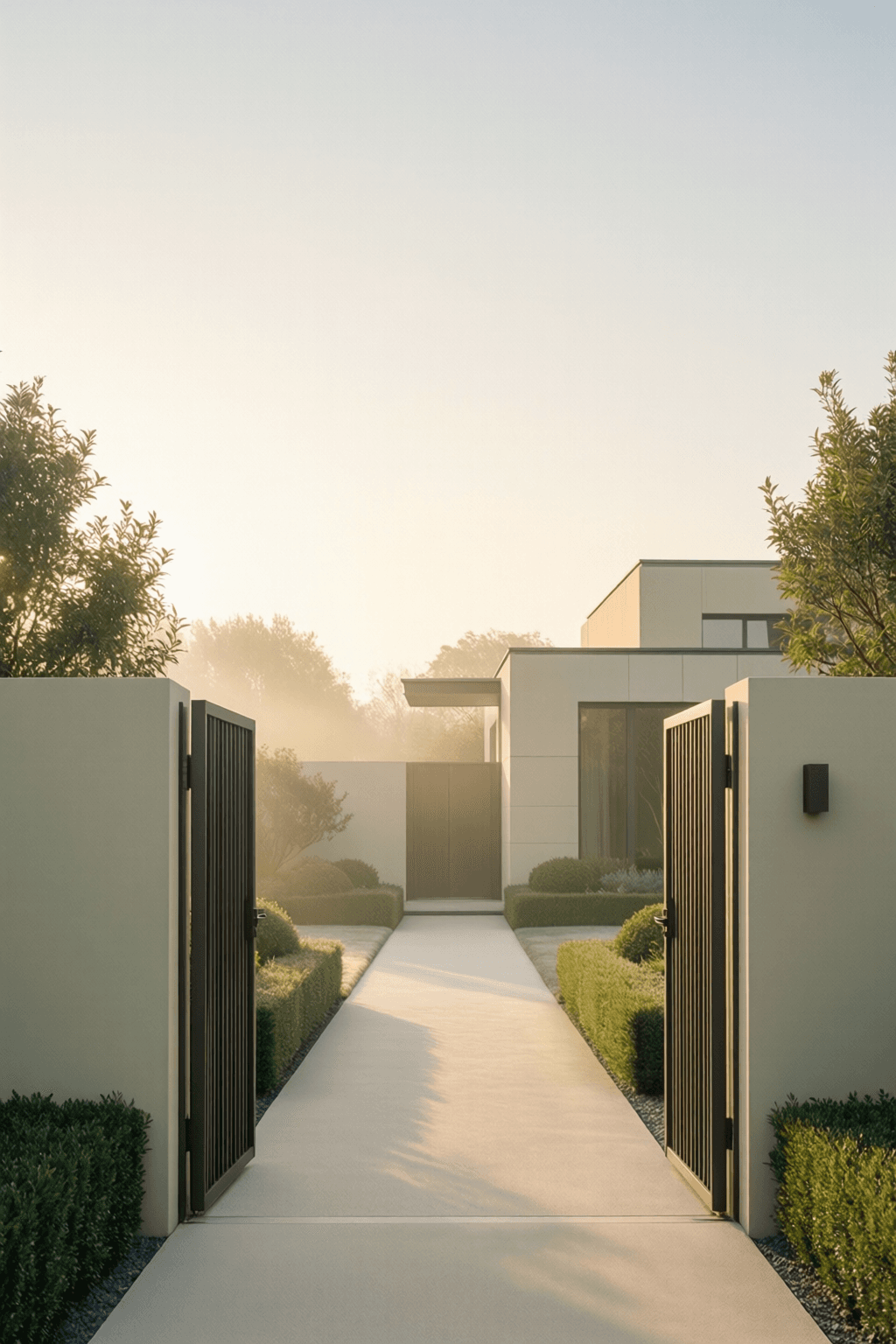
Boundaries are not walls to keep others out, but gates to protect your own nervous system. — Nedra Glover Tawwab
—What lingers after this line?
Reframing What Boundaries Really Are
At first glance, boundaries are often mistaken for rejection, distance, or emotional coldness. Yet Nedra Glover Tawwab’s image of gates rather than walls shifts the entire meaning: boundaries are not built to punish others, but to regulate what we allow into our emotional and physiological lives. In that sense, they are acts of stewardship, not separation. This reframing matters because it places self-protection within the language of care. Rather than announcing, “You are unwelcome,” a healthy boundary says, “I must manage my energy, safety, and capacity.” The distinction is subtle but powerful, turning boundary-setting from a defensive gesture into a humane practice of self-respect.
The Nervous System at the Center
From there, Tawwab’s wording directs attention to the nervous system, reminding us that relationships affect the body as much as the mind. Chronic criticism, unpredictability, or overexposure to others’ demands can trigger stress responses—fight, flight, freeze, or fawn—well before we consciously name what is wrong. In this light, boundaries become biological necessities. Modern trauma research, including Stephen Porges’s Polyvagal Theory (1994), helps explain why cues of safety and danger shape our capacity to connect. When people set limits around time, tone, access, or topics, they are often protecting their bodies from dysregulation. Thus, a boundary is not merely a preference; it can be a way of preserving calm, clarity, and emotional stability.
Why Gates Matter More Than Walls
However, the metaphor of a gate is especially revealing because a gate opens and closes with intention. Unlike a wall, which suggests permanent exclusion, a gate implies discernment: some people, behaviors, and moments are welcome, while others require distance or conditions. This makes boundaries flexible rather than absolute. That flexibility reflects emotional maturity. As Tawwab argues throughout Set Boundaries, Find Peace (2021), healthy limits are not about controlling others but about clarifying what we will participate in. A gate allows connection without surrender. In practice, this might mean loving a family member while refusing late-night conflict, or valuing a friendship while declining repeated emotional dumping.
Boundaries as a Form of Self-Trust
Once boundaries are understood as protective gates, they also become evidence of self-trust. To set one is to believe that your discomfort is worth noticing and that your internal signals deserve a response. Many people, especially those raised to please, minimize their stress until resentment or burnout forces action. Boundaries interrupt that cycle earlier. In this way, saying no, asking for space, or limiting access becomes less about confrontation and more about honoring internal knowledge. The message beneath the behavior is simple: “I trust myself to know when something is too much.” That posture strengthens identity, because every clear limit reinforces the belief that one’s needs are real and legitimate.
How Boundaries Preserve Connection
Paradoxically, boundaries often make intimacy more sustainable rather than less. When people do not protect their nervous systems, they tend to withdraw abruptly, explode in anger, or stay engaged while silently accumulating resentment. Clear limits prevent those extremes by making relationships more predictable and honest. This pattern appears in both therapy and literature: in Harriet Lerner’s The Dance of Anger (1985), unspoken strain corrodes closeness, whereas direct, respectful clarity creates healthier bonds. A gate, after all, does not end the relationship; it organizes entry. By defining what is manageable, boundaries make it more likely that care can continue without emotional collapse.
A Practical Ethic of Emotional Safety
Ultimately, Tawwab’s quote offers a practical ethic for daily life: protect your peace without abandoning your humanity. Boundaries need not be dramatic to be effective; they can appear as delayed replies, shorter visits, declined invitations, or explicit requests for respectful communication. Each small act teaches the nervous system that safety can be created, not merely hoped for. Therefore, the quote invites a more compassionate view of personal limits. We are not closing ourselves off from the world when we set boundaries; we are choosing the conditions under which we can remain open. Seen this way, boundaries are less like barricades and more like wise architecture for a livable inner life.
One-minute reflection
What does this quote ask you to notice today?
Related Quotes
6 selectedA boundary is a cue to others on how to love and respect you. — Nedra Glover Tawwab
Nedra Glover Tawwab
Nedra Glover Tawwab’s line reframes a boundary as something generous: a clear signal that helps other people understand what care looks like for you. Rather than being a wall that shuts others out, a boundary acts like a...
Read full interpretation →If you're over-explaining, you're usually over-compensating for a boundary you're not willing to keep. — Nedra Glover Tawwab
Nedra Glover Tawwab
Nedra Glover Tawwab’s line reframes over-explaining as more than a communication quirk; it becomes a clue about inner conflict. When someone keeps adding reasons, clarifications, and context, they may be trying to earn p...
Read full interpretation →A boundary is a door, not a wall. It is the distance at which I can love you and still love myself. — Nedra Glover Tawwab
Nedra Glover Tawwab
Nedra Glover Tawwab flips a common assumption: boundaries are often treated like cold barricades, but she calls them “a door.” That image matters because doors are meant to open and close with intention, letting closenes...
Read full interpretation →Self-care is more than a spa day. It is the ability to say no to people and situations that drain your energy. — Nedra Glover Tawwab
Nedra Glover Tawwab
Nedra Glover Tawwab’s quote begins by dismantling a common misconception: that self-care is primarily about treats, products, or occasional relaxation rituals. While comfort can be restorative, she argues that it’s not t...
Read full interpretation →You don't set boundaries to keep people out. You set them to keep yourself intact. Because peace doesn't live where you're constantly shrinking. — Intrepid Quips
Intrepid Quips
At first glance, boundaries can seem like walls meant to exclude others, yet this quote reframes them as a form of self-preservation. The point is not rejection but protection: a boundary marks the place where a person c...
Read full interpretation →Boundaries are not a wall to keep people out, but a gate to keep your peace in. — Morgan Harper Nichols
Morgan Harper Nichols
At first glance, boundaries are often mistaken for barriers, as if setting limits automatically signals rejection. Morgan Harper Nichols reframes that assumption by describing boundaries as a gate rather than a wall.
Read full interpretation →More From Author
More from Nedra Glover Tawwab →It is not a sign that you are doing something wrong to need a break; it is a sign that you are human. — Nedra Glover Tawwab
At its core, Nedra Glover Tawwab’s quote rejects the harsh belief that constant productivity is the measure of worth. Instead, it reframes the need for a break as evidence of our basic humanity: bodies tire, minds overlo...
Read full interpretation →The most powerful relationship you will ever have is the relationship with yourself. — Nedra Glover Tawwab
Nedra Glover Tawwab’s quote places self-relationship at the center of human life, suggesting that every other bond is filtered through the one we have with ourselves. In other words, the way we speak to ourselves, interp...
Read full interpretation →You do not have to fix everything today, this week, or alone. You can rebuild—gently, slowly, and sustainably. — Nedra Glover Tawwab
Nedra Glover Tawwab’s words begin by challenging a familiar pressure: the belief that healing must happen immediately and completely. By saying, “You do not have to fix everything today, this week, or alone,” she interru...
Read full interpretation →The greatest gift you can give an anxious mind is a home that serves as a sanctuary, where you can be heard without being judged. — Nedra Glover Tawwab
At its core, Nedra Glover Tawwab’s quote redefines home as more than a physical shelter. She presents it as an emotional refuge, a place where an anxious mind can finally lower its guard.
Read full interpretation →