
The Importance of Courage in Life - Vincent Van Gogh
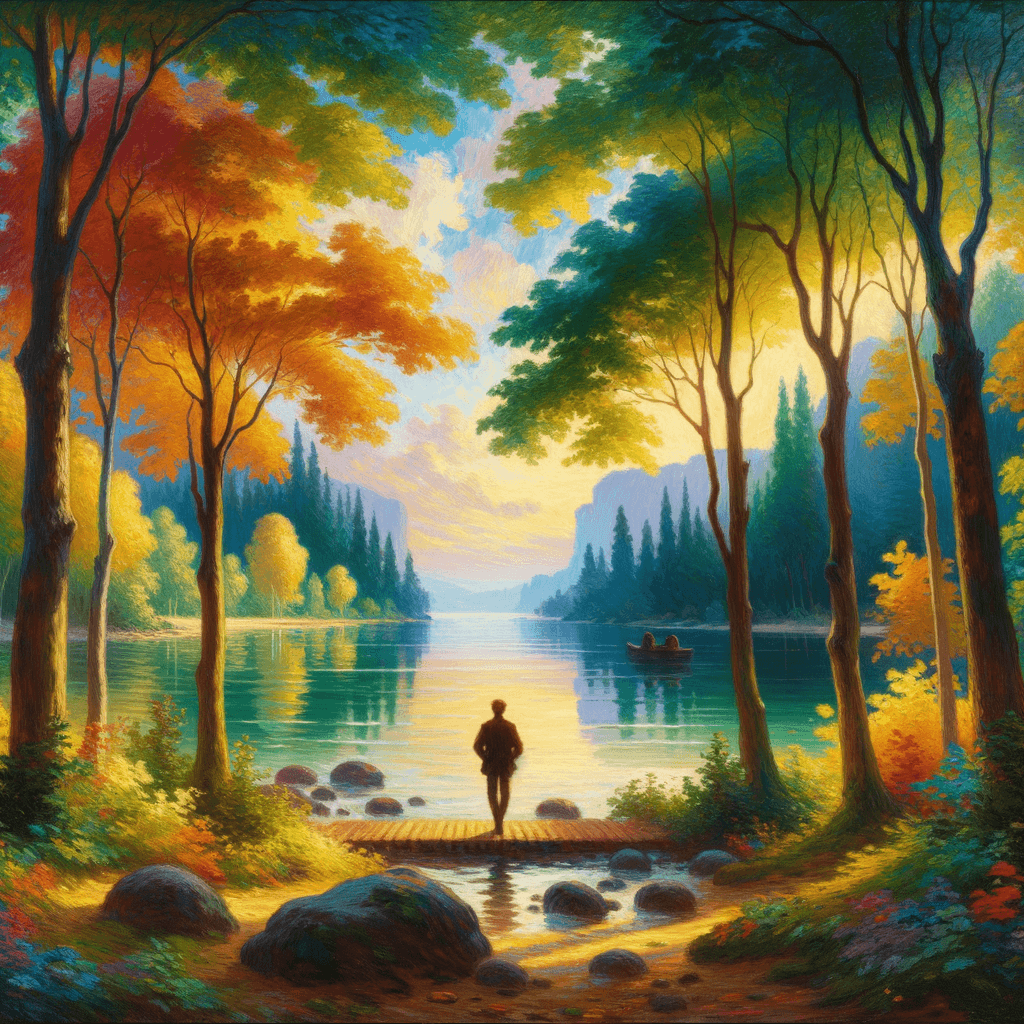
What would life be if we had no courage to attempt anything? — Vincent Van Gogh
—What lingers after this line?
Value of Courage
This quote highlights the crucial role courage plays in our lives. It suggests that without the bravery to pursue our goals and dreams, life would lack meaningful experiences and opportunities.
Embracing Challenges
Van Gogh implies that taking risks is essential for personal growth. Facing fears and challenges allows individuals to explore their potential and gain new insights.
Overcoming Fear of Failure
The quote also points to the necessity of overcoming fear. Fear can paralyze us, preventing us from trying new things and leading to a stagnant life devoid of fulfillment.
Creative Expression
As an artist, Van Gogh's own life was a testament to the importance of courage in creative expression. He faced rejection and mental struggles yet continued to create, illustrating that courage fuels artistic endeavors.
Historical Context
Vincent Van Gogh, a post-impressionist painter from the late 19th century, faced numerous challenges, both personal and professional. His struggles with mental health and societal acceptance amplify the significance of this quote in understanding the human condition.
Recommended Reading
One-minute reflection
What's one small action this suggests?
Related Quotes
6 selectedCourage is the daily practice of showing up for what matters. — Toni Morrison
Toni Morrison
Toni Morrison’s line shifts courage away from grand, cinematic heroics and into the realm of repetition. Rather than a single decisive moment, courage becomes something you rehearse—like a craft—through ordinary choices...
Read full interpretation →Courage is less about fearlessness than training the mind to act with clarity and conviction. — Ranjay Gulati
Ranjay Gulati
Ranjay Gulati’s line begins by overturning a common myth: that courage belongs to people who simply don’t feel afraid. Instead, he frames fear as normal—and even expected—while locating courage in what happens next.
Read full interpretation →Dare to begin where fear says to stop; the first step redraws the map — Paulo Coelho
Paulo Coelho
Paulo Coelho’s line treats fear less as a warning and more as a border we mistakenly accept as permanent. When fear says “stop,” it often isn’t pointing to actual danger; it’s signaling uncertainty, inexperience, or the...
Read full interpretation →If you feel safe in the area you're working in, you're not working in the right area. — David Bowie
David Bowie
David Bowie’s remark reframes unease as a signal rather than a problem: if you feel completely safe, you may be repeating what you already know works. In that sense, “safe” can mean predictable—methods mastered, outcomes...
Read full interpretation →If you are not in the arena also getting your ass kicked, I'm not interested in your feedback. — Brené Brown
Brené Brown
Brené Brown’s blunt image of “the arena” draws a sharp line between spectators and participants. Feedback, she implies, carries real weight when it comes from someone who has also accepted the risks of being seen, judged...
Read full interpretation →There is something wonderfully bold and liberating about saying yes to our entire imperfect and messy life. — Tara Brach
Tara Brach
Tara Brach frames acceptance not as resignation but as a daring, almost countercultural act. To say yes to “our entire imperfect and messy life” is to stop bargaining for a cleaner version of reality before we allow ours...
Read full interpretation →More From Author
More from Vincent van Gogh →Work with wild curiosity; a single brushstroke can begin a new horizon. — Vincent van Gogh
Van Gogh’s line opens by treating curiosity not as a casual interest, but as a way of moving through the world—“wild” enough to break routine perception. Rather than waiting for certainty, the artist begins by wondering,...
Read full interpretation →Starve the need for certainty and feed the appetite for meaning. — Vincent van Gogh
Vincent van Gogh’s line urges a deliberate reversal of instinct: instead of constantly soothing ourselves with clear, final conclusions, we should loosen our grip and make room for significance. Certainty can feel like s...
Read full interpretation →Work with urgency and tenderness; creation needs both flame and care. — Vincent van Gogh
Van Gogh’s line reads like a practical creed: work fast enough that the moment doesn’t cool, yet gently enough that the work isn’t bruised by haste. Urgency and tenderness are not competing moods here but paired tools, e...
Read full interpretation →Paint your goals with bold colors; then live as if they are already true. — Vincent van Gogh
Van Gogh’s invitation to “paint your goals with bold colors” begins with imagination. Rather than holding vague wishes, he urges us to see our aims as vivid scenes, almost like canvases hung in the gallery of the mind.
Read full interpretation →