
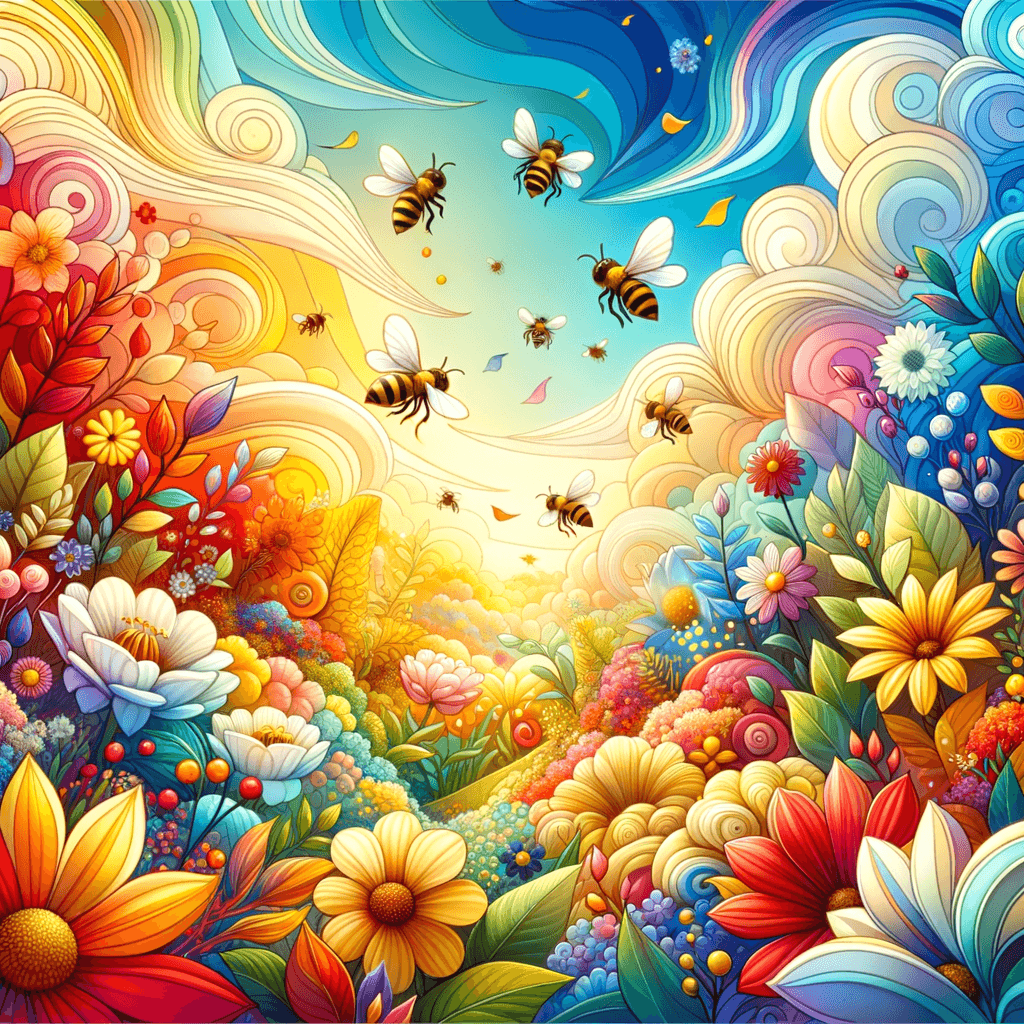
Life is a flower of which love is the honey. — Victor Hugo
—What lingers after this line?
Metaphor of Life and Love
In this quote, Victor Hugo uses the metaphor of a flower to represent life, suggesting that life is beautiful and delicate. Love, likened to honey, enhances this beauty and sweetness, making life more fulfilling.
The Essence of Happiness
Honey represents the joy and happiness that love brings into one's life. Without love, life's beauty might seem diminished, emphasizing how crucial love is for a fulfilling existence.
Interconnectedness of Nature and Emotions
The imagery connects natural elements to human emotions, illustrating how love is as essential to life as the diverse relationships within nature, creating a rich tapestry of experiences.
Transience of Life and Love
Flowers bloom for a short period, mirroring the fleeting nature of life. This suggests that love, while precious, is also transient and should be cherished in the moment for the sweetness it provides.
Philosophical Undertones
Victor Hugo was a prominent French writer known for exploring deep philosophical and emotional themes in his work. This quote reflects his belief in the transformative power of love, providing insight into his literary philosophy.
Recommended Reading
As an Amazon Associate, we earn from qualifying purchases.
One-minute reflection
What feeling does this quote bring up for you?
Related Quotes
6 selectedThe beginning of love is to let those we love be perfectly themselves, and not to twist them to fit our own image. — Thomas Merton
Thomas Merton
At its core, Thomas Merton’s statement reframes love as an act of reverence rather than possession. To love someone ‘perfectly themselves’ means resisting the urge to edit their character, ambitions, or temperament until...
Read full interpretation →The secret to a long life is to have something to do, someone to love, and something to look forward to. — Arthur Ashe
Arthur Ashe
At first glance, Arthur Ashe’s quote appears disarmingly simple, yet its power lies in how neatly it gathers a meaningful life into three essentials: purpose, affection, and hope. Rather than treating longevity as a pure...
Read full interpretation →The family is one of nature's masterpieces. — George Santayana
George Santayana
George Santayana’s remark, “The family is one of nature’s masterpieces,” turns an ordinary institution into something almost artistic. At first glance, the sentence feels warm and familiar, yet its force lies in the word...
Read full interpretation →The most important thing in the world is family and love. — John Wooden
John Wooden
John Wooden’s quote distills a large philosophy into a few plain words: amid achievement, wealth, and recognition, family and love remain the true center of life. At first glance, the statement seems obvious, yet its for...
Read full interpretation →Love is the oil that eases friction, the cement that binds closer together, and the music that brings harmony. — Eva Burrows
Eva Burrows
Eva Burrows frames love through three vivid images—oil, cement, and music—each describing a different way relationships endure. Rather than treating love as a single feeling, she suggests it is an active force that reduc...
Read full interpretation →What is done in love is done well. — William Blake
William Blake
Blake’s sentence compresses a large claim: the quality of an act rises with the quality of its love. In this view, love is not a mere feeling but a way of attending—giving full presence, patience, and respect to the task...
Read full interpretation →More From Author
More from Victor Hugo →Build bridges with your will, and let hope walk across them. — Victor Hugo
Victor Hugo’s image begins with a practical insistence: the future doesn’t simply arrive; it is constructed. By saying “build bridges with your will,” he treats willpower as a kind of engineering—an intentional effort to...
Read full interpretation →Forge a path with words and work, and let beauty follow in your wake. — Victor Hugo
Victor Hugo’s line, “Forge a path with words and work, and let beauty follow in your wake,” begins by uniting two worlds often held apart: artistic expression and disciplined effort. Instead of treating beauty as somethi...
Read full interpretation →When doubt knocks, invite it to see what you're building — Victor Hugo
Victor Hugo’s image of doubt knocking at the door immediately turns an internal feeling into an external visitor. Rather than picturing doubt as a storm that breaks in, he imagines it as something that politely announces...
Read full interpretation →Hold fast to the idea that small acts of bravery stitch the fabric of a freer tomorrow. — Victor Hugo
Imagine freedom as a fabric: resilient yet always at risk of fraying. Small acts of bravery are the stitches that prevent it from unraveling, and holding fast to this idea keeps our hands steady at the needle.
Read full interpretation →