
Boldness as the Catalyst for Transformative Change
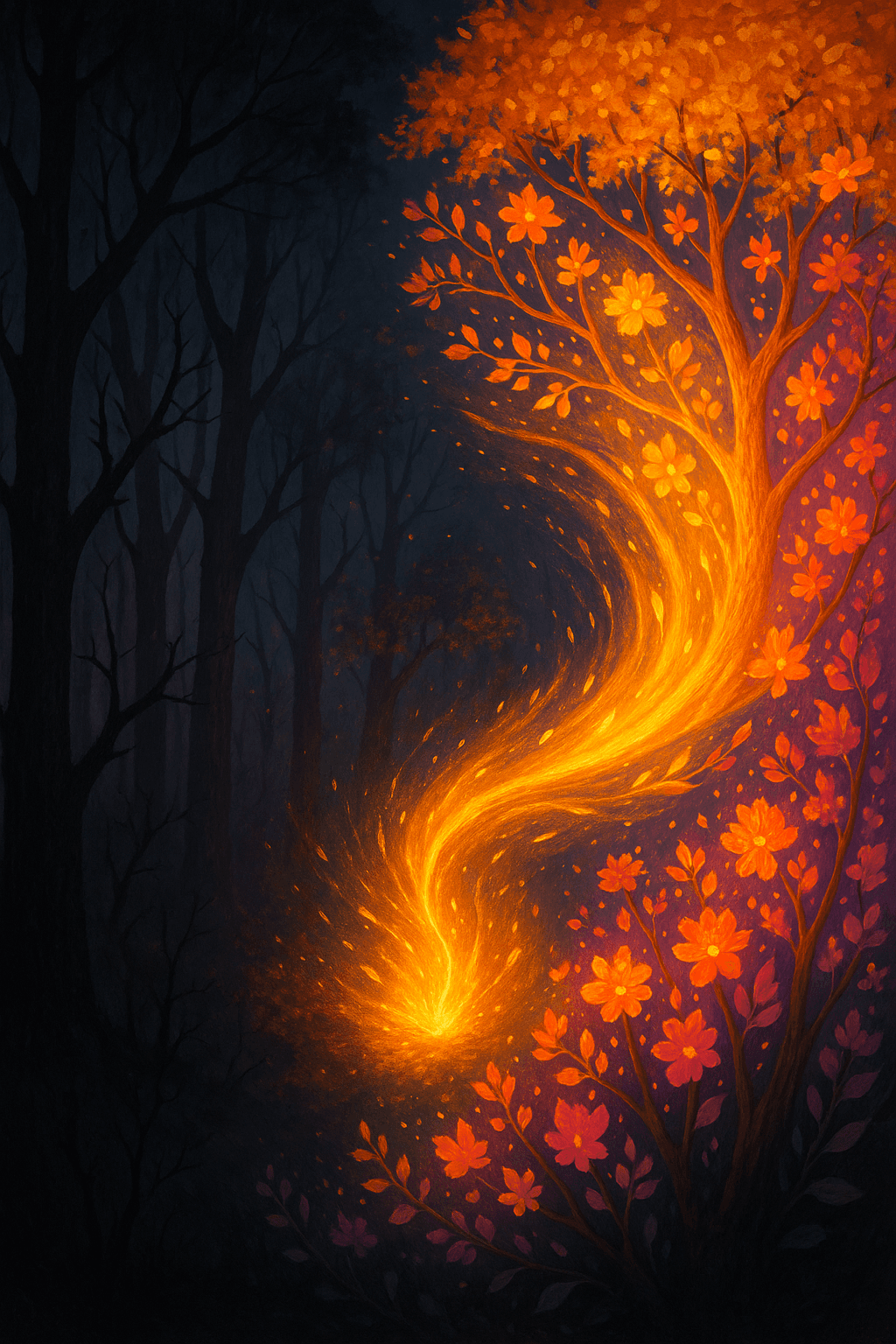
Boldness kindles the spark that ignites change. — Frida Kahlo
—What lingers after this line?
The Nature of Boldness
Frida Kahlo’s words draw attention to boldness as an essential quality for anyone seeking to make a difference. Unlike mere assertiveness, true boldness requires a willingness to risk discomfort and stand apart from the status quo. This attribute is not just personal bravado, but the very foundation upon which movements and innovations are built.
History’s Trailblazers and Their Courage
Looking to history, transformations often began with acts of singular courage. Rosa Parks’s refusal to surrender her seat in 1955 Montgomery, Alabama, is one such example—her boldness sparked the larger civil rights movement. This parallel reinforces Kahlo's notion: significant change is rarely the product of timidity.
Creativity Unleashed Through Daring
Furthermore, in the arts, boldness manifests as creative risk-taking. Kahlo herself—known for her unflinching self-portraits and exploration of taboo themes—embodied this principle. Her willingness to expose her pain and identity through her work inspired generations, proving that artistic revolutions are ignited by those unafraid to push boundaries.
Overcoming Resistance and Fear
Nevertheless, boldness is often met with resistance. Whether in societies or organizations, entrenched norms discourage risk-takers. Yet, as evidenced by innovators from Galileo to Malala Yousafzai, facing fear head-on is the first spark that lights the fire of progress. Such cases illustrate how deliberate audacity is necessary to break inertia.
Cultivating Boldness for Everyday Change
As we draw these ideas together, it becomes clear that boldness is not reserved only for the extraordinary. In daily life, anyone can kindle change—whether by speaking out against injustice, embracing a new idea, or pursuing a fresh path despite uncertainty. Kahlo’s insight reminds us that even the smallest acts of courage may be the spark that ignites lasting transformation.
Recommended Reading
One-minute reflection
What feeling does this quote bring up for you?
Related Quotes
6 selectedBoldness kindles the spark that ignites change. — Frida Kahlo
Frida Kahlo
Frida Kahlo’s statement spotlights boldness as the motivating force behind transformation. At its core, boldness means facing uncertainty or opposition with courage and resolve—a quality that propels individuals to move...
Read full interpretation →Passion is the bridge that takes you from pain to change. — Frida Kahlo
Frida Kahlo
This quote emphasizes how personal passion can act as a catalyst for transformation. It suggests that channeling intense emotions, like pain, into passion can create momentum for personal or societal change.
Read full interpretation →Life is too short to be subtle — Mary Quant
Mary Quant
Mary Quant’s line begins with a blunt accounting: life is finite, and that fact should change how we show up in the world. If time is scarce, then excessive restraint can become a kind of self-sabotage—postponing honest...
Read full interpretation →A person who is growing will never be able to fit back into their old life. — Yung Pueblo
Yung Pueblo
Yung Pueblo’s line frames personal development as a physical transformation: when you grow, you take up more inner space, and the old container can’t hold you. This isn’t arrogance or rejection for its own sake; it’s sim...
Read full interpretation →I'd rather be a lightning rod than a seismograph. — Ken Kesey
Ken Kesey
Ken Kesey’s line hinges on two instruments that represent opposing ways of moving through life. A seismograph registers tremors; it is designed to detect, record, and translate distant shocks into readable marks.
Read full interpretation →True resilience is not about returning to the person you were before the storm. It is about bouncing forward into the person the storm required you to become. — Satya Nadella
Satya Nadella
Satya Nadella’s line challenges the common idea that resilience is simply “getting back to normal.” Instead of treating hardship as a temporary interruption, he frames it as a transforming event that changes what “normal...
Read full interpretation →More From Author
More from Frida Kahlo →I paint flowers so they will not die. — Frida Kahlo
Frida Kahlo’s line reads like a gentle spell: by painting flowers, she resists the most ordinary tragedy—things fading despite our care. A bouquet wilts, a season ends, a beloved moment slips away; the canvas, however, o...
Read full interpretation →I tried to drown my sorrows, but the bastards learned how to swim. — Frida Kahlo
Frida Kahlo’s line opens with the familiar promise of escape—“I tried to drown my sorrows”—and then snaps into a punchline that refuses sentimentality. The sudden insult, “the bastards,” is more than comic shock; it’s a...
Read full interpretation →I used to think I was the strangest person in the world, but there must be someone just like me who feels bizarre and flawed. — Frida Kahlo
Frida Kahlo’s reflection begins in a familiar loneliness: the belief that one’s inner life is uniquely strange, even irredeemably flawed. That kind of self-story can make ordinary differences feel like permanent exile.
Read full interpretation →Embrace risk as the price of progress; comfort keeps the clock of your life frozen. — Frida Kahlo
Frida Kahlo’s line frames progress as a purchase: you pay for it with risk. In that sense, “embrace” is not a motivational flourish but an instruction to stop treating uncertainty as an error and start treating it as a t...
Read full interpretation →