
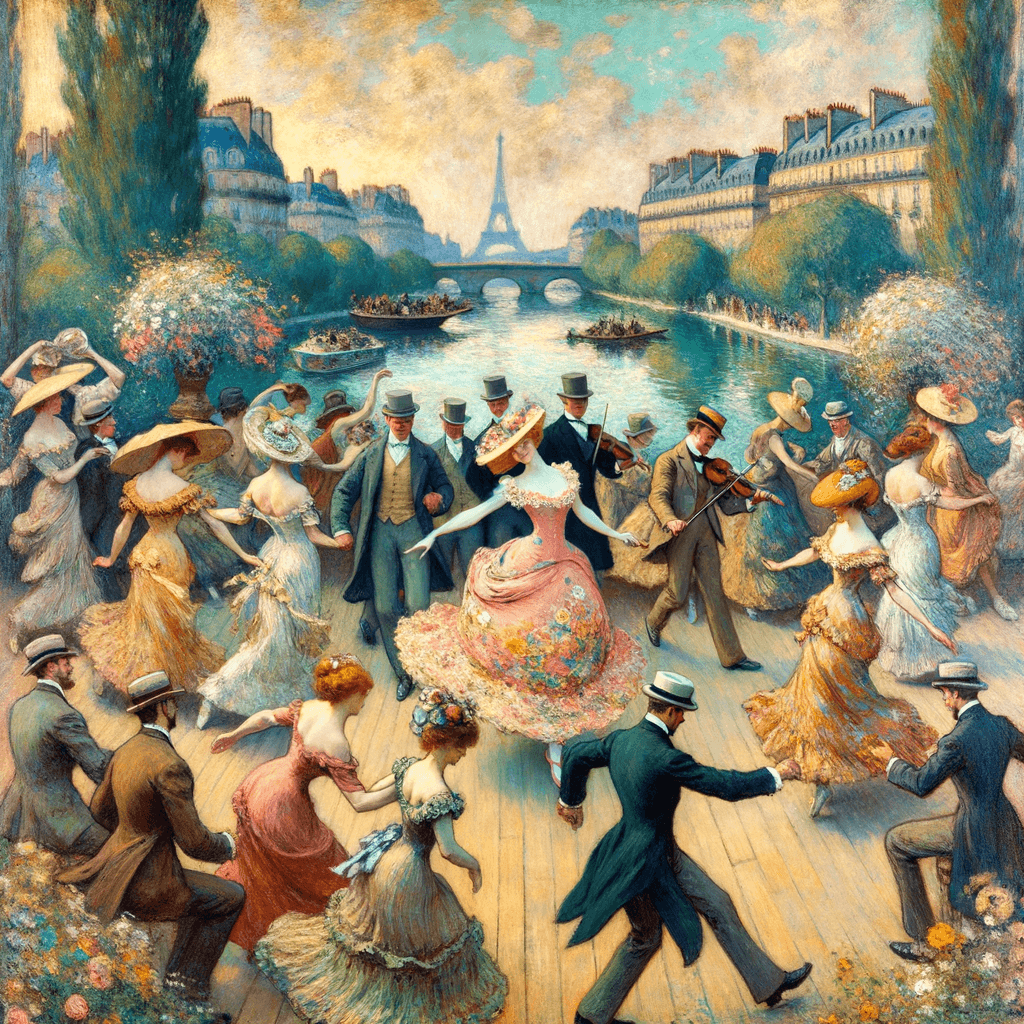
Art is not what you see, but what you make others see. - Edgar Degas
—What lingers after this line?
Subjective Experience
This quote highlights the subjective nature of art. Art is not merely about an artist's personal vision but how effectively that vision is communicated and perceived by others.
Impact on Audience
It emphasizes the importance of the emotional and intellectual impact that art has on its audience. The value of art lies in evoking a response or insight from those who encounter it.
Interpretation and Meaning
Art invites interpretation and multiple layers of meaning. The quote suggests that artists succeed when they stimulate their audience to see beyond the surface and uncover deeper significances.
Interpersonal Connection
The quote underscores the connection between the artist and the viewer, where the true essence of the artwork is realized through shared perception and understanding.
Role of the Artist
It highlights the role of the artist as a communicator or storyteller who guides the viewer towards a particular vision or emotion, demonstrating the power of artistic expression.
Historical Context
Edgar Degas was a prominent French Impressionist artist known for his works in painting, sculpture, printmaking, and drawing during the late 19th and early 20th centuries. His perspective on art reflects the period's emphasis on individual perception and innovation.
Recommended Reading
As an Amazon Associate, we earn from qualifying purchases.
One-minute reflection
Where does this idea show up in your life right now?
Related Quotes
6 selectedThere is no must in art because art is free. — Wassily Kandinsky
Wassily Kandinsky
At its core, Kandinsky’s statement rejects the idea that art must obey fixed obligations. By saying there is no ‘must’ in art, he frees creation from rigid formulas, academic demands, and social expectation.
Read full interpretation →Often what the artist expresses is unconscious, but we can learn to decode the story by collaboratively finding the pieces to the puzzle that create new possibilities for innovation. — Ben Okri
Ben Okri
At the heart of Ben Okri’s statement is the idea that art often says more than the artist consciously intends. A poem, painting, or song may carry hidden fears, cultural memories, or emotional truths that emerge without...
Read full interpretation →I think that when you create something, you leave a part of yourself in it. — Henri Matisse
Henri Matisse
At its core, Matisse’s reflection suggests that making anything—a painting, a poem, a song, even a room—inevitably transfers something inward into outward form. Creation is not merely the arrangement of materials; rather...
Read full interpretation →There is a deep peace that comes from creating something that didn't exist before. It is your way of telling the universe that you were here, and you felt something. — Maya Angelou
Maya Angelou
At its heart, Maya Angelou’s reflection suggests that creation is not merely productive but restorative. To make something that did not exist before—a poem, a garden, a melody, even a repaired room—is to experience a rar...
Read full interpretation →The creative act is not an escape from reality, but a way to encounter it more deeply. — bell hooks
bell hooks
At first glance, creative work can look like withdrawal: a painter disappears into a studio, a writer vanishes into pages, a musician closes the door and listens inward. Yet bell hooks reverses that assumption.
Read full interpretation →The best use of imagination is creativity. The worst use of imagination is anxiety. — Deepak Chopra
Deepak Chopra
Deepak Chopra frames imagination as a neutral force whose value depends on its direction. In one sense, imagination is the mind’s simulator: it can invent possibilities that do not yet exist, letting us rehearse outcomes...
Read full interpretation →More From Author
More from Edgar Degas →