
I think that when you create something, you leave a part of yourself in it. — Henri Matisse
—What lingers after this line?
Art as a Personal Trace
At its core, Matisse’s reflection suggests that making anything—a painting, a poem, a song, even a room—inevitably transfers something inward into outward form. Creation is not merely the arrangement of materials; rather, it becomes a subtle imprint of the creator’s temperament, memory, and attention. In that sense, the finished work is never wholly separate from the person who made it. This idea helps explain why handmade objects often feel intimate even before we know their history. A brushstroke, a phrase, or a design choice can carry the rhythm of a mind at work. Thus, Matisse points us toward a simple but profound truth: creation is also self-revelation.
The Emotional Residue of Making
From there, the quote deepens into emotion. What artists leave behind is not just style but feeling—the calm or urgency present during the act of making. Henri Matisse’s own works, from the luminous interiors of the 1910s to the cut-outs of his later years, often communicate joy, balance, and resilience, suggesting that his sensibility survives inside the color itself. Consequently, audiences often respond to art as though they are encountering a person through an object. Even when the maker is absent, a work can still transmit mood, struggle, or tenderness. What remains on the canvas or page is, in part, emotional residue made visible.
Why Imperfection Feels Human
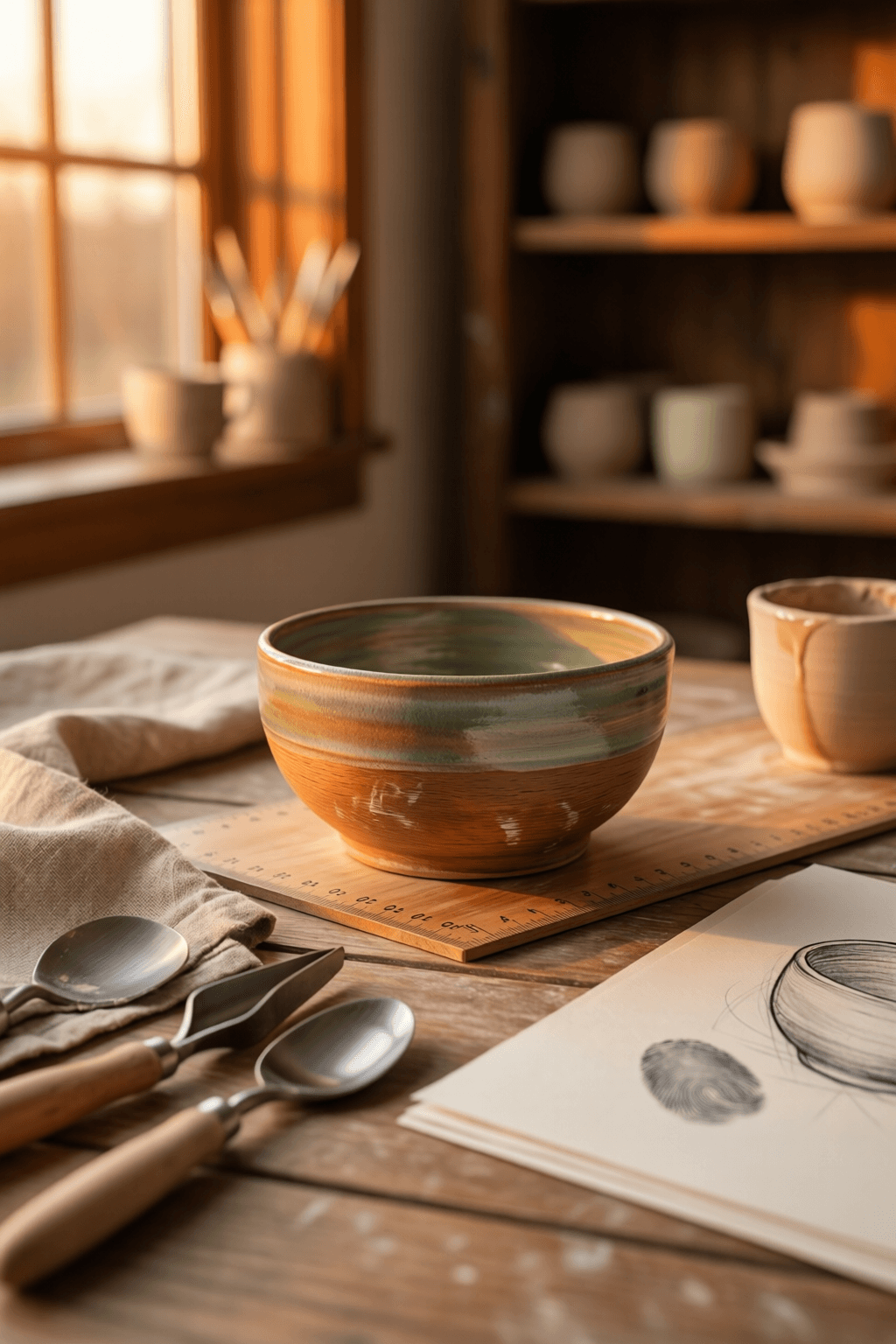
Moreover, Matisse’s idea explains why imperfections can make a work more moving rather than less. Small irregularities—a rough edge, an unexpected turn of phrase, an asymmetrical line—signal the presence of a living hand and mind. Instead of reducing value, such marks can make the object feel inhabited. This is why mass-produced perfection often seems colder than something evidently shaped by effort. The Japanese aesthetic of wabi-sabi, described in modern terms by Leonard Koren’s Wabi-Sabi for Artists, Designers, Poets & Philosophers (1994), similarly prizes the incomplete and transient. In that light, the part of oneself left in creation is often found precisely where polish gives way to personality.
A Bond Between Creator and Audience
As a result, creation becomes a bridge between private experience and shared meaning. A viewer may not know the artist’s exact biography, yet still recognize sincerity, grief, delight, or longing in the work. This connection is one reason art can feel strangely intimate across centuries; the maker’s inner life continues to meet new people long after the act of creation ends. Vincent van Gogh’s letters, especially those collected in The Letters of Vincent van Gogh, reveal how deeply he saw painting as an extension of feeling and perception. In a similar way, Matisse implies that what we make can outlast us not just as an object, but as a continuing relationship with others.
Beyond Art Into Everyday Making
Yet the insight does not belong only to painters. A teacher leaves part of herself in a lesson, a cook in a meal, an architect in a building, and a parent in a child’s handmade costume for school. In each case, decisions shaped by care, habit, and imagination become signatures of presence, even when no name is attached. Therefore, Matisse’s quote broadens into a philosophy of work itself: whatever we make bears the marks of what we value and how we see. The ordinary becomes meaningful because it, too, can contain the maker’s inner life.
Creation as a Form of Continuance
Finally, the quote carries a quiet promise. If we leave a part of ourselves in what we create, then making things becomes a way of continuing beyond the moment. Not immortality in a grand sense, but persistence through influence, memory, and presence. A creation can keep speaking long after its maker has fallen silent. For that reason, Matisse’s words are both tender and demanding. They remind us that to create sincerely is to give something real away. Yet that gift is also what allows a work to live: it contains not just labor, but a fragment of a person made lasting.
One-minute reflection
What does this quote ask you to notice today?
Related Quotes
6 selectedCreativity is the way I share my soul with the world. — Brené Brown
Brené Brown
The quote highlights that creativity is a unique way to express one's inner thoughts, feelings, and identity.
Read full interpretation →There is no must in art because art is free. — Wassily Kandinsky
Wassily Kandinsky
At its core, Kandinsky’s statement rejects the idea that art must obey fixed obligations. By saying there is no ‘must’ in art, he frees creation from rigid formulas, academic demands, and social expectation.
Read full interpretation →Often what the artist expresses is unconscious, but we can learn to decode the story by collaboratively finding the pieces to the puzzle that create new possibilities for innovation. — Ben Okri
Ben Okri
At the heart of Ben Okri’s statement is the idea that art often says more than the artist consciously intends. A poem, painting, or song may carry hidden fears, cultural memories, or emotional truths that emerge without...
Read full interpretation →There is a deep peace that comes from creating something that didn't exist before. It is your way of telling the universe that you were here, and you felt something. — Maya Angelou
Maya Angelou
At its heart, Maya Angelou’s reflection suggests that creation is not merely productive but restorative. To make something that did not exist before—a poem, a garden, a melody, even a repaired room—is to experience a rar...
Read full interpretation →The creative act is not an escape from reality, but a way to encounter it more deeply. — bell hooks
bell hooks
At first glance, creative work can look like withdrawal: a painter disappears into a studio, a writer vanishes into pages, a musician closes the door and listens inward. Yet bell hooks reverses that assumption.
Read full interpretation →The best use of imagination is creativity. The worst use of imagination is anxiety. — Deepak Chopra
Deepak Chopra
Deepak Chopra frames imagination as a neutral force whose value depends on its direction. In one sense, imagination is the mind’s simulator: it can invent possibilities that do not yet exist, letting us rehearse outcomes...
Read full interpretation →More From Author
More from Henri Matisse →Consistency is the sum that equals what we become. — Henri Matisse
At its core, Matisse’s remark suggests that identity is not formed in a single dramatic moment but accumulated through repeated actions. What we do regularly—how we think, practice, respond, and persist—gradually adds up...
Read full interpretation →The secret to a life of significance is not in the grand gesture, but in the quiet, unrelenting consistency of your daily practice. — Henri Matisse
At first glance, Matisse overturns the common belief that meaningful lives are built through dramatic turning points. Instead, he locates significance in repetition: the small actions done faithfully when no audience is...
Read full interpretation →The artist must be a craftsman; he must know his materials, his tools, and his methods. — Henri Matisse
Henri Matisse’s statement immediately shifts attention from inspiration to discipline. Rather than treating art as a purely mysterious gift, he insists that the artist is first a craftsman—someone who understands how thi...
Read full interpretation →The beauty of handmade is in the imperfections. — Henri Matisse
Matisse’s remark begins with a quiet reversal of modern expectations: what is irregular, uneven, or visibly human is not a flaw to hide but the very place where beauty appears. A handmade object carries the trace of touc...
Read full interpretation →