
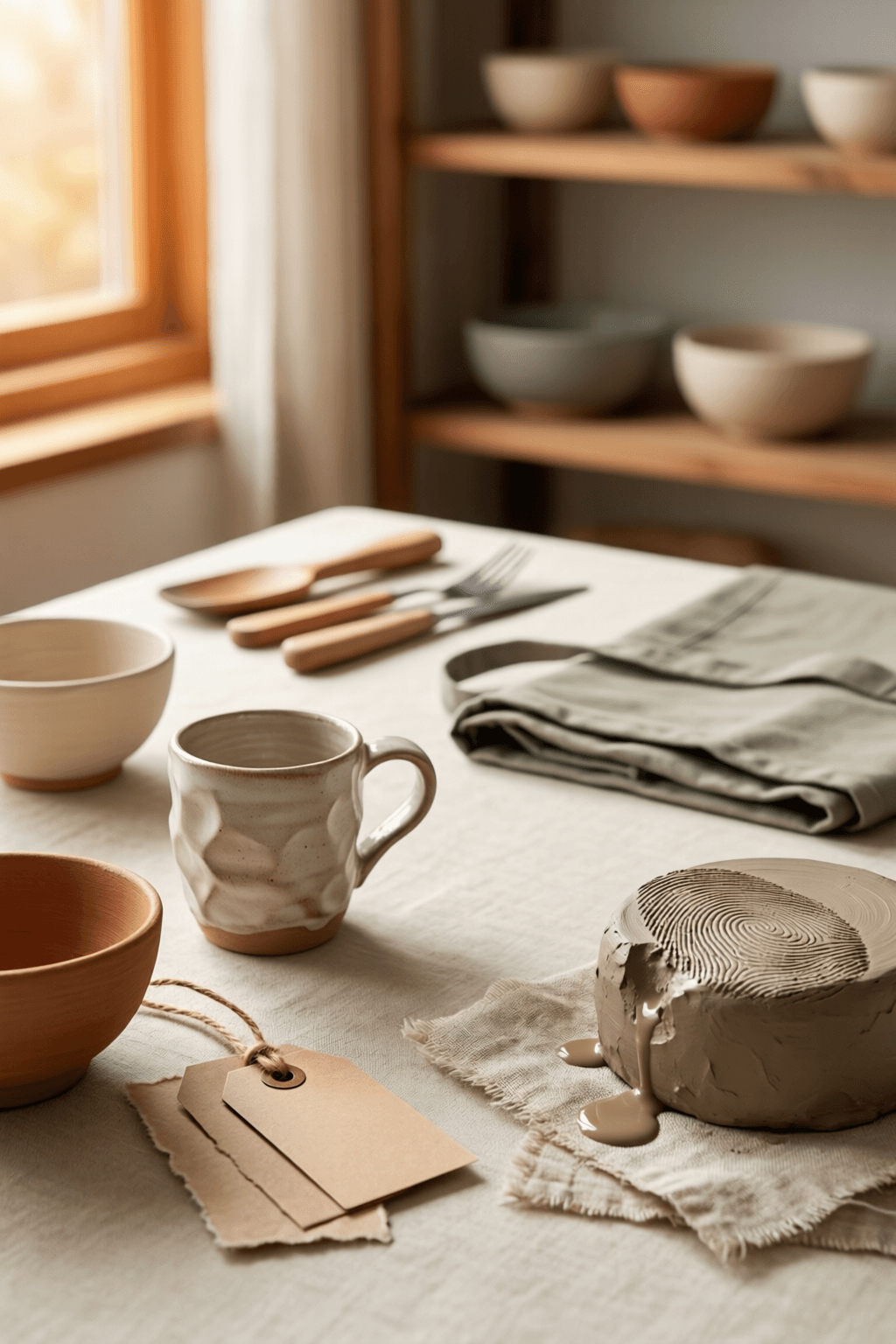
The beauty of handmade is in the imperfections. — Henri Matisse
—What lingers after this line?
Imperfection as the Source of Charm
Matisse’s remark begins with a quiet reversal of modern expectations: what is irregular, uneven, or visibly human is not a flaw to hide but the very place where beauty appears. A handmade object carries the trace of touch—slight asymmetries, softened edges, and small deviations that reveal a maker’s presence. In that sense, imperfection becomes evidence of life rather than failure. From this starting point, the quote invites us to value character over polish. Where machine-made precision often aims for sameness, the handmade offers singularity. Each variation tells us that something real happened in the making, and that history gives the object its emotional weight.
The Human Hand Leaves a Signature
Building on that idea, handmade work is beautiful because it preserves the gestures of the person who made it. A brushstroke, a stitched seam, or a thumbprint in clay functions almost like a signature, even when no name is written. These marks turn objects into encounters between maker and viewer, allowing us to sense patience, hesitation, revision, and care. This is why handcrafted pieces often feel intimate in ways flawless products do not. As William Morris argued in lectures such as “The Beauty of Life” (1880), the dignity of craft lies in labor shaped by pleasure and attention. Matisse’s insight fits that tradition: beauty deepens when the hand remains visible.
Aesthetic Traditions That Honor Irregularity
Seen more broadly, Matisse’s thought echoes traditions that have long celebrated irregular form. Japanese aesthetics, especially the idea of wabi-sabi described by thinkers such as Sen no Rikyū in the tea tradition, prize weathering, asymmetry, and incompleteness. In those contexts, beauty does not depend on perfection but on transience and authenticity. Consequently, the quote belongs to a wider cultural conversation. It suggests that the slightly crooked bowl or uneven glaze is not merely acceptable; it is meaningful. Such objects remind us that beauty can be quiet, humble, and inseparable from the passing conditions under which real things are made.
Resistance to Mechanical Perfection
At the same time, the saying can be read as a gentle critique of industrial uniformity. Mechanical perfection offers consistency, yet it can also erase surprise and individuality. When every object looks identical, beauty risks becoming sterile, detached from the bodily effort and small contingencies that make creation memorable. By contrast, handmade work resists that flattening effect. A woven textile with minor variation or a carved chair with subtle irregular lines reminds us that making is a process, not just an output. Matisse therefore points toward a richer standard of value—one based not only on finish, but on presence, labor, and originality.
Why Imperfections Feel Emotionally True
As the quote settles into personal experience, its emotional force becomes clearer: people often trust imperfect things more than flawless ones. We recognize ourselves in them. Just as a cracked voice can move us more than a technically perfect performance, an object bearing slight flaws can feel warmer because it mirrors human limitation and sincerity. For that reason, handmade beauty often creates attachment. The uneven mug used every morning or the quilt stitched with visible corrections gains meaning through its vulnerability. Matisse’s idea ultimately suggests that imperfections do not diminish beauty; rather, they make beauty believable, and therefore easier to love.
An Artistic Philosophy of Freedom
Finally, Matisse’s statement reflects his broader artistic vision. In works like his late cut-outs, discussed in studies such as John Elderfield’s Henri Matisse: A Retrospective (1992), vitality mattered more than polished illusion. He pursued immediacy, rhythm, and expressive form, trusting that life in art comes from bold human intervention rather than mechanical exactness. Thus the quote reaches beyond craft and into a philosophy of making. To accept imperfection is to allow spontaneity, risk, and personality into the work. What emerges is not careless production but liberated creation—beauty shaped by the hand, and made unforgettable by the marks it cannot help leaving behind.
One-minute reflection
Why might this line matter today, not tomorrow?
Related Quotes
6 selectedThe beauty of handmade is that it carries the soul of the maker, not the cold perfection of a machine. — Bill Watterson
Bill Watterson
At its heart, Bill Watterson’s quote praises the subtle irregularities that make handmade work feel alive. A hand-thrown bowl, a stitched quilt, or a penciled sketch often carries small asymmetries, yet those very marks...
Read full interpretation →The spring that keeps running is more valuable than the jug which bottoms out each day. We unlock that spring by patiently working at our task and giving our best effort every time. — Henri Matisse
Henri Matisse
Matisse’s image contrasts two kinds of value: the jug that must be refilled each day and the spring that continues to flow from within. At first glance, the jug seems useful, but its usefulness is limited by its emptines...
Read full interpretation →Consistency is the sum that equals what we become. — Henri Matisse
Henri Matisse
At its core, Matisse’s remark suggests that identity is not formed in a single dramatic moment but accumulated through repeated actions. What we do regularly—how we think, practice, respond, and persist—gradually adds up...
Read full interpretation →The secret to a life of significance is not in the grand gesture, but in the quiet, unrelenting consistency of your daily practice. — Henri Matisse
Henri Matisse
At first glance, Matisse overturns the common belief that meaningful lives are built through dramatic turning points. Instead, he locates significance in repetition: the small actions done faithfully when no audience is...
Read full interpretation →The artist must be a craftsman; he must know his materials, his tools, and his methods. — Henri Matisse
Henri Matisse
Henri Matisse’s statement immediately shifts attention from inspiration to discipline. Rather than treating art as a purely mysterious gift, he insists that the artist is first a craftsman—someone who understands how thi...
Read full interpretation →I think that when you create something, you leave a part of yourself in it. — Henri Matisse
Henri Matisse
At its core, Matisse’s reflection suggests that making anything—a painting, a poem, a song, even a room—inevitably transfers something inward into outward form. Creation is not merely the arrangement of materials; rather...
Read full interpretation →More From Author
More from Henri Matisse →The spring that keeps running is more valuable than the jug which bottoms out each day. We unlock that spring by patiently working at our task and giving our best effort every time. — Henri Matisse
Matisse’s image contrasts two kinds of value: the jug that must be refilled each day and the spring that continues to flow from within. At first glance, the jug seems useful, but its usefulness is limited by its emptines...
Read full interpretation →Consistency is the sum that equals what we become. — Henri Matisse
At its core, Matisse’s remark suggests that identity is not formed in a single dramatic moment but accumulated through repeated actions. What we do regularly—how we think, practice, respond, and persist—gradually adds up...
Read full interpretation →The secret to a life of significance is not in the grand gesture, but in the quiet, unrelenting consistency of your daily practice. — Henri Matisse
At first glance, Matisse overturns the common belief that meaningful lives are built through dramatic turning points. Instead, he locates significance in repetition: the small actions done faithfully when no audience is...
Read full interpretation →The artist must be a craftsman; he must know his materials, his tools, and his methods. — Henri Matisse
Henri Matisse’s statement immediately shifts attention from inspiration to discipline. Rather than treating art as a purely mysterious gift, he insists that the artist is first a craftsman—someone who understands how thi...
Read full interpretation →